Movies and TvShows featuring "video-art" theme.

In his book "1984", George Orwell saw the television of the future as a control instrument in the hands of Big Brother. Right at the start of the much-anticipated Orwellian year, Paik and Co. were keen to demonstrate satellite TV's ability to serve positive ends-- Namely, the intercontinental exchange of culture, combining both highbrow and entertainment elements. A live broadcast shared between WNET TV in New York and the Centre Pompidou in Paris, linked up with broadcasters in Germany and South Korea, reached a worldwide audience of over 10 or even 25 million (including the later repeat transmissions).
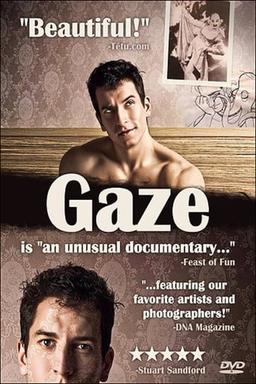
The works of today's most revered talents are set against a provocative, highly amusing commentary track in this celebration of queer art.
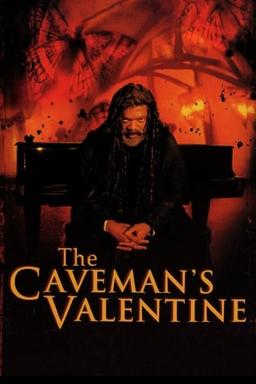
The Caveman's Valentine tells the story of Romulus Ledbetter, a mentally-ill and homeless man living in a cave in New York City. He becomes obsessed with solving a murder that takes place near his cave. Romulus struggles with his own delusions and mental illness while trying to uncover the truth. As he delves deeper into the investigation, he uncovers dark secrets and faces danger. The film explores themes of isolation, mental illness, and the power of imagination.

SHIFTING VISIONS is a video essay that revolves around the transition between the different stages of human consciousness. From the most intense state of full attention to the most abstract and dreamlike state, passing through all its nuances. We know that the mind remains a mystery to science, but, through combining neuroscientific theory and personal perceptions, we represent these mental dynamics transferred to images, sounds and metaphors. We thoroughly analyse each of these stages to translate concepts and create audiovisual imaginaries through symbolic mental limbos. A piece that drags the viewer on an inner journey to their own lucidity.

Presented without commentary, this film reveals the thinking behind the work of John Baldessari over the course of his career, and provides clues to the understanding of the artist's paintings, photographic work and books.

Nam June Paik: Moon Is the Oldest TV(2023)
 90%Tomatometer
The quixotic journey of Nam June Paik, one of the most famous Asian artists of the 20th century, who revolutionized the use of technology as an artistic canvas and prophesied both the fascist tendencies and intercultural understanding that would arise from the interconnected metaverse of today's world.
I Can’t Get Away is a three-channel black-and-white silent video. The video depicts 4 sequences: a figure perpetuating walking away; a figure bounded to an immobile tree; a figure running away from another figure, and vice versa. The performances of stages within the grieving process, different modes and processes to grapple with loss and the sensibilities that comes with mourning impermanence.

An experimental short film from Toshio Matsumoto featuring Mona Lisa.

Paik produced this exuberant, high-speed collage as a commission for the National Fine Arts Committee of the 1980 Olympic Winter Games. In a fractured explosion of densely layered movement and action, images of Olympic sports events are mixed with Paik’s recurring visual and audio motifs.

"In an effort to explore the flexibility of Telidon, Canada's videotex system, Pierre Moretti, animation artist from the National Film Board, used, in the graphic mode, the geometric figures which form the basis for Telidon's picture description instructions. Thus he created this short animated film."

“Just like cinema, friendship is a sculpture in time,” says Cao Guimarães. The people the Brazilian artist and filmmaker has maintained relationships with over decades have, like him, dedicated their lives to the arts. This means that the line between film and friendship is sometimes blurred. He notices this when he and his regular cameraman set out on a road trip lasting three days and nights, from Belo Horizonte to Montevideo. But the overlap between art and life becomes even more apparent when the COVID pandemic makes physical meetings impossible and all contact takes place artificially on screens.

The innovative and influential British filmmaker Derek Jarman was invited to direct the Pet Shop Boys' 1989 tour. This film is a series of iconoclastic images he created for the background projections. Stunning, specially shot sequences (featuring actors, the Pet Shop Boys, and friends of Jarman) contrast with documentary montages of nature, all skillfully edited to music tracks.
Poet and artist Vito Acconci points his finger towards the camera and his own reflection in an offscreen video monitor.

The video opens with a barrage of explosive imagery along with an audio track of a siren taken from the 1970s TV show Wonder Woman. The following scenes are fast paced repeated shots from Wonder Woman, with several scenes following of actress Lynda Carter as the main character Diana Prince, performing her transformative spin from secretarial role into superhero role. […] The representation of repeated transformations expose the illusion of fixed female identities in media and attempts to show the emergence of a new woman through use of technology. […] The video ends with a scene of repeating explosions that precedes a blue background with white text that scrolls upwards, delivering a transcription of lyrics to the song ‘Wonder Woman Disco'.

The death of the minotavr talks about the concept of the heroine's journey. Suffering, horror and exhaustion lead the protagonist to a process of transformation, abyss and expiation, because only murdering to minotaur and everything he represents is possible to return to life. From the female gaze, it shows the depth of the emotional wounds caused by domestic violence; the same one that the surrealist Dora Maar lived and that ask why, as a society, instead of killing the minotaur, we blindly continue to send him women only to be devoured and ask them why they simply did not fight, why they did not try get out of the labyrinth.

An auto-documentary about a disenfranchised Everyman and his struggle to re-integrate himself into society. He fails and turns to crime.

A compilation of avant-garde artwork and talent of the mid to late 20th century hosted by Ryuichi Sakamoto.
Video Art installation simulation inspired by Jacques Derrida
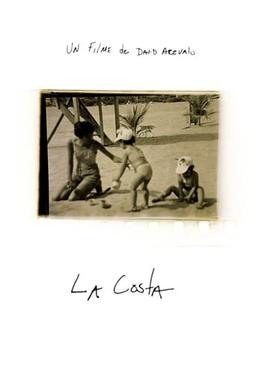
A short film on self reflection and homesickness. Narrated by David Arevalo.

Mireia has just come out of a toxic relationship that prevents her from enduring physical contact when she is offered the lead role of "Sleeping Beauty" at the ballet school where she attends, and has to dance with the Blue Prince.