Movies and TvShows featuring "tsarist-russia" theme.
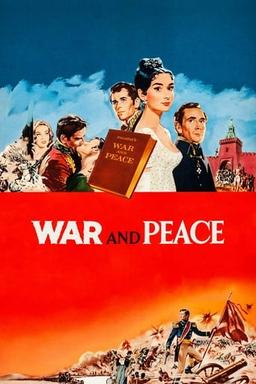

War and Peace (1956) is an epic film adaptation of Leo Tolstoy's novel of the same name. The story follows the lives of several aristocratic families in Russia during the 1805 French invasion of Russia and the subsequent Napoleonic Wars. The movie explores themes of love, honor, and war as the characters navigate through dramatic events and personal struggles.
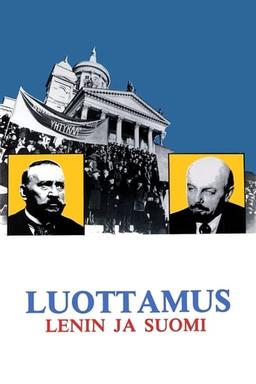
Directed by Edvin Laine and Viktor Tregubovich, Trust (1976) is a Finnish-Soviet historical drama film that follows the relations between Finland and the Soviet Union. In December 1917, the Finnish delegation, composed of Chairman of the Senate Finance Department P.E. Svinhufvud (Vilho Siivola), Senator Carl Enckell (Yrjö Tähtelä) and State Secretary Gustaf Idman (Yrjö Paulo) arrive in St. Petersburg to meet V.I. Lenin (Kirill Lavrov) to gain recognition for the country's independence.
In the Russian Empire, a labor strike erupts as workers protest against their exploitative working conditions, corruption, and the cruelty inflicted upon animals. The rebellion grows in intensity, leading to a fierce fight for workers' rights and justice. Amidst the turmoil, the working class is pushed to the edge, suffering from starvation and social unrest. The movie explores themes of class struggle, anti-capitalism, and the oppressive nature of the Tsarist regime.
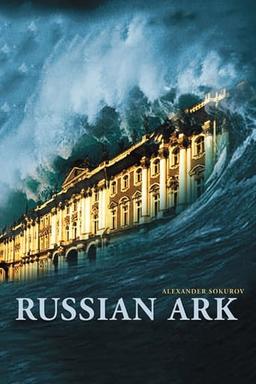
In a single continuous take, the film explores the history of Russia through a mysterious unnamed protagonist who wanders through the Winter Palace of the Hermitage Museum in Saint Petersburg.

The young Count Martin von Tandenskiöld who has returned from the war is forced into a battle with a Russian colonel after he harasses his bride Karin. Chased by the Cossacks Martin escapes and joins the old wanderer. On the way Martin encounters adventures and beautiful women.
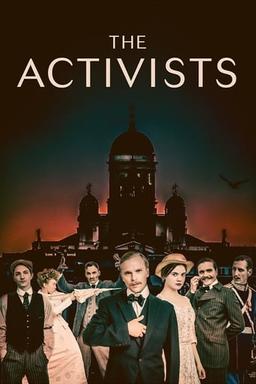
The Activists follows the years from 1899 to 1906 when Finland as an independent nation started to form. At the center stage are young restless souls who operate against the backdrop of the phenomena of the time: deep social divisions, political intrigue, fierce proclamations and people’s movements that get out of control. Activists portrays what happens when people lose faith in society’s capability to deal with conflict.
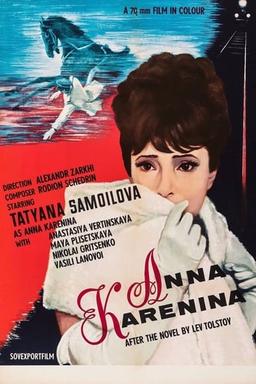
Anna Karenina, a wife of an aristocrat, falls in love with a count, leading to a devastating affair that shakes the foundations of her marriage and society around her. Set in 19th century Russia, the story explores themes of love, betrayal, and the consequences of societal expectations.

In pre-Soviet Russia, Boris Savinkov leads a terrorist faction of Socialist-Revolutionary Party members responsible for the deaths of governors and ministers.
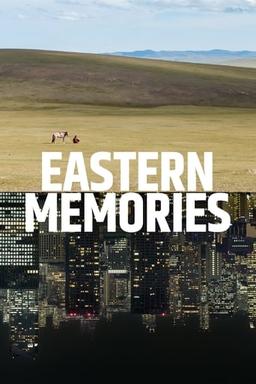
At the turn of the 19th and 20th century Finnish philologist G. J. Ramstedt travelled around Mongolia and Central-Asia. In this documentary Ramstedt’s memoirs are heard in the modern day setting, where tradition is replaced with hunger for money, and deserts give way to cities.
In 17th-century Pohjola, young Antti Puuhaara is looking for himself, because he has grown up with no knowledge of his childhood. Two actors, the tragedian and the comedian, who were banished from Tsarist Russia to Karelia, had predicted to the crooked merchant Markki Bohattov that Antti's fate would become intertwined with his own. When Antti falls in love with Bohattov's daughter Darja, the father has to arrange for her to marry the tar merchant Arho Mustahatu.

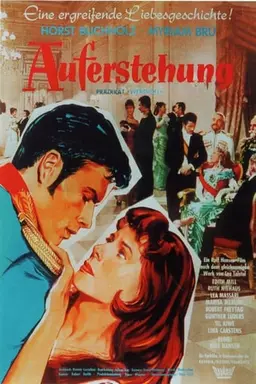
Young Prince Nechljudov is summoned as a judge in a murder trial. A rich merchant was found dead in the room of the inn where he was staying and the prostitute Maslova was accused of the crime. Nechljudov recognizes in the woman the maid of the aunts he had seduced and abandoned years before and tries to convince the authorities of her of his innocence but to no avail. Convinced that he is responsible for her moral fall, he follows her to Siberia where she must serve her sentence.
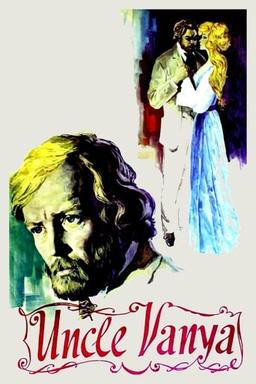
Uncle Vanya is a drama set in rural Tsarist Russia, focusing on the relationships and tensions within a family and the unrequited love that exists amongst them. The story explores themes of melancholy, disappointment, and the bitter realities of middle age.

The story of two young lovers takes a tragic turn as the girl falls in love with the boy's father.
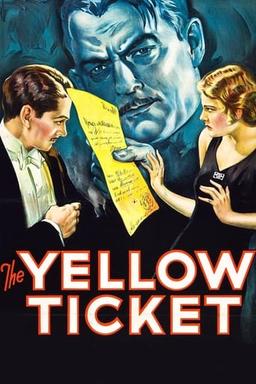
A young Russian girl is forced into a life of prostitution in Czarist Russia, and she and a British journalist find their lives endangered when she reveals to him information regarding the social crimes rampant in her country.

Outskirts (1933) is a surrealistic drama set in a Russian village during World War I. The film explores themes of patriotism, forbidden love, and the harsh realities of war. It follows the lives of the villagers, including a cobbler who becomes a soldier, a factory worker, and a young girl caught in a love triangle. The plot also touches on the impact of the war on the village and its inhabitants.
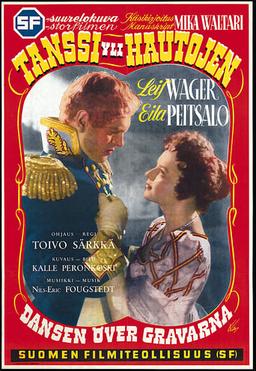
In the early 1800s, Finnish governor's daughter first detests but soon falls in love with Russian Czar Alexander I who has just taken Finland over from Sweden's rule.
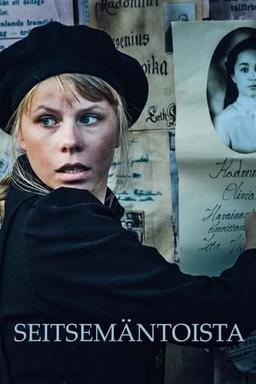
The year is 1917. Rumors of the Russian Revolution are spreading to Helsinki, disrupting the lives of both Prime Minister Oskari Tokoi and the bourgeois Nikolajeffie family. The family's 17-year-old daughter Olivia and the same-aged maid Iita, who works for the family, are best friends. They meet a young socialist boy, Juho, and become entangled in politics, which puts their friendship to the test. Olivia disappears, and Iita realizes that it is a matter of life and death. At the same time, Oskari Tokoi's government seeks to make Finland independent from Russian rule.
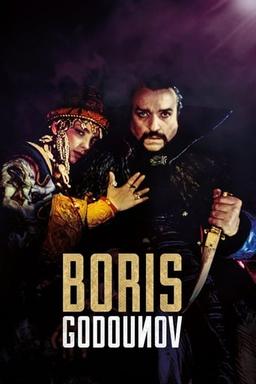
A possible impostor torments a newly crowned medieval czar who may have ordered the real successor's death.
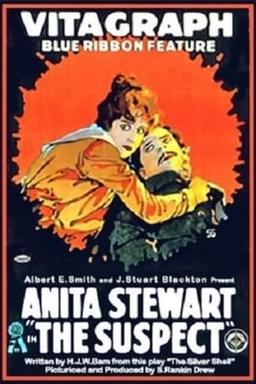
The Suspect is a 1916 lost silent film directed by S. Rankin Drew. Set in France and Russia, the plot revolves around the cruelties of Russian Grand Duke Karatoff, known to friends and enemies alike as "the butcher." Sophie, leader of a band of revolutionaries, attempts to assassinate Karatoff but accidentally wounds his son Paul instead.