Movies and TvShows featuring "tbilisi" theme.

Arjun and Kayal, an Indian couple living in Azerbaijan, set out on a journey to visit her parents. Their peaceful trip takes a terrifying turn when Kayal mysteriously disappears. With time running out, Arjun must navigate a web of danger and deception, facing a ruthless gang determined to keep him from uncovering the truth.

Kari and Onia meet in Cannes, experiencing love at first sight. Upon returning to Sakartvelo, they are quarantined in different hotels in the midst of the COVID-19 pandemic. They stay in touch via phone calls and video chat. Kari teaches Onia Caucasian Yoga breath training and they travel in past to meet a variety of Georgian historical figures during their important life events, in order to understand the wisdom and limits of love.

In Tbilisi, Georgia, a carefree musician flirts with a young girl while rehearsing with an orchestra. Set in the Soviet Union, this plotless movie explores the joy and freedom of music.

Following "Paris, Je t'aime" "New York,I Love You" and "Rio, Eu Te Amo" “Tbilisi, I Love You” has become the next film in the “Cities of Love” franchise.


A 52-year-old woman named Manana decides to leave her husband and live independently, causing tensions in her large family. The film explores the intricacies of family relationships and the challenges faced by women in Georgian society.

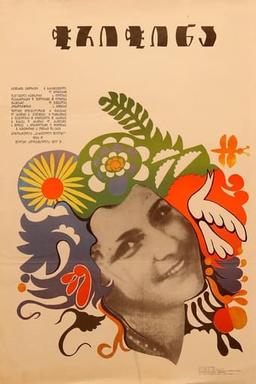
A young, funny, lovely, kind girl from country-side is named Marine but she is nicknamed as Chrichina (Dragonfly). She is very popular in her village because of her happy-go-lucky temperament and singing songs. She lost a chance to study at University, fell in love with handsome, intelligent architect from the city. She must prove to everyone that she is useful for something, and not only for singing "aba deli dela..." every day. Everyone realizes that they are not very suitable for each other, but the young architect can't get her out of his head.
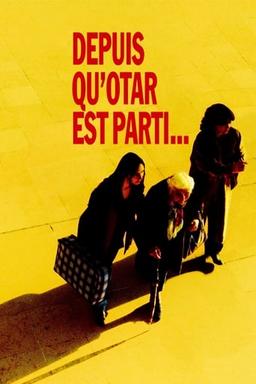
Since Otar Left is a drama film set in rural Georgia. It tells the story of a family dealing with the loss of Otar, who emigrated to Paris without telling them. The film explores their struggle to cope with the news and the secrets that unravel as they deal with their grief.

Set in the 1970s in Tbilisi, Georgia, 'Melodies of the Vera Quarter' is a musical that tells the story of a love affair in the midst of poverty and dreams. It follows a laundress who falls in love with a ballet dancer and explores themes of love, family relationships, and the struggles of everyday life.

A young Georgian man named Lado is involved in smuggling antique furniture from Georgia to Russia. Medea, Lado’s girlfriend, buys herself an apartment in St. Peterburg’s historic center. At the time of the unlawful deportation of thousands of Georgians from Russia, Lado is caught and deported.

A dead hen becomes a problem between two neighbor families in Ajara (west Georgia). That leads to drama; a young guy is killed in the next quarrel.

Mzia’s classmates have decided to stay in their village and work at the Sovkhoz after graduation. But Mzia’s mother wants her to go to Tbilisi to become a student.

The old peasant Minago Iremadze and his wife miss their children who live in the city. The older brother married a city girl, the younger studies there. Minago decides to bring them back home. He goes to the city and tells everything to his sons. The brothers understand their dad well but cannot abandon the city life.

In Georgia, two stranded Nigerians, Obinna and Afame, navigate the sleeping city of Tbilisi after a long night out. However, as day breaks the true colors of their ambiguous affection begin to show. In this way, they find solace despite their hostile environment.
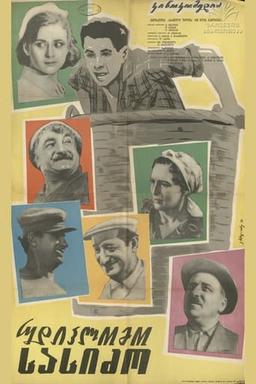
A lazy and insane man living in Tbilisi is forced to get a job in the tea industry. He falls in love with a girl and gets involved in a love triangle. Chaos ensues as he tries to navigate his way through his father-in-law's expectations and the challenges of his new job.
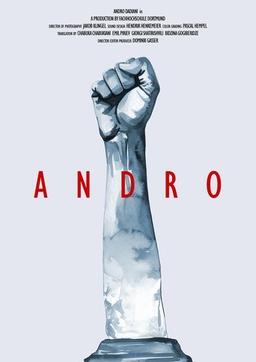
ANDRO DADIANI's political performances dissect the oppression by state and church in Georgia and conquer Tbilisi's urban spaces. As a queer, non-binary protest and performance art figure, their identity remains a secret. The danger of open resistance is too great.

"Free Spaces" sketches a new and transformative image of four major cities in Eastern Europe. In te post-communist urban settings of Tbilisi (Georgia), Yerevan (Armenia), Chișinău (Moldova) and Kiev (Ukraine), Ina Ivanceanu follows artists and activists as they reclaim public spaces and assert their freedom of expression. Occupying a cinema, reviving an old Soviet circus, converting a grim metro passage into a glamorous arena, and repurposing a defunct factory building into a cultural agora. By seizing and creatively transforming public spaces characterized by an abondoned past, today's new generation explores democratic means and freedom while also confronting pervasive neoliberal structures in their respective societies.

The film tells the story of an accountant who is fanatically in love with football, who will go through many curious adventures full of misunderstandings before he gets to the desired match.
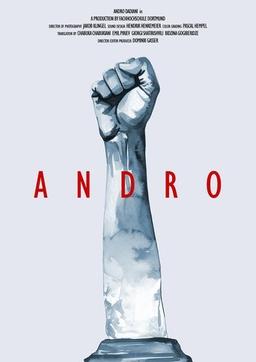
ANDRO DADIANI's political performances dissect the oppression by state and church in Georgia and conquer Tbilisi's urban spaces. As a queer, non-binary protest and performance art figure, their identity remains a secret. The danger of open resistance is too great.

The horrific war in Chechnya, a neighbor of Georgia, gives a special poignancy to Otar Iosseliani’s fascinating, four-hour, made-for-television documentary on Georgia which, like his delightful Chasing Butterflies (SFIFF 1993), was produced in France. Iosseliani presents the history of this former Soviet republic through beautifully interwoven images of landscapes, artwork and clips from other Georgian filmmakers such as Nikoloz Shengalaya and Tenghiz Abuladze. He illuminates the part played recently by two politicians, both KGB men but with very different destinies: Zviad Gamsakhurdia, an ultranationalistic demagogue who died in exile; and Eduard Shevardnadze, who is the president of Georgia today.