Movies and TvShows featuring "student-protest" theme.

Youth of May is a romantic drama that takes place in Gwangju, South Korea, during the 1980s. It tells the story of a medical student and a nurse who fall in love amidst the backdrop of the Gwangju Uprising, a student-led protest against the military dictatorship. As they navigate the challenges of their relationship and the political turmoil of the time, they discover the power of love and resilience.


Discover the story of the greatest civil rights movement most people have never heard about. During eight tumultuous days in 1988 at the world's only Deaf university, four students must find a way to lead a revolution—and change the course of history.

Misbehaviour (2020) follows the story of a group of women who disrupt the Miss World competition in London in 1970, protesting against the exploitation of women in beauty pageants and fighting for gender equality. The film explores the challenges faced by these women as they challenge the patriarchy and fight for their rights.

In 1987, South Korea is under the control of a military dictatorship. When a college student is killed during a protest, a group of ordinary citizens begins to fight for justice and democracy. This gripping film portrays the struggle against political corruption, police brutality, and the cover-up of a historical event.
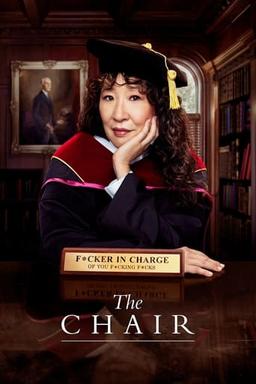
The Chair follows the story of Ji-Yoon Kim, the first woman of color to become the chair of the English department at the fictional Pembroke University. She navigates the challenges of her new position while dealing with personal and professional struggles. The show explores themes of race, gender, academia, and relationships.

"A", a member of a student protest organization, becomes disenchanted by his group's inability to effect real change. Emboldened to pursue more radical methods by the older, experienced leftist organizer Despard, "A" unwittingly becomes party to a labor strike that turns violent. Ultimately held responsible by the authorities for the fracas, "A" allies himself with terrorist Leonard, who intends to avenge those jailed in the protest.
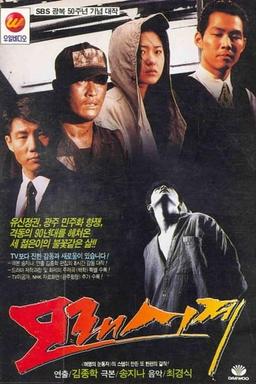
Sandglass is a South Korean television series considered one of the most significant and highest-rated Korean dramas in history. Written by Song Ji-na and directed by Kim Jong-hak, it aired on SBS in 1995 in 24 episodes. A depiction of the tragic relationship among three friends affected by the political and civilian oppression of 1970s and 1980s Korea, the series mixed politics, melodrama, action, and great acting. It recorded a peak rating of 64.5%, the third highest of all time, and launched its leading trio of Choi Min-soo, Go Hyun-jung, and Park Sang-won into stardom. Its reenactment of the Gwangju Massacre remains one of the most realistic, devastatingly powerful, and unforgettable moments in Korean TV history.
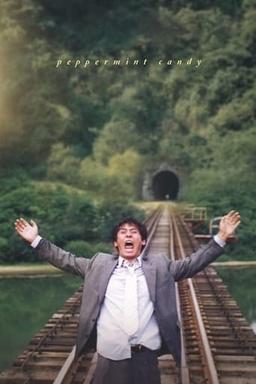
Peppermint Candy follows the life of an ordinary man named Yun-su, exploring key moments in his past that led to his downfall. The film tells the story in reverse chronological order, highlighting themes of innocence, regret, and the impact of political events on personal lives.
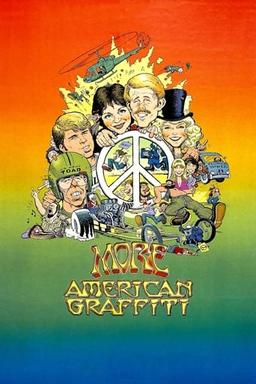
More American Graffiti is a movie that takes place in the 1960s and follows the lives of various characters as they navigate the turbulent time of the Vietnam War. The movie combines comedy and drama as it explores themes of peace, army desertion, teenage rebellion, and the cultural shifts happening during that era.

* Based on a manga by Kasahara Tetsurou. In a future world where an organization called the GGP has taken control of the world, Ogata Rin had a promising career as an up-and-coming ballet dancer, but suffered a serious injury and decided to quit. Years later in college she comes across an unusual club building and soon finds herself intrigued by a transforming motorcycle-like vehicle called a Rideback. She discovers that her unique ballet skills with balance and finesse make her a natural on a Rideback. However, those same skills also get her into serious trouble with the government. Source: ANN

In 19th-century France, Jean Valjean, a man imprisoned for stealing bread, breaks parole and is pursued by the relentless Inspector Javert. As he assumes a new identity and rises to become a respected factory owner, his past catches up with him, threatening to destroy the lives of those he cares about.

Zabriskie Point is a drama that explores themes of counterculture, disillusionment, and social unrest in 1970s America. The story follows a college student who becomes involved with a group of hippies and finds himself on a road trip that leads to chaos and tragedy. Along the way, he encounters themes of nonconformity, protest, and the clash between the establishment and the counterculture movement. The movie also explores themes of love, sex, and freedom, as well as the destructive power of corporate greed and police brutality. Zabriskie Point is regarded as a cult classic and an experimental film that captures the spirit of the era.

A documentary about the end of the student movement in 1972 and the lynching of Daizaburo Kawaguchi, a student at Waseda University. The documentary interweaves testimonies from japanese intellectuals and a short play, written and directed by Shôji Kôkami, about the murder.

L, a student in India witness to the government's violent response to university protests, writes letters to her estranged lover while he is away.

During a court case, protesters clash with authorities in a powerful demonstration of the counterculture movement.

Much of the world first became aware of the Chinese People’s Liberation Army in the tragedy of Tiananmen Square in June 1989. However, only weeks before, filming had been completed on an extraordinary examination of China’s military machine. Boasting unprecedented access to all areas of the People’s Liberation Army, this five-hour documentary reveals with unerring insight and exceptional clarity the enigma which is the modern Chinese army.
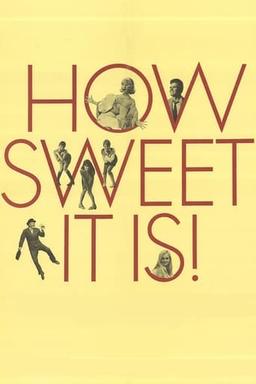
How Sweet It Is! is a comedy set in the swinging sixties. It follows the story of a manipulative female and a hen-pecked husband as they navigate through various comedic situations.

A Better Tomorrow III: Love and Death in Saigon(1989)
A man is torn between two women in war-torn Saigon, as he navigates the brutal world of crime and violence.
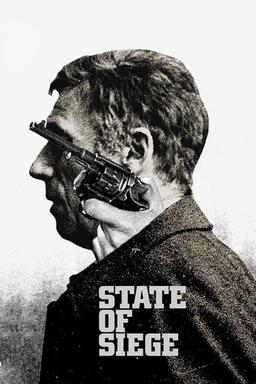
State of Siege follows the events surrounding a kidnapping in Uruguay during the state of siege imposed by the military government. As a siege mentality develops in the country, an American official joins forces with local police to uncover the truth behind the abduction and the oppressive regime. With themes of dictatorship, guerrilla warfare, and undercover operations, the movie explores the fight against fascism and the corrupting influence of capitalism.

Professor Leaf is absent-minded and constantly finds himself in comedic situations. When his son starts writing letters to the celebrity Brigitte Bardot, chaos ensues as the boy's infatuation grows and he seeks advice from a psychiatrist. The professor must navigate his son's obsession while dealing with his own absent-mindedness.