Movies and TvShows featuring "second-sino-japanese-war-1937-45" theme.

'Agent Number Two' Lee Kwok-wai of the resistance troops Red Rattlesnake sets off for Guangzhou to assist Agent Number One in rescuing their comrade Pang Yau-lan from the puppet army. Lee approaches his former lover Lam Ying-tsi, the mistress and trusted aide of the puppet commander Wong Tai-wai, who has fallen prey to the lip service of the beautiful and smart songstress Pak Lai. Following the vandalism of the arsenal, Pak is quick to point the finger of blame at a spy at work. Lam combs their home for clues and finds Lee's recording devices. Furnishing Lee with misleading information, Lam has Lee and associates arrested. Pak appears to their rescue, revealing herself as Agent Number One. The dauntless spy sabotages the enemy's ammunition and communication network, captures the commander before joining her comrades to celebrate a successful withdrawal. (Synopsis based on audiovisual materials)

Cheung Kei-sang and the orphan Chau Sai-kai, two young lovers from a village in Southern China, are forcibly separated on their marriage day due to the Japanese invasion. Filled with hatred and vengeance, Sai-kai joins a Kuomintang secret agency, becoming their spy, while Kei-sang ends up in a Communist guerrilla militia and receives training to be their government’s spy. It is through this militia group where Kei-sang meets Kong Sheung-hung, another Communist spy. Together, they go on a mission to search for a Japanese businessman, who looks eerily like Sheung-hung...

Teacher Huang San extends to his pupils the high principles of patriotism, thus arousing the hatred of the occupying Japanese. Huang is forced to flee and to escape from the Japanese clutches. One night, he helps a robber escape from a pursuing Japanese officer by firing his gun and thus unintentionally kills the Japanese. Huang San follows to his hideout and from then on, Huang San joins the bandits. Huang San attempts to rob a house but discovers that the occupant is none other than his student Wang Zhongkang who is involved with the guerrillas. Huang San decides to help Zhongkang raid the military arsenal of the enemy. However, as Huang gradually gains the trust of their chief, some jealous associates within the bandit group informs on him. Huang and Zhongkang carry out their raid amid a fierce confrontation, Zhongkang successfully implements his mission but Huang is killed in the battle.
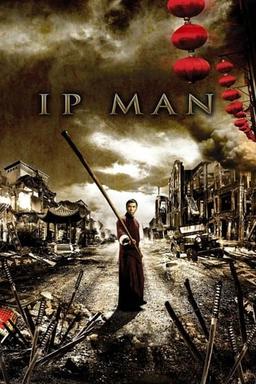

In the 1930s, wealthy martial artist Ip Man is forced to leave his home during the Japanese invasion of China. With little means of survival, he and the people of his city must find a way to survive. Ip's skills in Wing Chun martial arts lead him to confront and defeat aggressive Northern Chinese martial artists and Japanese soldiers. Despite the hardships, Ip maintains his integrity and eventually establishes a Wing Chun school in Hong Kong, training students including the future legend Bruce Lee.
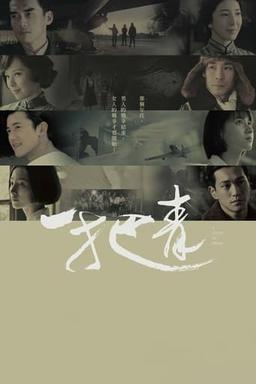
The drama tells the story of air force pilots and their families from 1945 to 1971. As the husbands embarked on patriotic missions to fight against the enemies, their families must content with horror of wars, mass emigration to distant land, and death of love ones. Their shared experience brought the military families together to support one another.
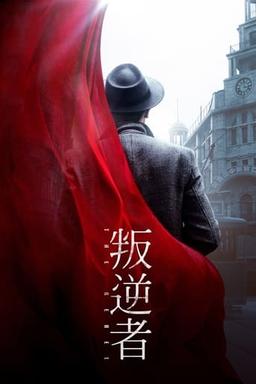
After ten years of knowledge and choice, after the victory of the War of Resistance Against Japan, Lin Nansheng has grown into a true Communist Party member. And at the critical moment of the War of Liberation, he made outstanding contributions to the party and the country.

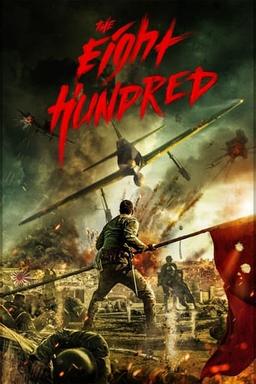
The Eight Hundred is an epic war drama that takes place in 1937 during the Second Sino-Japanese War. It follows a group of Chinese soldiers who take shelter in a warehouse in Shanghai, facing constant attacks from the Japanese army. Based on a true story, the film showcases the bravery and resilience of the soldiers as they fight for their country.

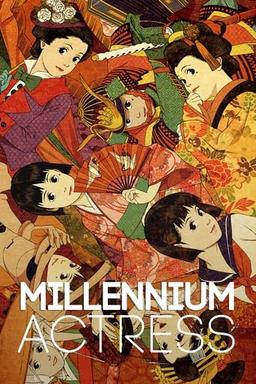
In Millennium Actress, a documentary filmmaker explores the life of a reclusive former movie star, Chiyoko Fujiwara. Through a series of interviews, Chiyoko recounts her extraordinary career and her search for a lost love. As the boundaries between reality and fantasy blur, the filmmaker becomes deeply immersed in Chiyoko's story, uncovering the secrets of her past and the power of her memories.

After Japan’s invasion of China, a Chinese professor in Boston returns to Beijing to translate a document exposing Japanese war crimes for the UN, but becomes a target of the Japanese army, who will stop at nothing, including kidnapping his brother, to silence him.
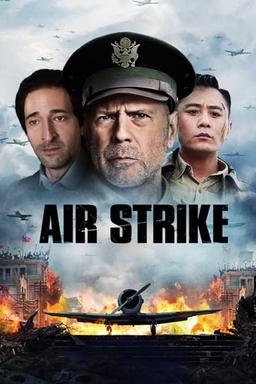
Air Strike is a gripping war film set in China during the Second Sino-Japanese War. It follows the story of an American colonel who joins forces with Chinese resistance fighters to stop the Japanese invasion. Filled with intense battles, bravery, and sacrifice, this movie explores the brutality of war and the resilience of the human spirit. The film showcases the struggles of the Chinese people during this tumultuous period in history.

Story of a Prostitute follows the tragic love story of a prostitute and a deserter during the Japanese occupation of Manchuria. Their passionate love faces obstacles of duty, honor, and societal norms, leading to a heartbreaking climax.

Guerrilla fighter Lam Suet-fan is in charge of the operation which succeeds in crippling the traitorous activities of Ting Chuen. An infuriated Ting strikes back, swamping the occupied territory with spies and exposes the singer disguise of Lam's comrade Laura who is made his mistress. Through the discreet help from Ting's cousin Sai-kit who goes undercover as the traitor's house guest, a series of offensives are launched, resulting in heavy casualties in the Japanese camp. With pressure mounting on both sides, guerrilla leader Lady Spy No.1 entrusts the mission of bombing Ting's signal tower to Lam who will then lead the troop in retreat. The mission fails, leading to the arrest of Lam and Sai-kit. Laura puts her life at stake in order to accomplish the mission and before she expires, reveals herself to be their leader and names Lam her successor to lead the troop to its stronghold in the north. (Synopsis based on audiovisual materials)

City of Life and Death is a gripping drama set during the Second Sino-Japanese War, depicting the events of the infamous Nanjing Massacre. The film explores the atrocities committed by the Imperial Japanese Army and the resilience of the Chinese people in the midst of chaos and destruction. Through the eyes of various characters, including a Chinese soldier, a Japanese soldier, and a foreign journalist, the movie showcases the brutality of war and the devastating impact it has on individuals and communities.

In 'Too Hot to Handle', a news reporter travels to the jungle, encountering secretaries, screwball comedy, poker, and more. Along the way, he faces challenges like hypodermic needles, shootouts, and cannibals. This film is set against the backdrop of the second Sino-Japanese War and explores themes of rivalry, humor, and adventure.
During World War II, spy Wu Lai-sheung is instructed by her superior Fan Yeung-shan to murder spy number 13 Cheung Chi-ping. While Wu establishes a relationship with Sakei, the assistant general of the Japanese army, she also gets acquainted with Cheung. Cheung and Wu fall in love. Wu recommends Cheung to become Sakei's driver. Cheung pretends to court the Japanese spy Siu-kuen, but Siu-kuen arranges to kill the spies contacting with him. Cheung has seen through Kuen's identity for long. When Kuen is going to kill Wu, Cheung kills Kuen, Fan compels Wu to kill Cheung. Wu follows the instruction to murder Cheung. After the murder, Wu disappears. After the war, Fan discovers Wu ends up in asylum. When he visits Wu, he tells her of Cheung's innocence. This breaks Wu's heart. Cheung turns out to have seen through Wu's identity for a long time and pretended to have been killed to cover up his identity and facilitate his work. With the truth known and the war ended, Cheung and Wu married.
The Lok's family disperses when Japanese occupied China. Mrs. Lok's company prospers in Hong Kong. Her son Tin-yam looks after her business. She misses her daughter. Another daughter Chui-yin dates Kuk-tat. Mrs. Lok hopes that Tin-yam will find a good partner. Wan Yuk-yin works in Mrs. Lok's company and meets Tin-yam. They fall in love. Mrs. Lok asks Yuk-yin to leave Tin-yam. Facing his mother's objection, Tin-yam falls ill. Mrs. Lok let them marry. The wedding guests despised the bride, which makes Mrs. Lok uncomfortable. The couple lives happily, but Mrs. Lok and Chui-yin make Yuk-yin embarrassed. Kuk-tat covets the Loks' fortune. He steals their jewels. Mrs. Lok thinks Yuk-yin did it. Yuk-yin is innocent, but she is expelled. Tin-yam returns. Yuk-yin's parents seek justice at the Loks. Mrs. Lok's saw the Yuk-yin's birthmark. She realizes Yuk-yin is her lost daughter. Mrs. Lok decides to be a dutiful mother. Tin-yam is an adopted son of the Loks so the couple lives happily.
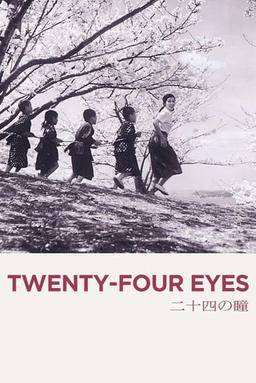
Twenty-Four Eyes is a heartwarming drama set in rural Japan during the 1920s to 1940s. It follows the story of a dedicated schoolteacher and her students as they navigate through the challenges of life, including poverty, cultural conservatism, militarism, and the impact of war. The film explores themes of nationalism, imperialism, patriotism, and the importance of education in shaping the lives of young individuals.

Black Sun: The Nanking Massacre is a graphic and brutal portrayal of the atrocities committed by the Japanese Imperial Army during their occupation of Nanking, China in 1937. The movie explores the harrowing experiences of both Chinese civilians and Chinese and Japanese soldiers involved in the conflict.