Movies and TvShows featuring "sami-culture" theme.

In the village of Utfjord, Sami Elin fights to preserve the pastures of the family that runs reindeer, but when she falls in love with Daniel, her values are put to the test.


Acoustic Ocean is an artistic exploration of the sonic ecology of marine life in the North Atlantic. Located on the Lofoten Islands in Northern Norway, the video centers on the performance of a marine-biologist diver who is using a life-size model of a submersible equipped with all sorts of hydrophones and recording devices. In this science-fictional quest, her task is to sense the submarine space for acoustic and bioluminescent forms of expression.

Loving someone of the same gender is frowned upon in Sami communities. Sparrooabbán (Me and my little sister) shows what it’s like to be a minority within a minority. Suvi describes how her little sister Kaisa wishes to be accepted as she is. Like her sister, Kaisa is a Sami, but also in a relationship with a woman, and she also works as a deacon. There are obviously more constricting communities in the film than only one.

Curses, witchcraft and mysterious phenomena. Do they have natural explanations? Join Stian "Staysman" and Ole Rune on a road trip for answers.
Mercy is a movie that explores themes of forgiveness and second chances. It tells the story of a woman who has to confront her husband's infidelity and her own guilt after a tragic accident. As she navigates through a web of secrets and emotions, she discovers the power of forgiveness and the possibility of starting anew.
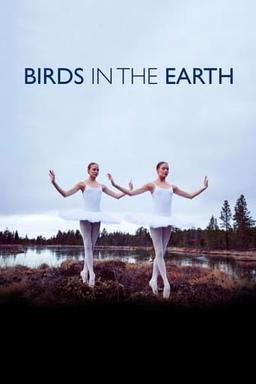
Sami dance students Birit and Katja Haarla dance through the villages and lost woods of Sápmi all the way to where the important decisions are made. The polarity of Nature and the Western way of life is filtered through sharp humour.

The AssimiNation is a political pamphlet portraying the indigenous Sámi people fighting for their existence. The film follows the on going cultural genocide of the Sámi which the current Governmental politics allow. This film is a cry for help for the last indigenous people living in the EU.
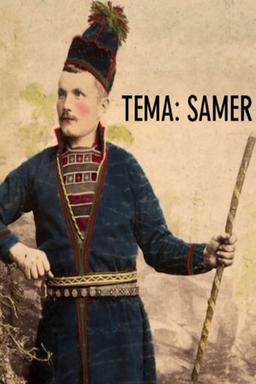
The Sámi people (also spelled Sami or Saami) are an indigenous Finno-Ugric people inhabiting Sápmi, which today encompasses large northern parts of Norway and Sweden, northern parts of Finland, and the Kola Peninsula within the Murmansk Oblast of Russia. A single daily newspaper is published in Northern Sámi, Ávvir. There are short daily news bulletins in Northern Sámi on national TV in Norway, Sweden and Finland. There is a Sámi theatre, Beaivvas, in Kautokeino on the Norwegian side, as well as in Kiruna on the Swedish side. The largest Sami Publishing house is Davvi Girji. In this program "Topic: Sámi" filmmaker Nils Gaup presents his latest production, "The Kautokeino Rebellion" (2008), author Ann-Helen Laestadius talks about to seek ones roots, and Isabel Pavval share how it is being a young Sámi and youth culture.

Three Sámi men travel to the capital of Norway. One of them is wearing gákti, the Sámi traditional costume, to attract Norwegian women. The second one believes it unethical to do this, and the third is bitter that he doesn't attract women when he wears the gákti. Indigenous Police is a Sámi short film told with humor and political sting. It is an identity satire about how people, both the Sámi and the majority population, consciously and unconsciously define what is the right way to be Sámi.
Follows Astrid & Sune as they show techniques and methods of sami handcraft.
The Indigenous Sámi people fight to get back their stolen ancestral heritage.

Wimme Saari is one of the best known Sami yoikers from Finland. He combines traditional Sami singing with his own improvisations, usually to a techno-ambient accompaniment by members of Finnish electronic group RinneRadio. Wimme has also appeared on the albums of other bands or musicians, for instance Hedningarna, Nits or Hector Zazou.

The everyday life of the Karesuando Sámi at the Sarek Mountains, near their camp, the sita. Traditionally, the Sámi have pursued a variety of livelihoods, including coastal fishing, fur trapping, and sheep herding. Their best-known means of livelihood is semi-nomadic reindeer herding. The genetic makeup of Sámi people has been extensively studied for as long as such research has been in existence. Ethnographic photography of the Sámi began with the invention of the camera in the 19th century. This continued on into the 1920s and 1930s, when Sámi , against their will, were photographed naked and anatomically measured by scientists,.

When Mats' grandfather dies the family opens a wooden box containing evidence of the family's Sami heritage. Why has this been kept secret? Why did they stop being Sami? And why do they know so little about their history?
A charismatic womanizer is deprived of his leadership and betrayed by his own people.
Love, music, Sami identity and environmental activism go hand in hand in this inspiring tale of young singer Ella and her fight against the mining company that threatens her Sami heritage.

Two parallel stories are gradually unfolding the everyday life of two very different persons - that of 86-year-old Sara and 7-year-old Mihka - both residing in Guovdageaidnu - Kautokeino, in the middle of the Norwegian arctic tundra, through the drastic change of the arctic seasons and the passage from the long winter’s darkness to the never-ending light of the summer season.

The group SOLJU, formed by Ulla Pirttijärvi and her daughter Hildá Länsman, combines their heritage of northern Sámi language and traditional chant, known as yoik, with a desire for new and innovative music. SOLJU provides a dialogue of traditional and modern Sámi culture. Solju is proud of their indigenous roots and want to show it to the world. Sámi culture and identity lie at the heart of the music, reflecting mythology and aspects of the traditional lifestyles of their homeland. The listener is taken to the far north of Europe: Sápmi. Solju soundscape ranges from the expansive wilderness of the tundra to the most intimate lávvu fireplace. The music can be described as vivacious, colourful, earthy, ethereal, and genuine. Recorde live at G Livelab, Helsinki, April 25, 2018. Songs from Solju's debut album "Odda Áigodat" (New Times), produced by Samuli Laiho and Teho Majamäki, mixed by Riku Mattila.