Movies and TvShows featuring "sahrawi-refugee-camps" theme.
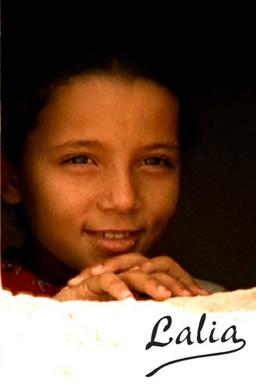
Lalia is a Saharaui girl who lives in a refugee camp in Algiers. She has only heard her grandmother and grandfather talk about her country, about the Sahara, that was taken away by Morroco. She dreams of one day seeing the ocean, seeing her real country. The reality she lives in is different... the uncertainty of the refugee camps, the political unbalance... but she is strong... and she knows that there can be change... she won't stop dreaming, and she won't stop longing..

Filmed in the camps of Sahrawi refugees living in West-Algeria and Tifaritti (the liberated territory). The narrator, in his multiple interviews, examines the reality of these people who have been condemned to silence in exile. This is a direct and concise documentary that gives the refugees the opportunity to express themselves, as well as hearing from other people implicated in the conflict.

Documentary about the arduous early years of the Sahrawi cause (1977)

Testimonies of a people enlisted on the path of independence. Records taken at refugee camps in Tindouf (Sahara Desert in southern Algeria) and Bir Lehlu (region liberated by the Polisario Front)

Young Mohamed Dih, who in Seville, returns to his birthplace – a refugee camp in Western Sahara. Time flows differently here: the times of the day are marked by calls to prayer and the seasons – by the rainfall. When a torrential downpour destroys his family’s home, the protagonist stays in the camp for longer to help to rebuild it.
The strength and will of a girl with physical difficulties in Sahrawi society.

The magic of life in the desert and that which takes place on a stage, the tricks that one has to learn in order to survive and those that bring a smile to your face. Two worlds that you find behind a clown’s nose and 1500 excited children.

In a refugee camp in the Sahara desert lives a deaf boy who wants to learn to write. Welcome to the silent world of Kori and his best friend the camel Caramelo.
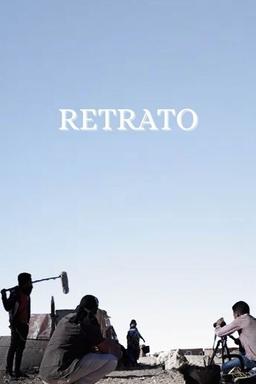
28-year-old Azman, a student in the film school Abidin Kaid Saleh, explains how he discovered film in the Sahrawi refugee camps, the difficulties he had explaining his choice of study to his family, and how his society views this career.

Médicos del Mundo Sahara presents the "Hunna Raquizat Alhayat" campaign that tells the stories of 17 Saharawi refugee women with different specialties and responsibilities within the field of health. This campaign arises from the need to value their work and raise awareness around all the challenges they face in their day to day, with the aim of contributing to the construction of a fairer society for all people. Saharawi women have been and continue to be the ones who sustain the population or, in other words, they are the pillar of life.

Women are the protagonists of this documentary. Girls and women of varied ages tell us the difficulties of living their whole lives in refuge and their desires for the future.
Mektub portrays a day in the life in the Sahrawi refugee camps, along with the declarations of some of its protagonists. But behind this seemingly calm life hides a common fight, which is to continue fighting and protesting to accomplish the single common goal that all Sahrawis have as a nation: to take back the occupied land, rebuild their country, and reunite with their families.
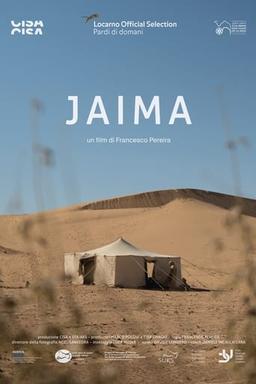
In the dunes of the Sahara, a Jaima, the traditional Saharawi tent. Through the tea ritual, a woman takes us into the past and present of her people, persecuted and driven from their land. There are three teas she offers us: the first, bitter as life; the second, sweet as love; the third, mild as death. Each tea tells us a story.
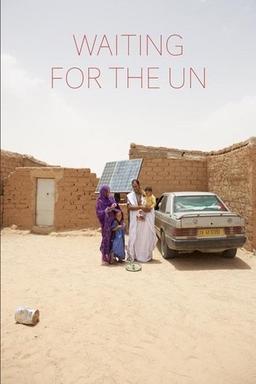
Waiting for the UN is a poetic documentary about life in the desert, literally and figuratively. We follow the everyday life of a Saharawi family from occupied Western Sahara, who have lived ”temporary” in a refugee camp in Algeria for over 40 years. Waiting for God and the UN, as the father puts it.

From a chronological perspective, “Saharauis, entre la ocupación y el exilio” (2010) explains the origins and key points of the Western Sahara conflict, especially since Spain handed over the territory to Morocco and Mauritania. Based on the interviews with the main people affected by the conflict, among others, this documentary shows the Sahrawi fight for survival in a society and a culture that have been able to prevail in occupied territory as well as in the refugee camps of Tindouf (Algeria).
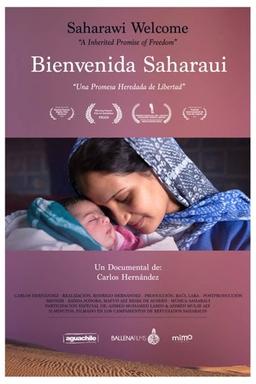
"We used to travel trough Sahara in quest for clouds. We did not depend on no airplanes, nor cars, just on our camels” Sahrawi grandpas recall today. Since 1975 Sahrawi people live in refugee camps, surviving the desert, fighting for its independence. This documentary is witness of the birth of two Sahrawi girls, of the love that their families celebrate at their birth and at the same time is witness of their heritage of fight to recover their freedom.

Smara is the city of dust, kingdom of sirocco, a surviving ruin of a suffocating region… Thousands of Sahrawis who fled Western Sahara after the war against Morocco (36 years ago) live in this refugee camp, located in the Sahara’s inhospitable north, in the middle of the Algerian hamada. They live here, under poor human conditions, thanks to international help. A small film cooperative fights, with barely any means, to elevate the voices of young Saharawis. It is one of the many Nollywoods (Hollywood of emptiness) found in Africa.
From the Sahrawi refugee camps of Tindouf (Algeria) to Tifariti (freed territories of the Sahrawi Arab Democratic Republic), we embark hand in hand on an adventure with a group of artists from all around the World. Each one has their own story, experience, worldview and artistry. An extraordinary and heartwarming journey through a dreamlike world that gives us hope in humanity.
Taleb, who came to a refugee camp at the age of five in 1975 and returned there after his studies abroad, tells of his life as a displaced person, his gratitude for the reception and support in Algeria, and his hope that the Sahrawis may one day return to their homeland. For Taleb, this hope drives him to actively prepare for better times: as a graduate in agricultural sciences, he conceived a successful small-scale closed-loop economy in a desert under the most difficult conditions, producing enough food for self-sufficiency.
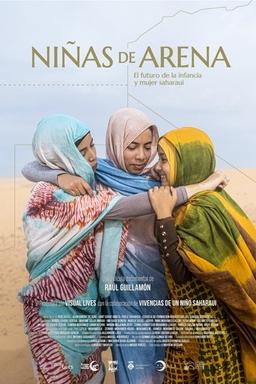
Benda, a young Sahrawi woman in the diaspora wonders about the future of her people's children and women. We accompany her on an emotional journey to the refugee camps to see the more human face of the conflict. The film leaves the political as a mere context to focus on the dreams and drama of a people determined in their struggle to return home.