Movies and TvShows featuring "queer-history" theme.
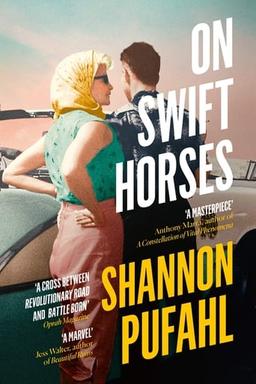
In the 1950s, a seemingly sensible newlywed and her wayward brother-in-law undertake parallel journeys of risk, romance, and self-discovery.

In 1920s England, a gay novelist and his psychiatric nurse form an unlikely friendship over a series of doctor-prescribed "dates." Through their conversations, he tells her the story of his relationship with an old friend which spiraled out of control when they turned to a risky procedure to cure themselves of their forbidden feelings for one another.

Arthur wakes to a shocking discovery—a horn growing from his forehead. Confronted by his parents, Arthur will have to make difficult choices that flip his life upside-down.

Escape to Life: The Erika and Klaus Mann Story(2000)
 29%Tomatometer
This documentary contains dramatized episodes about the lives of Erika and Klaus Mann, the brilliant children of German writer Thomas Mann.
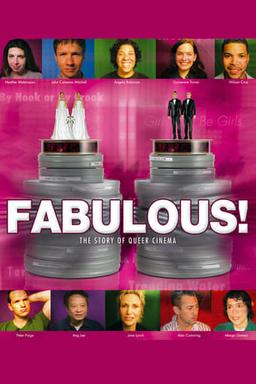
Fabulous! The Story of Queer Cinema is a documentary that delves into the rich history and cultural significance of queer cinema, exploring its evolution from the early days of underground filmmaking to its mainstream recognition. Featuring interviews with influential filmmakers and actors, as well as archival footage, the film celebrates the achievements of the LGBTQ+ community in the world of cinema.

Sexual minorities were oppressed, imprisoned and murdered by the Nazis. Paragraph 175 criminalized homosexual men during the Nazi era – but the Nazis also discriminated against lesbians and trans people. They should be excluded from the national community. More than 50,000 queer people have been proven to have been persecuted. The documentary highlights three poignant fates in the context of Nazi terror.
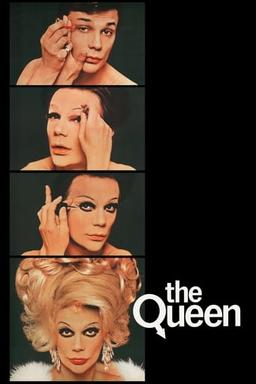
The Queen is a documentary film that delves into the vibrant and captivating world of drag queens and beauty pageants. It offers a captivating and revealing look at the lives and experiences of drag queens as they prepare for and compete in the Miss All-American Goddess beauty pageant. Through interviews and behind-the-scenes footage, the film also explores themes of gender identity, self-expression, and the power of performance.
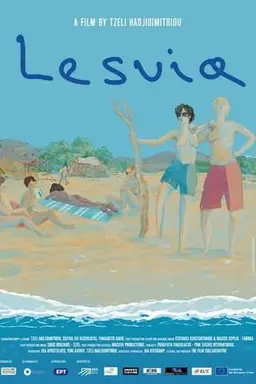
Since the 1970s, lesbians from around the world have been drawn to the island of Lesvos, the birthplace of the ancient Greek poet Sappho. When they find paradise in a local village and carve out their own queer lesbian community, tensions simmer with the local residents. With both groups claiming ownership of lesbian identity, filmmaker Tzeli Hadjidimitriou—a native and lesbian herself—is caught in the middle and chronicles 40+ years of love, community, conflict, and what it means to feel accepted.

After the Soviet invasion of Czechoslovakia in 1968, Libuše Jarcovjáková, a young female photographer, strives to break free from the constraints of Czechoslovak normalization and embarks on a wild journey towards freedom, capturing her experiences on thousands of subjective photographs.

For the last quarter century, Houston native Arden Eversmeyer journeyed across the country to record hundreds of oral "herstories" with a mostly invisible population that is rapidly disappearing. Old Lesbians honors Arden's legacy by animating the resilient, joyful voices she preserved in the Old Lesbian Oral Herstory Project, from first crush to first love, from the closet to coming out, and finally from loss to connection.

In San Francisco, a city known for its queer community and bustling gay nightlife, there hasn't been a lesbian bar for almost a decade. Driven by nostalgia for a time when queer women had spaces, self-identified dyke Malia Spanyol sets out to build one for the next generation of women and femmes.

During the women's demonstration on March 8, 1972, Mariasilvia SPOLATO was there with a placard: Liberazione omosessuale. A month later, Simone de Beauvoir came to Rome to give an interview, and this placard illustrated her article. Mariasilvia could no longer teach, ended up homeless and spent her life on the trains.

The oldest known "out" African-American lesbian remembers ten colorful decades in this hour-long documentary, which won the Audience Award for Best Documentary at the San Francisco International Gay and Lesbian Film Festival in 1999. Born July 23, 1899, in Springfield, IL, Ruth Ellis spent most of her life in Detroit. A pioneering independent black businesswoman, she operated her own print shop until the age of 65. In the home she shared with Cecilene "Babe" Franklin, her partner of more than 30 years, she played host to innumerable gatherings of the city's African-American gays and lesbians in an age when segregation excluded them from white homosexual society. A participant in the civil rights movement and a witness of the riots that tore Detroit apart in the 1960s, Ellis later became an icon for, and active participant in, the city's multicultural lesbian and feminist community.

"There are things in this world that are yet to be named" centers around Solanum plastisexum - an Australian tomato whose sexual expression is unpredictable and unstable, challenging even the fluid norms of the plant kingdom. Footage of the team of botanists who recently used their Solanum research to explode notions of sexual normativity in any plant or animal is combined with a voiceover of letters sent between science writer Rachel Carson and her lover Dorothy Freeman. "There are things in this world that are yet to be named" is a meditation on erasure, indefinability, and the intersection of queer and environmental histories.

Past and present collide when an Iranian American trans man time-travels through an LGBTQ+ archive on a dizzying and erotic quest to unravel his own sexual desires.

Cultural anthropologist and proud lesbian Esther Newton was years ahead of her time when she studied Midwestern drag shows in the 1960s, back when academia turned its back on her.

Through a creative blend of mixed-media and charismatic narration balancing humor, sass and historical gravity, discover the queer history of the carabiner in this latest WaterBear Original, directed by Gianna Mazzeo and made in partnership with Nikon. Follow the carabiner’s story, from its humble 1911 climbing roots (thanks, Otto "Rambo" Herzog), to empowering butch mechanics and postal workers in the 60s, becoming a potent signal of identity and attraction in the 80’s (think Tinder, but with hardware) and as a TikTok fashion sensation today.

History of the stigmatization and marginalization to which the queer community was subjected in Spain during the Franco dictatorship.
No More results found.