Movies and TvShows featuring "puerperal-fever" theme.
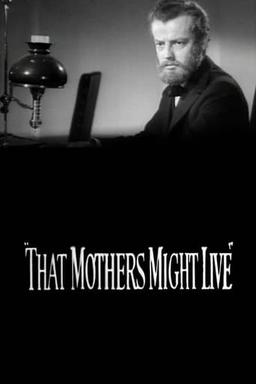
That Mothers Might Live is a 1938 American short drama film directed by Fred Zinnemann. The short is a brief account of Hungarian physician Ignaz Semmelweis and his discovery of the need for cleanliness in 19th-century maternity wards, thereby significantly decreasing maternal mortality, and of his struggle to gain acceptance of his idea. Although Semmelweis ultimately failed in his lifetime, later scientific luminaries advanced his work in spirit like microbiologist Louis Pasteur, who provided a scientific theoretical explanation of Semmelweis' observations by helping develop the germ theory of disease and the British surgeon, Dr. Joseph Lister who revolutionized medicine putting Pasteur's research to practical use. In 1939, at the 11th Academy Awards, the film won an Oscar for Best Short Subject (One-Reel).

In the middle of the 19th century, almost one in three women who gave birth died of puerperal fever. The Hungarian doctor Ignaz Philipp Semmelweis also observed these terrible occurrences in his clinic in Vienna. He came to the conclusion that it was primarily the unhygienic conditions in the clinic itself that led to this disease, as his colleagues were constantly shuttling back and forth between the anatomy department and the delivery room. He tries to convince the doctors of the absolute necessity of thorough disinfection by washing their hands with chlorinated lime. He meets with fierce resistance from his colleagues until he himself sets up an exemplary clinic in Budapest.
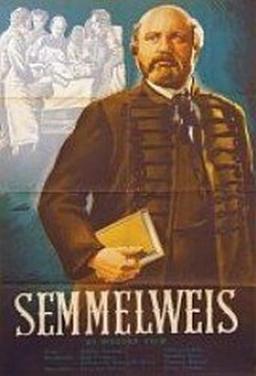
Ignác Semmelweis is 18 and is in Vienna, training to become a judge-advocate, to comply with the wishes of his family. He is, however, attracted by the medical science, and joins the team of Professor Rokitanszky.
No More results found.