Movies and TvShows featuring "preparedness" theme.
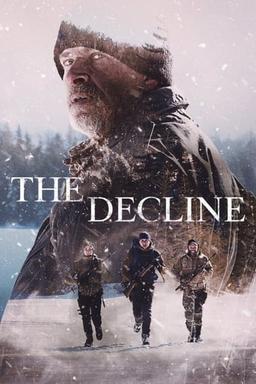

In the isolated wilderness of Quebec, a group of survivalists gather at a remote winter camp. They face various challenges and tests of their survival skills, as well as fierce competition against each other. The ultimate prize is a complete food supply that will secure their survival. As tensions rise and desperation sets in, the participants must navigate the treacherous terrain and outwit their opponents to claim victory.

Portentously portrays the evacuation of Portland, Oregon, when threatened by a nuclear attack on its state-of-the-art civil defense system.
Made at the height of 'cold war' paranoia, this drama-documentary shows the work of the UK Warning and Monitoring Organisation, who's duties included the issuing of public warnings of any nuclear missile strike and the subsequent fallout.

The Kingdom of Heaven is a series of short stories called parables. As Jesus teaches the people each parable, some begin to understand what the “Kingdom of Heaven” is like. Some have “ears that will not hear” and are not willing to become followers of the Savior. At the Second Coming they will not be counted as His own.

While waiting in a hotel lobby for instructions from his government, Ludwig Schumann, an agent of the Black Legion, is enchanted by Marion Washburn, the daughter of a Texas senator. As he is about to speak to the girl, Schumann is stunned to see a young American enter who could be his double. The American is James Walbert, whom Schumann's contact mistakes for the agent. The contact passes to Walbert a photograph of a woman spy, Wanda Bartell, whom the agent is to meet aboard a steamer. Walbert realizes the mistake and determines to protect his country.
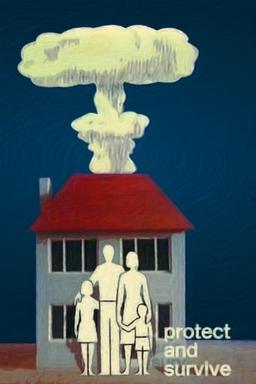
Protect and Survive was a public information series on civil defence produced by the British government during the late 1970s and early 1980s. It was intended to inform British citizens on how to protect themselves during a nuclear attack, and consisted of a mixture of pamphlets, radio broadcasts, and public information films. The series had originally been intended for distribution only in the event of dire national emergency, but provoked such intense public interest that the pamphlets were authorised for general release.

Dramatizes the plight of a young adventure seeker whose canoe is capsized by a wall of water during a flood. Shows community flood preparations, pointing out that a flood's predictability usually allows ample warning time to save lives. Designed to stimulate discussion on civil preparedness for floods

During World War I, the beautiful and patriotic Leslie Selden is courted by two ardent admirers: Jack Wynn, a young man not yet taken by the draft, and Dr. Wolff, a Danish scientist who, in reality, is a German agent. When Jack learns that Wolff is masterminding a plot to bomb several munitions factories and destroy the water system in New York City, he goes to the spy's home and confronts him.
Intercuts scenes from Jack London's To build a fire with modern urban and rural winter scenes to point out the dangers of winter storms and low temperatures. Designed to stimulate discussion on civil preparedness for winter storms.
Commissioned by the U.S. Government Defense Civil Preparedness Agency, the film describes the elements of a modern tornado warning system as was developed at the Texas Tornado Warning Conferences in 1953 and included radar detection of tornadoes, a spotter network, and improved communications between the U.S. Weather Bureau, spotters, and public officials to better disseminate warnings to the public. In the 1960s TV changed the way tornado safety and preparedness information was disseminated and this film is likely a product of that development. This film opens with vignettes of people in a small town somewhere in America’s suburban midwest. It then goes on to display the moments before and after the onset of a tornado and informs the audience of appropriate safety response measures.
The Defense Civil Preparedness Agency began an informational campaign in 1972 called Your Chance to Live. As part of the campaign, a series of films was released along with a companion book. Each installment covers a different disaster scenario, including tornadoes, blizzards, earthquakes, forest fires, blackouts and a nuclear disaster. The California Department of Education helped produce the films and hosted a workshop of educational professionals to discuss the best ways to present the desired emergency preparedness information to school age audiences. The process was filmed and assembled, along with clips from each production, and distributed as an Instructor's Guide in 1975.
The film highlights the dangers of extreme heat and the importance of staying hydrated and cool. It portrays a conversation between two friends, one of whom insists on playing basketball despite the oppressive heat. The narrative emphasizes that heat-related illnesses can be avoided by recognizing the body's signals and taking necessary precautions, such as drinking water and staying indoors. The film concludes with a report of record-breaking temperatures, underscoring the seriousness of heat exposure.
Portrays the challenges of creating a film about nuclear disaster amid public apathy. It captures behind-the-scenes moments as the crew discusses the gravity of nuclear threats, the importance of preparation, and the emotional impact of a nuclear attack. The narrative emphasizes the need for individuals to take responsibility for their safety and community in the event of an attack, blending factual information with a call to action.
Released by the Defense Civil Preparedness Agency in 1972, Your Chance to Live is a series of films which cover threatening events, from forest fires, to floods, tornadoes and nuclear disasters. Hurricane tells the story of two parents who revisit the beach town where their children were killed in a violent storm the previous summer.
This short,produced by the United States Civil Defense Department, while shot in the style of Edward R. Murrow's CBS "See it Now" series and with Murrow as the commentator, was produced for theaters and was not a television program...and WAS NOT part of the Murrow television series. This "Iron Curtain/Atomic Age" preparedness film is a plea for needed civilian volunteers to act as aircraft spotters all around the United States. An air attack on New York City is simulated by B-29 bombers flying from London, England, and they fly practically undetected to their target area due to a shortage of civilian-volunteers at spotting points around the country. Murrow's dooms-day narration didn't calm the nerves of the theatre-audiences that saw this, either.
No More results found.