Movies and TvShows featuring "polar" theme.


In 1989, the German polar explorer Arved Fuchs and the South Tyrolean mountaineer Reinhold Messner set out together to reach the South Pole on skis without sled dogs or motor technology and then cross the entire Antarctic. There are problems right from the start because the onward transport to the starting point by plane cannot be carried out on time. Finally, the adventurers set off from Patriot Hills Base Camp on the Filchner-Ronne Ice Shelf to the Pole. The completely different character traits of the two men quickly emerge. Messner is impetuous and pushes for speed. The calm Fuchs divides his strength and consistently follows his pace during all planned breaks. On New Year's Eve 1989, the two men are warmly welcomed by the crew of the US Amundsen-Scott South Pole Station. But the much larger and more dangerous part of their adventurous continental crossing still lies ahead of them. The 3-part documentary shows one of the last great adventures of modern times in impressive pictures.
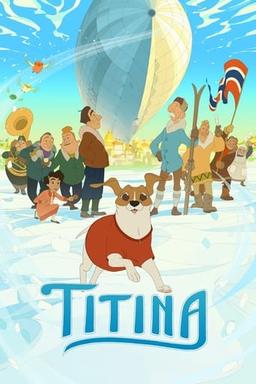
Italian airship engineer Umberto Nobile enjoys a quiet life with his beloved dog Titina. One day, Norwegian explorer superstar Roald Amundsen contacts him and orders an airship to conquer The North Pole.
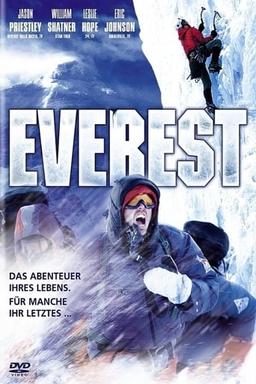
Based on the true story of the first Canadians to ever make it to the top of the world's tallest and most historic peak. A proud moment for Canadians and an adventure that is filled with bitterness, broken relationships and the bodies of four dead men.


Garden Party is a dark animated comedy that revolves around a dead body found in a swimming pool. The story follows a group of frogs who stumble upon the gruesome discovery and inadvertently unravel a mystery. With elements of suspense and a realistic portrayal of nature and wildlife, Garden Party takes viewers on a twisted journey filled with unexpected twists and turns.

The Flight of the Eagle is a biographical adventure drama film based on the true story of scientist Salomon August Andrée's ill-fated 1897 attempt to reach the North Pole by hydrogen balloon.

Exploring the polar day and night in northern Scandinavia while shedding light on the various challenges animals and plants face for survival.

A young woman spends an adventurous winter with a trapper on Spitsbergen.
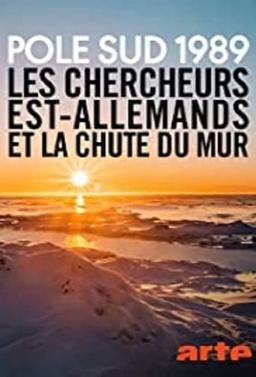
Reunification in the Ice: The Story of the Last GDR Antarctic Explorers(2020)
In 1989, thirteen GDR scientists and technicians set off from East Berlin to the Georg Forster research station in the Antarctic. During their expedition the Berlin Wall fell on November 9th. Cut off from the images that go around the world, the men can only experience the historical events passively. When they returned in the spring of 1991, their homeland was a foreign country. The documentary reconstructs the thoughts and feelings of the East German researchers on the basis of eyewitness accounts, diary excerpts, letters, film material, grandiose landscape shots from the location of the action and unique photos to make the consequences of the events tens of thousands of kilometers away on the small GDR expedition in the middle of the eternal ice tangible.

A young crook called Joë Caligula and his crew make war on a Parisian gang.

This film noir tends to stay within very conventional plot lines, as the narration by the main protagonist, private detective Eugene Tarpon Jean-François Balmer, recites a dreary litany of how he wanted to chuck his profession until an attractive woman shows up asking him to investigate the murder of her roommate, a porno star. Soon Tarpon is up to his neck in trouble: the police, gangsters, and the victim's lover are all out to get him.

Polar Adventure is a new russian cartoon

The Arctic, 1922. After being buried under the ice for a hundred years, Howard Hillary is thawed and revived. When he meets Felice Strange, he recognizes in her the same woman he once loved deeply. But is it really her?



In 1999 two Danish adventurers, John Andersen and Frederik Jacobi, set out to travel north around Greenland, on foot, on skies, and in kayak. As they move forward they visit areas where former explorers fought life-and-death-battles with the Polar, and tell their stories in details.

A police office in Algiers sometime after independence. Mr Rachid, father, around fifty years old, former colonial official transferred to the cinema annex library. Mr. Rachid, disappointed and exasperated by his sad life, faced with an inspector who questions him, tries to explain: why did he kill his former department head after a long night of wandering?

After years of preparation, a team of highly motivated Quebeckers set out on one of the longest wilderness expeditions ever documented. Stage one involves skiing in relentless polar conditions from Ellesmere Island to the Northwest Passage where the challenge was reaching the mainland. Cue canoes for a 2000km journey across Nunavut and NWT until they reach the first dirt road available where bikes are waiting to be pedalled 4000km to Point Pelee in Ontario.

Untamed beauty and the lure of the North have drawn artist Cory Trépanier to paint the Canadian Arctic for over a decade. Preparing for a touring exhibition to premiere in Washington DC, he now heads back on an expedition to complete his vision. But much has changed since he first went North. Shrinking sea ice is opening the door to a world hungry for its resources. Remoteness can no longer protect this land or its people from the coming impacts. For 9 weeks and 25,000 kilometres, Cory immerses himself into the Arctic. Explores with Inuit elders. Paddles the most northerly canoe route in North America. Walks in the footsteps of early explorers John Rae and John Franklin. Voyages through the Northwest Passage. And deeply connects with a changing land, to bring it to the eyes of those who may never see it. With the future of the North at a crossroads, can a simple stick and some bristle paint the Arctic into the hearts and minds of others, so far away?

Californian ecologist David Ainley has been traveling to the Ross Sea to study this unique ecosystem for more than thirty years. He has written scientific papers describing it as a ‘living laboratory’. Largely untouched by humans, it is one of the last places where the delicate balance of nature prevails. But an international fishing fleet has recently found its way to the Ross Sea. It is targeting Antarctic toothfish, sold as Chilean sea bass in up-market restaurants around the world. The catch is so lucrative it is known as white gold. Ainley knows that unless fishing is stopped the natural balance of the Ross Sea will be lost forever. Together they form ‘the Last Ocean’ and begin a campaign taking on the commercial fishers and governments in a race to protect Earth’s last untouched ocean from our insatiable appetite for fish.