Movies and TvShows featuring "palestine" theme.
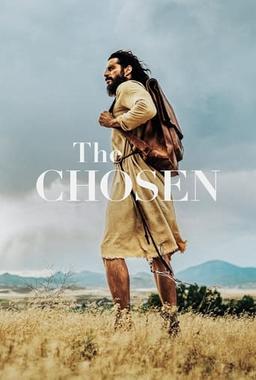
The Chosen is a drama TV show based on biblical stories, particularly focusing on the life of Jesus Christ and his disciples. It explores themes of forgiveness, redemption, and the power of faith. Set in 1st-century Palestine during the Roman Empire, the show delves into the historical and cultural context of the time. Through its compelling narrative, The Chosen offers a fresh perspective on well-known biblical events and characters.
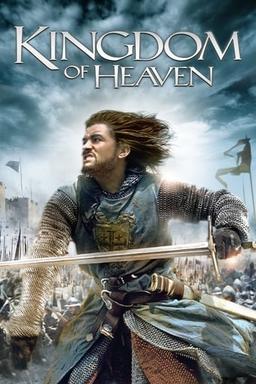
Balian of Ibelin, a blacksmith haunted by his wife's suicide, journeys to Jerusalem during the Crusades. There, he becomes the defender of the city and its people, navigating political intrigue and facing off against brutal factions that aim to provoke a war between Christians and Muslims.
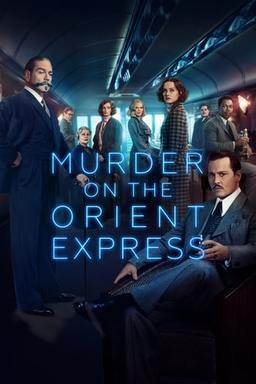
Murder on the Orient Express(2017)
 60%Tomatometer
When a murder occurs on a train on which he's travelling, celebrated detective Hercule Poirot is recruited to solve the case. In 1934, famous detective Hercule Poirot solves a theft at the Church of the Holy Sepulchre in Jerusalem. The obsessive compulsive Belgian-who seeks balance in life, and considers his case-solving ability to see a lie amid truth a curse-wants to rest in Istanbul but must return to London for another case. His friend Bouc, director of the Orient Express, offers him a room on the train. Poirot refuses businessman Samuel Ratchett's offer to hire him as his bodyguard during the three-day journey, as Ratchett has received threatening letters from an unknown party. That night Poirot hears strange noises coming from Ratchett's compartment, and sees someone in a red kimono running down the hallway. An avalanche derails the train and strands the passengers. The next morning Poirot learns Ratchett was murdered during the night after being stabbed a dozen times. Poirot and Bouc investigate passengers as repairs begin. Evidence indicates that Ratchett was murdered by one person, with Caroline Hubbard claiming that a man was in her compartment during the night and that since her cabin was next to Ratchett, the murderer would have entered Ratchett's cabin through hers. Poirot discovers a partially destroyed note connecting Ratchett to the kidnapping of Daisy Armstrong, a child who was abducted from her bedroom and held for ransom. After the ransom was paid, Daisy was found murdered. Ratchett is identified as John Cassetti, Daisy's kidnapper and murderer. Her death caused her mother Sonia to die after giving premature birth to a stillborn baby; her father, Colonel Armstrong, then committed suicide. The family's nursemaid Susanne was arrested and hanged herself while in police custody, but exonerated after her death. The train compartments were locked at night, so the only suspects were the people in that particular compartment. Also that compartment had a guard who said he saw nobody enter Ratchett's cabin during the time of his death. Ratchett's coffee is found to be drugged, but his Valet Henry does not know how the coffee was drugged before or after he delivered it to Ratchett. Then Poirot finds Hector trying to burn the ledgers of Ratchett's accounts. Poirot stops him and accuses him of stealing from Ratchett and hence killing him for the fear of being found out. But Dr Artbutnot confirms that Hector was drinking with him all night. More evidence is found, including a bloodstained handkerchief and the button of a conductor's uniform found in Hubbard's compartment. The uniform is later found, as is the kimono, discovered in Poirot's own suitcase. Hubbard is stabbed in the back; she survives but cannot identify the culprit. Poirot discovers several of the passengers have direct connections to the Armstrong family. While interviewing governess Mary Debenham, John Arbuthnot shoots Poirot in the shoulder claiming that he is the murderer, but is stopped by Bouc. Poirot realizes that Arbuthnot never meant to kill him. Poirot then interviews the count and countess Andrenyi. He finds that the countess's passport has been tampered and deduces that her first name is not Elena, but Helena. He then deduces that Helena is in fact the sister of Sonia Armstrong, who is living in permanent fear from the events of the past. Poirot meets the suspects outside the train, offering two theories of how Ratchett died. The first is simple: A murderer disguised as a conductor boarded the train, murdered Ratchett, and fled. The second is more complex: Every suspect is connected to the Armstrongs, Susanne, or her trial in some way-including those who had pretended otherwise-and had motive to kill Ratchett/Cassetti. Hubbard is revealed to be Linda Arden, former stage actress and Sonia Armstrong's mother. Poirot reveals that the 13 other passengers on the train, and the train conductor, were all connected to the Armstrong family in some way. Hubbard admits that she gathered everyone and planned the murder. All of the suspects took turns stabbing Ratchett. Arbuthnot stabbed Hubbard without endangering her life to convince Poirot of a lone killer. Poirot challenges the passengers to shoot him with his gun since he is the only one who can expose their plot; Bouc can lie but Poirot-obsessed with truth and balance-cannot. Hubbard grabs the gun and tries to kill herself. The gun is unloaded; Poirot wanted to see how the suspects would react. As the train is put back on track Poirot concludes that justice is impossible in the case, as Ratchett deserved death; for the first time he will have to live with a lie and imbalance. Poirot presents the lone killer theory to the Yugoslavian police, allowing the suspects to leave. As he disembarks the train a messenger asks him to investigate a death on the Nile. Poirot takes the case.
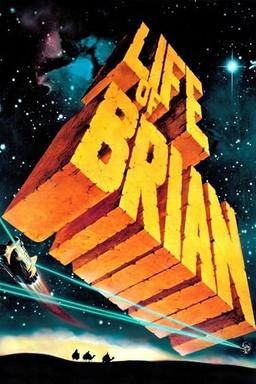
A man named Brian is born on the same day as Jesus Christ and spends his life being mistaken for a messiah. He joins a rebel group fighting against Roman occupation in Judea. After a series of misadventures, Brian unwittingly inspires a religious movement and becomes a reluctant messiah. Eventually, he is caught by the Romans and scheduled to be crucified, but due to a case of mistaken identity, he is not released. He remains hanging on the cross, abandoned by those who could have helped him.
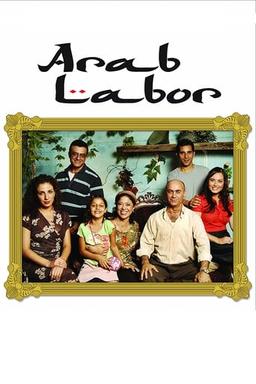
Amjad is an Arab-Israeli journalist whose problems with cultural identity drive himself and all around him crazy especially his wife, Bushra.

This feature length investigation by Al Jazeera’s Investigative Unit exposes Israeli war crimes in the Gaza Strip through the medium of photos and videos posted online by Israeli soldiers themselves during the year long conflict.

14 years after his first visit, Louis Theroux meets some of the growing community of religious-nationalist Israelis who have settled in the occupied West Bank.
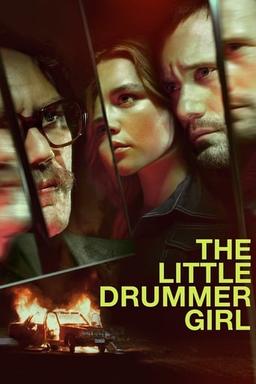
In this TV mini-series, an actress becomes entangled in a world of espionage and terrorism when she is recruited by a spy handler to infiltrate a terrorist organization. Set against the backdrop of the Arab-Israeli conflict, the show explores the complexities of the Israeli-Palestinian conflict and the role of secret surveillance in counter-terrorism efforts.

The Adventures of Sir Prancelot was a children's animated TV Series. It followed the adventures of an eccentric Knight and his family as they head for the Crusades in the Holy Land
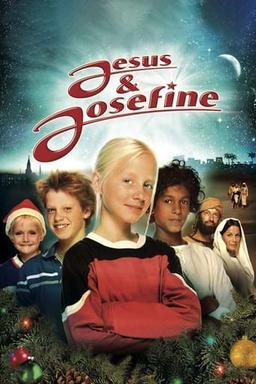
In Jesus & Josefine, two children discover an advent calendar that grants them the ability to travel back in time. They embark on an adventure filled with altering history, visions, and temptations. Along the way, they learn important lessons about friendship, faith, and the true meaning of Christmas.
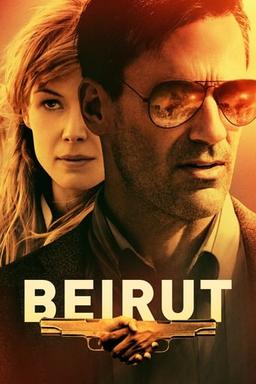
Beirut is a tense action-packed movie set in war-torn Beirut, Lebanon in the 1970s and 1980s. It follows the story of a former U.S. diplomat who is called back to Beirut to negotiate for the life of a friend he left behind. As he navigates the dangerous and complex world of international espionage and political conflicts, he must confront his own demons and make difficult decisions that could change the course of history.

In the aftermath of her father's murder, a British-Israeli businesswoman becomes entrenched in the politics and conflicts of the Middle East. She navigates her way through dangerous alliances and espionage while trying to uncover the truth behind her family's secrets.

Four-part series on the 'nakba', meaning the 'catastrophe', about the history of the Palestinian exodus that led to the first Arab-Israeli war in 1948, and the establishment of the state of Israel. Arab, Israeli and Western intellectuals, historians and eye-witnesses provide the central narrative which is accompanied by archive material and documents, many only recently released for the first time. It begins in 1799 with Napoleon's attempted advance into Palestine to check British expansion and his appeal to the Jews of the world to reclaim their land in league with France, before moving through the 19th and 20th centuries, the British Mandate in Palestine, up to the 21st century and the ongoing 'nakba' on the ground.

This documentary delves into the media's manipulation of public perception surrounding the Israeli-Palestinian conflict, highlighting propaganda campaigns, distortions, and bias. It examines the occupation of Palestine, the Israel-Lebanon War, and key events from 1948 to 2014. Through the lens of media coverage, it reveals the influence of PR coordinators and the complicity of the United States in shaping the narrative.
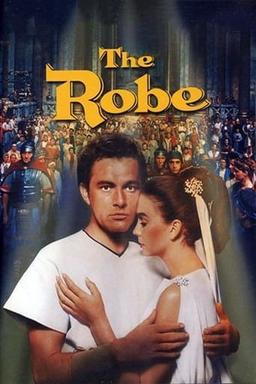
The Robe is an epic drama set in ancient Rome. It follows the story of Marcellus Gallio, a Roman military tribune, who is assigned to oversee the crucifixion of Jesus. After winning Jesus' robe in a dice game, Marcellus finds himself plagued by guilt and embarks on a journey of redemption and faith.

This is a 1 min rumination on the illustration of the frontline of a war based on the National Gallery of Canada's exhibition (The Great War: A Hundred Years On), depicting the cruelty of war as well as the absence of experiences that the media can portray us with the real war experiences.
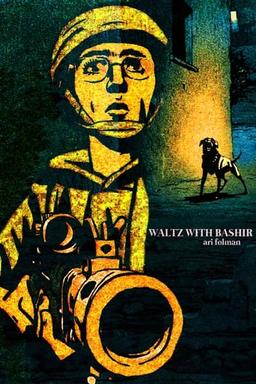
Waltz with Bashir is an animated documentary film that follows the journey of a man as he tries to piece together his lost memories of his involvement in the Lebanon war. Through a series of interviews and flashbacks, the film explores the director's personal experiences and the trauma of war, highlighting the impact it has on individuals and society.

It revolves around the two grandsons of the Islamic prophet Muhammad, Hassan and Hussein, and their relationship with their companions, sedition that occurred between them and their companions after the killing of Usman ibn Affan.

Pillar of Fire focuses on the History of Zionism, beginning in 1896, in the wake of Theodor Herzl's revival of the concept of Jewish nationalism and continues to follow the Jewish People in the 20th century, the early stages of Zionism, followed by the waves of Aliyah prior to the founding of Israel, the Revival of the Hebrew language, the Ottoman Empire's rule in over the Land of Israel, the British Mandate, Anti-Semitism in Europe, the rise of Nazism and The Holocaust, the history of the Yishuv, the Jewish struggle for independence, and ends in 1948, with the Israeli Declaration of Independence.