Movies and TvShows featuring "occupied-territories" theme.
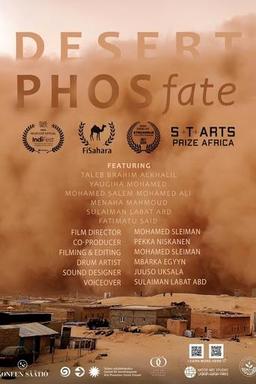
DESERT PHOSfate is an artist film that tells about the impact of phosphate on the Sahrawi community and its fate, including the surprising emergence of family gardens and their knowledge of how to farm in the desert without the processed phosphorus that had caused the dislocation of the Sahrawi nomads from their homeland of Western Sahara.
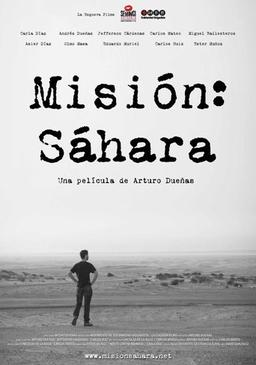
On 1976 twenty thousand Spaniards left the last European colony in Africa, and thousands of Saharawi’s are abandoned to their fate. Forty years have gone by and Western Sahara has become a forgotten conflict. This film offers an original point of view: the version of the conflict from the opposition to the regime within the occupying power, Morocco, and the odyssey of a group of young people to achieve these testimonies, while trying to reach the capital of the Occupied Territories, El-Aaiun.

From a chronological perspective, “Saharauis, entre la ocupación y el exilio” (2010) explains the origins and key points of the Western Sahara conflict, especially since Spain handed over the territory to Morocco and Mauritania. Based on the interviews with the main people affected by the conflict, among others, this documentary shows the Sahrawi fight for survival in a society and a culture that have been able to prevail in occupied territory as well as in the refugee camps of Tindouf (Algeria).

The story of the film is inspired by the reality of the suffering of the Sahrawi people under Moroccan occupation.

A documentary about the situation of the saharawi people in the refugee camps of Tindouf through the life and participation in the 2019 Sahara Marathon of the saharawi athlete and political refugee Amaidan Salah. An amateur documentary made using only a cellphone.

This documentary shows the torments and comrade disappearance ocurrences in the Moroccan Occupied Western Sahara through the eyes of Yahia, a young Sahrawi person living in Barcelona. It tells of the the precarious living conditions in the Algerian refugee camps and the situation of immigrant Sahrawis in Spain, the old colonizing power in Western Sahara. Similar to the majority of young Sahrawis, Yahia has come to the conclusion that after so many years of supporting the pacifist route, war is the only option for the Sahrawi community to regain their territory.

This is the reality of women of the same nation who live divided by the wall that has separated them for 35 years now. Exiled Sahrawi women who live in the refugee camps in Tindouf (Algeria) have a 88% representation rate in teaching and in healthcare, and 9% in government, evidence that they are the fundamental pillar of society. The ones who remained in the occupied territories of Western Sahara are part of every aspect of the struggle and activism against Moroccan occupation. They protest at the intifadas, they research the plunder of their natural resources, they paint flags, write pamphlets and they belong to the organisations that defend Sahrawi human rights in Western Sahara. These women: former prisoners, formerly missing, activists, today are tortured, harassed, followed, surveilled and violated simply for defending their legitimate right to freely express themselves in favour of Western Sahara’s independence.

Enforced disappearances, torture, secret prisons, mass graves, no trial and no justice. The history of Western Sahara, the area south of Morocco with an as yet undefined political status, is marked by a dark sequence of human rights violations. And it’s still forgotten. The documentary tells the story of Sahrawi people through the voices of special women who’ve been victims of violence, both in Western Sahara and in the refugee camps in Algeria. Through their testimonies, diaries and old photographs, the movie reconstructs the history of Western Sahara from a female and intimate point of view.

Rofles or graffiti: the non-violent fight of the Sahrawi people(2016)
Many Saharawis are claiming to return to war in order to break the impasse of wainting during 40 years. However, the Sahrawi nonviolent activists argue that they are pushing Morocco to an untenable position. For them, the nonviolent action and the respect of human rights make Sahrawis part of the new world that is coming and also they are building a sane society. The documentary explores this debate with activists of the refugee camps and of the occupied territories.

The film, shot in the Saharawi refugee population camps, tells the story of a group of students from a film school who, for their final year project, decide to shoot on the Wall of Shame erected and mined by Morocco, in the middle of the current war that is being waged after the breaking of the ceasefire by the Alawite regime in November 2020.
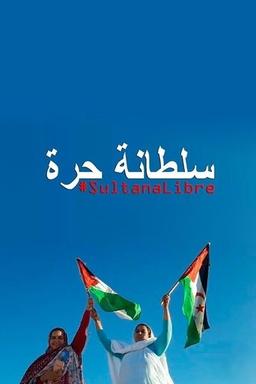
The documentary #FreeSultana, tells the story of a Sahrawi activist who has been under house arrest for a year with her entire family, without a court order. During this time, the Moroccan paramilitaries have destroyed her house, stoned, assaulted, raped, poisoned the Jaya sisters.
This report was carried out clandestinely in the occupied territories of Western Sahara. In it testimonies are heard concerning the plunder of natural resources, the repression and the camp of Gdeim Izik. The report ends with the expulsion of the journalists by the Moroccan police.
The story of young Ahmed Tarfi might as well be the story of the Sahrawi people’s difficulties, and particularly those of the youth. The Sahrawi people are divided by a wall of more than 2000 km in length. This Moroccan wall is not only a defensive position for the occupying power, but it is also an obstacle for the cultural and social development of the original population, and also a wall of emotions and disappointments. The story of Ahmed Tarfi, despite being fictional, could very well be the story of thousands of young Sahrawis.

abel and Antonio are human rights activists. They were awoke by the loud noise of sirens and the roar of thousands of screamings. They picked what they could, between what was the camcorder. They switched it on and started recording what their eyes could not believe: the savage assault and destruction of the largest protest camp ever raised in the Sahara: Gdeim Izik. Tried to contact international press but their satellite phone had been disabled. Antonio and Isabel had to find a way to show these images to the world. It wouldn't be easy. They would have to spend nine days hidden in a safe house during one of the most obscure incidents in the Moroccan history.

This documentary illustrates the story of Gdeim Izik through the voices of the Sahrawis themselves, giving personal accounts of how the camp was dismantled, what happened in the following weeks, and what it meant for them, as a people and as a nation. Our aim is to shed light on what really happened in Gdeim Izik during the autumn of 2010. The documentary is homage to the courage and strength of the Sahrawi people in their historic and unprecedented action, and it seeks recognition of their role in setting off the revolutions in the Arab world. Its aim is also to report and denounce the hypocritical role of foreign governments, the Moroccan government’s concealment of facts, and the way the Spanish government has been complicit in the situation through its policy of non-intervention in a conflict in which it is unavoidably involved.

"A woman about to give birth. A nurse who skips an unfair order. A worker who claims his rights. A child who begins to discover the society in which he lives. A teacher haunted by his identity. A young woman in a hostile world. Six stories that show us the day-to-day lives of the Saharawis who livein the occupied territories of Western Sahara."
This documentary explains the problems of Western Sahara while occupied by Morocco, the territories liberated by the Polisario Front, and the refugee camps in Tindouf (Algeria). 40 years of human rights violations, cultural, human and economic despoliation (fishing, phosphates,...), but also of resistance, fighting back, dignity, solidarity; and most of all, the women’s defining role in the establishment of a forcefully exiled population in one of the most inhospitable places on the planet.
This documentary follows the journey of two journalists to the occupied territories of Western Sahara where they are monitored constantly by the occupying Moroccan forces.

An international team of 4 friends undertake the Plymouth to Dakar Challenge a ‘banger rally’ which annually shadows the route of the Paris Dakar Rally. They acquire two old Mercedes vans and take a 3 week route through Spain, Morocco, Western Sahara, Mauritania, Senegal and Gambia. They arrange to transport prosthetic limbs for a Bristol based charity to a clinic in Gambia providing help to amputees. Interviewing a number of experts on the 30 year conflict between Morocco and the Saharawi natives, they arrange to meet with Saharawi ‘dissidents’ in the Western Sahara to expose their oppression by Moroccan authorities who they claim are occupying their land and profiting from their national resources.

The narrative of resistance of Sahrawi poet Jadijetu Alaÿat flows against the background of raveling images from an unknown land.