Movies and TvShows featuring "nazca" theme.

A Giant Adventure tells the story of Sebastian, Sophia and little Wawa, who will embark on an unexpected and extraordinary journey that will take them to an unknown world inspired by the Nazca culture.

One of the world’s greatest ancient enigmas, the Nazca lines are a dense network of criss-crossing lines, geometric shapes, and animal figures etched across 200 square miles of Peruvian desert. Who created them and why? Ever since they were discovered in the 1920s, scholars and enthusiasts have raised countless theories about their purpose. Now, archaeologists have discovered hundreds of long-hidden lines and figures as well as evidence of ancient rituals, offering new clues to the origins and motivations behind the giant desert symbols.

Join a team of archaeologists and the Discovery Channel in an investigation into the mysterious lines of the Nazca region in Peru. Created by the Nazcas, these huge sculptures are only visible from the sky and depict people, animal, geometric forms, and strange creatures. See a premier exhibition of pottery and textiles, musical instruments, and mummies from this long-forgotten, pre-Columbian civilization and visit Cahuachi, a buried city of pyramids and ceremonial buildings which may have once been the religious capital of the Nazca people

Classified as a UNESCO World Heritage Site, the Nazca Lines have never ceased, since their fortuitous discovery in Peru during the first half of the 20th century, to fascinate the general public as well as the scientific world.
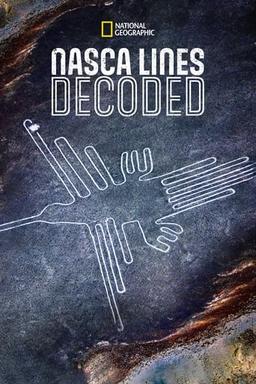
They are striking works of art by any standard: but what purpose did they serve? Some of the theories put forward suggest that the lines were ancient running tracks, runways for aliens, and even a giant astronomical calculator. But after decades of misunderstanding, modern archaeology may finally have an answer to the puzzle of the Nasca lines.
No More results found.