Movies and TvShows featuring "natural-science" theme.
Through the Wormhole is a captivating documentary TV show that delves into the fascinating world of astrophysics, exploring topics like wormholes, the nature of the universe, and the laws of gravity. Hosted by renowned physicist Morgan Freeman, the series takes viewers on an enlightening journey through the cosmos, using cutting-edge technology and scientific research to provide answers to some of the biggest questions about our existence.

The Nature of Things is a Canadian television series of documentary programs. It debuted on CBC Television on November 6, 1960. Many of the programs document nature and the effect that humans have on it. The program was one of the first to explore environmental issues, such as clear-cut logging. The series is named after an epic poem by Roman philosopher Lucretius: "Dē Rērum Nātūrā" — On the Nature of Things.

A teaching film for social studies, which was developed as a new educational subject in 1947. At an elementary school in Hokkaido, children have started a fly extermination campaign to improve school hygiene. In order to eliminate the causes of flies, the entire town is working to improve the sanitary environment. The short was filmed with the cooperation of Mizukaido Elementary School in Joso City and is the first film in the "Social Studies Teaching Film System" by Iwanami Film Productions.
Attenborough's Life in Colour is a captivating documentary series that takes viewers on a fascinating journey to explore the role of color in the animal kingdom. From the vibrant hues of tropical birds to the mesmerizing patterns of underwater creatures, Sir David Attenborough reveals the secrets behind the amazing array of colors found in nature. Through stunning visuals and insightful storytelling, this TV show showcases the important role of color in animal behavior, survival, and communication.
Dive into the field of natural science, Discover the Solar System or the various functions of the human body. The information is presented in the "Eyewitness Museum", a computer-generated science museum. Various exhibits are shown, and stock video footage is usually seen through large windows or other depressions in the wall.


Wälder unserer Erde is a documentary film that takes the audience on a captivating journey to explore the diverse and enchanting forests found throughout the world. From the towering redwoods of California to the mystical rainforests of the Amazon, this film showcases the beauty and importance of these natural habitats and the fascinating creatures that call them home.


From extreme speed to bone crushing bites, big cats are some of the most impressive predators on the planet. Each of them is an incredible animal, with its own unique and special set of skills. In Big Cat Games, we will challenge ferocious felines against each other in a series of trials that will determine once and for all who is king of the cats. In the wild they are confident, dominant, and fearless—but they have never had to face anything like this before. Lions, cheetahs and tigers will be pushed to the limits of their natural athletic abilities

Unearth the secrets of the mighty Tyrannosaurus Rex and other awe-inspiring dinosaurs in this captivating documentary hosted by Chris Packham.

From the jungles of Singapore to the coral reefs of Indonesia, from the ornaments of Australian budgies to the deceptive traps of carnivorous plants, this film explores a world where light becomes language. Seduction, camouflage, overexploitation, reproduction: fluorescence directs behavior, often without us noticing. A light phenomenon that science is just beginning to decipher.
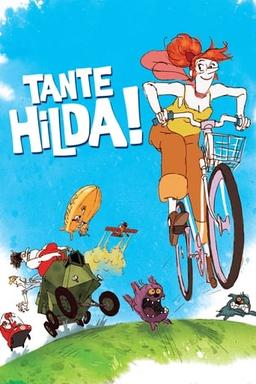
Plant loving Hilda, has created a museum where she preserves endangered and rare plants from all over the world. Meanwhile Attilem, a new genetically modified cereal, is launched on the market. Growing with little water and fertilizer while generating high crop field Attilem looks like an ideal solution to eradicate starvation and provide an alternative to diminishing oil reserves. But nothing is at it seems...

Hannah Fry takes a spectacular look at the science of size by imagining a parallel world in which everything is made bigger or smaller.


In the Faroe Islands, a team of biologists is studying these marine plants with the aim of improving salmon farming and avoiding the need for drugs or chemicals. In Munich, others are working on a tiny algae whose high oil content could eventually replace petroleum. The carbon fiber obtained from it is a real match for fossil fuels. In France, a tower resembling a Morris column is being used to purify the air. The tower absorbs one tonne of CO₂ per year - the equivalent of several dozen trees - and converts it into oxygen.

After falling in love with a boulder, two glyptodons brawl over their shared romantic interest.

Humans today are masters at consuming hallucinogenic substances, whether as stimulants or narcotics. But our feathered, furry, and scaly companions also sometimes get intoxicated. Animals have been consuming plants, fruits, and mushrooms that sometimes get them high for much longer than we humans have.