Movies and TvShows featuring "mgm-featurette" theme.

In late 18th century Scotland, Annie Laurie and William Douglas love each other, but their clans are on opposite sides of the country's civil war. Their love is made immortal through the title song of this film.
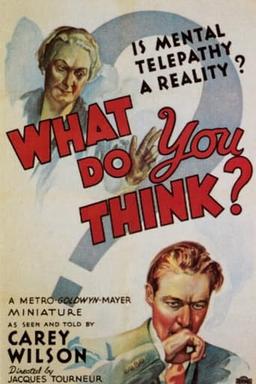
The narrator's voice tells of John Dough, who wakes up after a late-night party and prepares to go to work. However, a few interruptions, including thinking for a moment that he sees a woman's body in his bed, having his car key not work, and thinking he hears his mother calling, delay his departure from home by almost a minute. When tragedy strikes close by, John revisits the morning's events. A phone call from his brother in Chicago confirms how odd this morning is. Did John experience telepathy or was it all coincidence? If radio waves can carry a communication, why not a mother's love?

A prisoner with a good singing voice escapes, only to grow jealous when an opera singer who looks like him is delivered back to the prison and receives attention, especially from Ann, the warden's daughter who leads the prison glee club.

This Pete Smith Specialty showcases the Cristiani Family, a circus act. They mount and dismount moving horses and perform acrobatic feats while riding them.
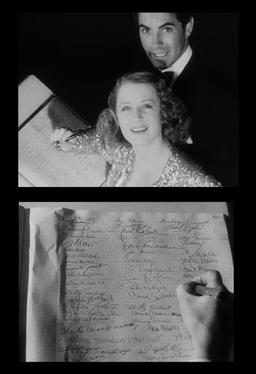
This short shows how Hollywood gets ready for the world premiere of an "important" movie. The film celebrated here is Marie Antoinette (1938), which had its premiere at the Carthay Circle Theatre. We see the street leading to the theatre transformed to suggest a garden that might be seen in a French palace. This includes the placement of trees and other foliage, as well as large statues along the route. Grandstands are set up so fans can see their favorite stars as they arrive for the premiere. Finally, the proverbial "galaxy of stars" arrives in their limousines. Fanny Brice and Pete Smith make remarks at the microphone set up on the carpet outside the theatre.

Historical short showing how Eli Whitney (best known for the invention of the cotton gin) played a significant role in the introduction of mass production techniques to the USA in the late 18th century.
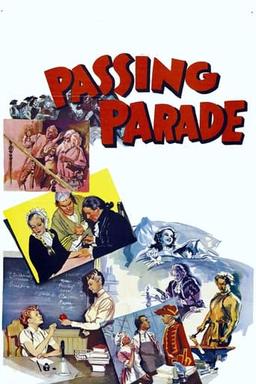
In this John Nesbitt's Passing Parade series short, narrator John Nesbitt tells the story of Scandinavian immigrant Annie Swenson, who worked as cook and housekeeper in his family's home while he was growing up.

Bandleader/singer/songwriter Ted Barry arrives to heaven. The receptionist tells him that before he can take his place in the Hall of Music, a committee must review his work and decide whether he is worthy of admittance.

A world famous conductor suffers while leading a mediocre orchestra.
The Candid Camera Story (Very Candid) of the Metro-Goldwyn-Mayer Pictures 1937 Convention(1937)
This short film chronicles various events associated with MGM's 1937 convention for the studio's national sales and distribution staff.

A group of African-American waiters on a railway believe they have made a deal to secure a railroad dining car that they set up on Wilshire Blvd. in Los Angeles as a diner. To bring in customers, they sing, their voices providing most of the musical accompaniment as well. At the diner, in front of a crowd of swells, the police deliver the bad news.

A satirical visualization of strange and forgotten, but (at that time) nevertheless still existing laws in the U.S.A.
In this Pete Smith Specialty short, a raccoon spends the night looking for food for his family. After his encounters with a skunk, a frog, and a menacing bobcat, he experiences the dangers in a vacant cabin.

The cat of the house has its nap interrupted by two playing puppies, which sets off a chain of events.
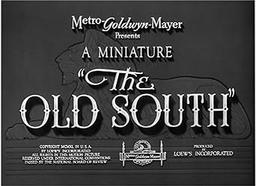
This short film chronicles the importance of cotton to the economy and culture of America's Old South.
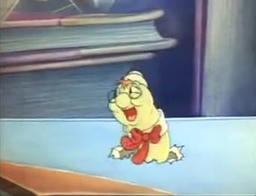
Three witches need a worm to complete their potion; they dispatch a raven to catch one, and he goes after a bookworm. He chases the worm into the horror section, where the monsters attack but soon, Paul Revere rides Black Beauty to the rescue, along with the Police Gazette, and other assorted war heroes; eventually, the Boy Scouts build a match-stick bridge, leading the worm to safety.

A woman reporter is hired by an author-songwriter to help him avoid additional breach-of-promise suits.

The Captain, after much wrestling with his alarm clock, finally wakes up to discover there's no buttons (for suspenders) on his ding-busted pants. He chews out Mama; she tells him if he doesn't like the housekeeping, he can do it himself, and storms out. What follows is pretty much the usual bunch of man-keeping-house jokes: a voracious vacuum, an overflowing sink, crashing dishes, and a dozen crises at once. And still no buttons on the pants.
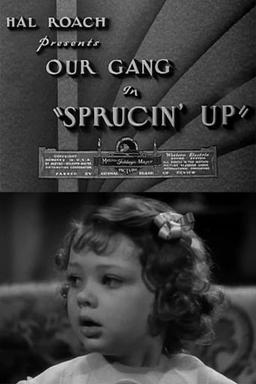
A new truant officer moves into the neighborhood, and everybody wants to get friendly with his daughter.

On Christmas morning two pups and the household's children are up early. The pups are frightened by a large stuffed dog, a train set, a crying doll, a toy tank, and other toys.