Movies and TvShows featuring "ludwig-van-beethoven" theme.

If Daniel Barenboim is not the world's greatest living classical musician he is certainly the most versatile. In a career spanning more than 50 years, his name is attached to many of the celebrated recordings of opera, symphony, small ensemble and piano solo. With the later half of his career marked by distinction at the podium, one may forget that he is still an accomplished concert pianist. Here we are treated to both talents as Barenboim conducts the Staatskapelle Berlin and plays all five of Beethoven's piano concerti. From the accompanying booklet we find that Barenboim first recorded these works in 1967 at the age of 24 under Otto Klemperer. Now he is revisiting them 40 years later on the occasion of his 65th birthday.

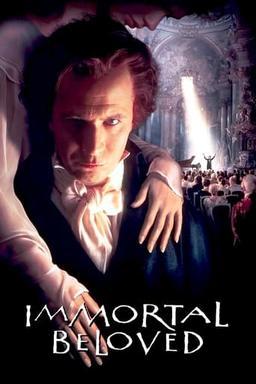

Immortal Beloved is a compelling drama that delves into the life of Ludwig van Beethoven, exploring his genius, personal struggles, and complex relationships.

Beethoven was a musician who overcame an incurable deafness disease and left behind many masterpieces. However, in reality, he was a vulgar and dirty old man. This film depicts the story of Schindler, the secretary who "fabricated" the sublime image of Beethoven that is conveyed to the public. Driven by a sense of mission to absolutely protect Beethoven, who saved him from rock bottom, Schindler changes Beethoven's image after his death from a "vulgar and dirty old man" to a "sacred and genius musician."

Recording of the Berlin Philharmonic Orchestra conducted by Herbert von Karajan playing Beethoven's 7th Symphony.

Beethoven spent three years composing the Eroica, an intimate journal of his emotional crises and his dramatic emergence as an original master. Michael Tilson Thomas and the musicians of the San Francisco Symphony help you make sense of this voyage into life as it really is.
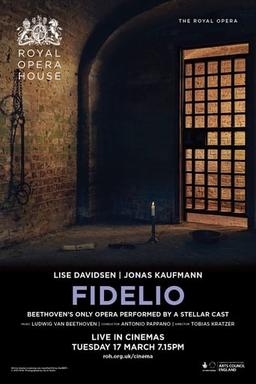
Beethoven’s only opera is a masterpiece, an uplifting story of risk and triumph. In this new production, conducted by Antonio Pappano, Jonas Kaufmann plays the political prisoner Florestan, and Lise Davidsen his wife Leonore (disguised as ‘Fidelio’) who daringly sets out to rescue him. Set in strong counterpoint are the ingredients of domestic intrigue, determined love and the cruelty of an oppressive regime. The music is transcendent throughout and includes the famous Act I Quartet, the Prisoners’ Chorus and Florestan’s impassioned Act II cry in the darkness and vision of hope. Tobias Kratzer’s new staging brings together the dark reality of the French Revolutionary ‘Terror’ and our own time to illuminate Fidelio’s inspiring message of shared humanity.

An award-winning wordless documentary that explores the architecture of the then new St. Peter's Seminary which is now seen as one of the most important post-war buildings in the United Kingdom. The film was made in celebration after architect Jack Coia was awarded the RIBA Gold Medal in 1969. Winner of the Medalla de Bronce at the Fifth Union of International Architects Festival in Madrid (1975).
Recording of the Berlin Philharmonic Orchestra conducted by Herbert von Karajan playing Beethoven's 8th Symphony.

Experience what Zell Music Director Riccardo Muti calls “the work of a divine architect” in this special encore presentation of Beethoven’s Ninth Symphony. Recorded live September 18, 2014, at Orchestra Hall during one of the opening programs of the Chicago Symphony Orchestra’s 2014/15 season, this performance features Muti leading the Orchestra and Chorus and distinguished soloists in one of history’s most powerful and inspiring artistic works. A masterpiece whose staggering influence can be seen across classical music, it concludes with the famous Ode to Joy, which calls for understanding, peace and universal goodwill. The Chicago Symphony Orchestra is grateful to an anonymous donor for generously underwriting the recording of this concert in 2014.

A new way to approach classical music, more fun, more original, more entertaining. Mozart Band arrives, and with it his four young members: Mozart, Betoven, Chopin and Verdi. Since the filming of a music video for a superstar to the mysterious theft of a valuable harp, Mozart and his friends live a host of incredible adventures. There comes a symphony of humor, adventure and above all, lots of music.

Claudio Abbado conducted Beethoven’s symphonies on many occasions in the Philharmonie in Berlin. But only at the end of his tenure as chief conductor of the Berliner Philharmoniker did he decide to give a performance of the complete symphonies. It was left to audiences of his native Italy to witness these concerts in February 2001 in the Accademia Nazionale di Santa Cecilia in Rome.

Beethoven - Symphonies 1-9 (Berliner Philharmoniker, Sir Simon Rattle)(2016)
Recordings of all the Beethoven symphonies with their chief conductor are always a milestone in the artistic work of the Berliner Philharmoniker. So it was with Herbert von Karajan and Claudio Abbado, and expectations are correspondingly high for this cycle conducted by Sir Simon Rattle. Where does the special status of these symphonies come from? Simon Rattle has an explanation: “One of the things Beethoven does is to give you a mirror into yourself – where you are now as a musician.” In fact, this music contains such a wealth of extreme emotions and brilliant compositional ideas that reveal the qualities of the orchestra and its conductor as if under a magnifying glass.

Ludwig van Beethoven headed for Symphony No. 9 literally his entire life. As early as the 1790s, he had an eye on Ode to Joy, perhaps the most well-known poem by Friedrich Schiller, written on the threshold of the French Revolution (1786). In his mature and, in particular, later years, the deaf composer with an acute ‘hearing vision’ increasingly distanced himself from conventional forms and genres and wrote parts beyond the possibilities of instruments of his day. He nurtured the idea of a symphony with a choir for at least several years. The history of the Ninth’s interpretations includes 200 years of staggering revelations and lingering stagnation. Performed by the musicAeterna orchestra, choir, and guest soloists under the baton of Teodor Currentzis, Beethoven’s opus magnum acquires the original poignancy and energy of a recent discovery.

When his mother rents their vacant room to a peculiar composer, Christoph can't believe his bad luck. But as the abrasive boarder, Ludwig Van Beethoven, begins creating his masterful 9th Symphony, Christoph is won over by the majesty of his music. This lighthearted family drama was awarded the 1993 Emmy for Outstanding Children's Program.

"What would the world be like without Beethoven?" That’s the provocative question posed by this music documentary from Deutsche Welle. To answer it, the film explores how Ludwig van Beethoven's innovations continue to have an impact far beyond the boundaries of classical music, 250 years after his birth.

After constantly moving, two students finally find the opportunity to start a family by adopting a stray dog.
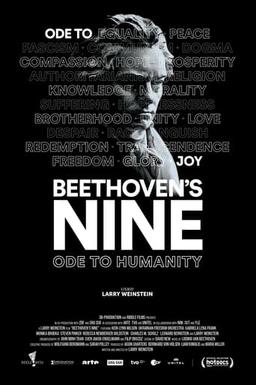
Can a work of art remain relevant 200 years after its creation? Ludwig van Beethoven’s last completed symphony proves it’s possible.

Filmed in Austria for the hundredth anniversary of Beethoven's death, this 1927 silent film tells the story of the German genius' eventful emotional life. Presented in a restored version and with rearranged music, a biopic to be savored with ears wide open.