Movies and TvShows featuring "lost-tv-series" theme.

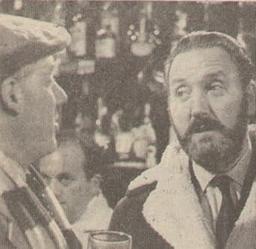
United! was a British television series which was produced by the BBC between 1965 and 1967, and was broadcast twice-weekly on BBC1. The series followed the fortunes of a fictional second division football team, Brentwich United. The football scenes were filmed on the grounds of Stoke City with Jimmy Hill acting as a technical advisor, and the efforts to achieve authenticity saw the show being criticised by the then management of Wolverhampton Wanderers, who complained that the series was based on their team. United! was not a success, and was cancelled after two series. The programme was generally considered to be too soft to appeal to male viewers, and too male-oriented for the female soap opera audience. As was common television practice of the time, the series' episodes were wiped, and none of its 147 episodes are believed to have survived. Created by Anthony Cornish, other writers on the programme included Gerry Davis, Brian Hayles, Malcolm Hulke and John Lucarotti. The directors included Innes Lloyd and Derek Martinus. Aside from Cornish, all of these individuals also worked on Doctor Who concurrent with their involvement in United!.

The Revenue Men is a British television series, produced and transmitted by the BBC between 1967 and 1968. The series dealt with cases handled by the Investigation Branch of Customs and Excise such as the illegal import of goods, illegal immigration and business transactions amongst travellers. The Revenue Men was produced by Gerard Glaister. The series lasted for three series and 39 episodes in total. In spite of this fact, all of the episodes were later wiped, with no episodes extant in the BBC archives as of 2009.

The Space Kidettes is an American Saturday morning cartoon produced by Hanna-Barbera Productions, originally airing on NBC during the 1966-67 season. Set in outer space, the series followed the adventures of a group of child astronauts, who have acquired a treasure map and have to keep it away from their nemesis, a man named Skyhook and his sidekick Static. Originally airing for one season on NBC as a half-hour program and sponsored by General Mills, The Space Kidettes episodes were later edited down to ten-minute episodes and paired with other General Mills-sponsored shows such as Tennessee Tuxedo and Go Go Gophers to form a full half-hour for syndication; edited reruns of cartoons from another NBC Hanna-Barbera program, Samson & Goliath to form the syndication package The Space Kidettes and Young Samson. The original master elements for both programs were lost, leaving the syndicated edits as the only extant broadcast quality versions.

Francie and Josie was a double act performed by Scottish comedians Jack Milroy as Francie and Rikki Fulton (of Scotch and Wry) as Josie. from 1958 - 1990's. In 1962 Scottish Television gave them their own show, The Adventures of Francie and Josie which also starred Clement Ashby, Glen Michael, and Ethel Scott (first wife of Rikki Fulton). The show became a hit, being broadcast by Anglia, Border Television, Grampian Television, Tyne Tees and UTV, and resulted in the pair appearing at the opening of many British Relay TV rental shops. The opening of their first shop, in Airdrie, caused such mayhem that crowds smashed the shop windows.
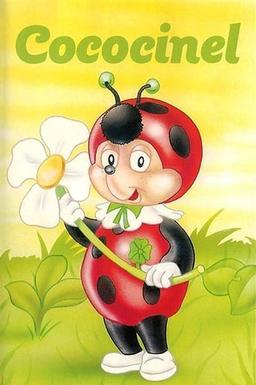
Cococinel is a French children's television programme. Directed by Raymond Burlet and written by Yolande Baillet and Jean Montagné, 52 episodes of the animated cartoon were made in 1992. The main character is an heroine ladybird who gains superpowers thanks to a mysterious magic 4-leaf clover.

Hidden Faces is an American soap opera that aired on NBC from December 30, 1968 to June 27, 1969. The series was created by Irving Vendig, who also created the long-running Procter & Gamble serial The Edge of Night. The serial focused on a law firm that was dealing with a high profile murder case throughout its 127-episode run. Some of the show's stars were Conard Fowkes, Louise Shaffer, Tony Lo Bianco, Stephen Joyce, and a very young Linda Blair.

The World of Beachcomber was a surreal television comedy show produced by the BBC inspired by the Beachcomber column in the Daily Express newspaper. The show, like the column, consisted of a series of unrelated pieces of humour. Links between the items were provided by Spike Milligan, dressed in a smoking jacket and cap, as in the cartoon logo above the newspaper column. The other actors were a Who's Who of British comedy of the time, encompassing almost every supporting player seen or heard in comedy, not excluding people of diminutive stature. Likewise the writing staff included Milligan, Barry Took, John Junkin, Neil Shand and others. The producer was John Howard Davies. In all, 19 episodes were produced beginning in 1968. They were mostly shown on the new BBC 2 channel, which broadcast in colour using the 625-line PAL standard. BBC 2 was a minority-appeal culture channel, and thus allowed greater stretching of the boundaries of the art. Unfortunately, like many shows of the time, the original videotapes were wiped. Only one complete episode, on black and white 16mm film now survives of this show in the BBC archives, from the penultimate edition. In addition to this, excerpts for the 29.09.69 edition also survive. Audio soundtracks also survive for episodes Three and Four of the 1969 series. In addition to this, a soundtrack LP featuring excerpts from shows from series one was also released by PYE records, and rereleased on Audio Cassette in 1997.

We Have Ways of Making You Laugh is a comedic television series produced by Humphrey Barclay and directed by Bill Turner for London Weekend Television.

King of the River is a British television series transmitted by the BBC between 1966 and 1967. The series centred around the King family and their efforts to maintain their sail-driven barge transport business.

Author and critic John Mason Brown, who once commented that "some television programs are so much chewing gum for the eyes," offered this intellectual alternative in 1948-1949. It consisted of an informal living-room discussion on the arts with two or three guests, of the caliber of author James Michener, producer Billy Rose, publishrer Bennet Cerf, and critic Bosley Crowther. The subjects ranged from modern art to new novels, films, the theater and fashions.

The Hazel Scott Show was an early American television program broadcast on the now defunct DuMont Television Network. The series ran during the summer of 1950, and is most notable for being the first U.S. network television series to be hosted by a African American woman.
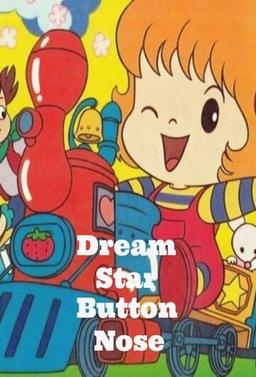
Button Nose is a little girl who is home alone for a few days when a robot comes to gather strawberries. She is so excited by his spaceship she accidentally starts it, and goes on a voyage to his planet. When she lands she is brought before the king, who is a distant relative of hers and invites her to spend some time on the planet.

199 Park Lane is a British television soap opera based around the residents of an exclusive block of apartments in London, and dealt with the intrigues of the Chelsea/Kensington set.

The Hunchback of Notre Dame is a 1966 television series and an adaptation of the novel The Hunchback of Notre Dame by Victor Hugo.
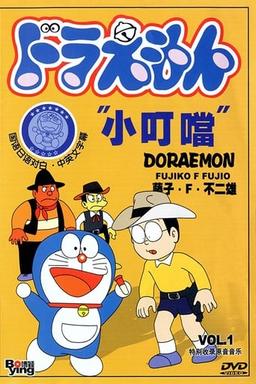
Nobita Nobi is so hapless that his 22nd century decendants are still impoverished as a result of his 20th century bumbling. In a bid to raise their social status, their servant, a robotic cat named Doraemon, decides to travel back in time and guide Nobita on the proper path to fortune. Unfortunately Doraemon, a dysfunctional robot that the familly acquired by accident (but chose to keep nonetheless), isn't much better off than Nobita. The robot leads Nobita on many adventures, and while Nobita's life certainly is more exciting with the robot cat from the future, it is questionable if it is in fact better in the way that Doraemon planned.

Danger Island is a live-action adventure serial produced by Hanna-Barbera and originally broadcast in 1968 as a segment on the Banana Splits Adventure Hour. It was filmed in Mexico and directed by future Superman, Goonies, and Lethal Weapon director Richard Donner and featured Jan-Michael Vincent as Lincoln 'Link' Simmons. The series comprises a 3-hour adventure yarn broken down into 36 short chapters. Each chapter is roughly five minutes long and includes a suspenseful cliffhanger ending that is resolved in the next installment.

The Yorkshire-based Champion family and the dramas surrounding the family textiles firm, Champion Mills.
Boy Meets Girls was a UK popular music TV show which was launched in September 1959 replacing the earlier show Oh Boy!. The show was presented and produced by Jack Good. Marty Wilde was the principal resident male artist and The Vernons Girls were the female residents. Joe Brown made regular appearances. Other artists appearing included Terry Dene, Freddy Cannon, Little Tony & His Brothers, Adam Faith and Cliff Richard. The director was Rita Gillespie for ABC Weekend Television part of the ITV network. It closed in 1960; all 26 episodes were subsequently wiped, and none survive in ITV's archive as of 2009.