Movies and TvShows featuring "la-mancha-spain" theme.

11-year-old Alfonso, heir of Don Quixote, and his three imaginary musical rabbits are joined by Pancho and Victoria to save their beloved town of La Mancha from a huge storm, created by an evil corporation seeking to own the land.
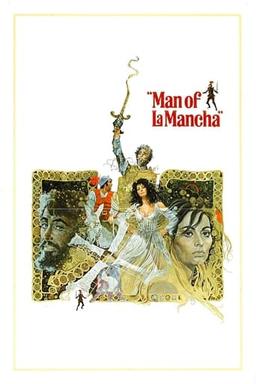

In 16th-century Spain, Miguel de Cervantes, a playwright and tax collector, is imprisoned and defends himself by acting out the story of Don Quixote. Through his delusion, he believes himself to be a knight-errant on a quest to rescue a damsel in distress.

The beloved American musical that brought us “The Impossible Dream” turns its lens on modern love and society, especially as brought to the Playhouse stage by director Mark Lamos in our award-winning 2018 production. In this play within a play, Cervantes has not yet finished his manuscript for Don Quixote—he sits in jail awaiting trial during the Spanish Inquisition. Fourteen actors portraying Cervantes and his fellow prisoners bring to life the great odyssey we all know of a questing knight tilting at windmills and battling for the love of the fair maiden Aldonza.

An epic journey through Don Quixote's troubled mind, from which five paths to the unknown are opened: to reason, to freedom, to love, to friendship, to adventure; although only three destinations await at the end of an imaginary and audacious existence: the narrative of the adventurous life of Cervantes; the survival of a legendary novel in these heathen times, when the one-armed gentleman is nothing but dust and bones; the memory of the living, writers and scholars, where both the tormented captive and the insane hero, are immortals beings and will be forever.

When looking at Pedro Almodóvar’s filmography, it becomes evident that women are everywhere; in fact, his work revolves around them. His divas are the best to create a real portrait of Almodóvar and evoke the emotional power of his films. These women are the ideal observers of a cinematic career that, from La Mancha to Hollywood, has changed the image of Spain in the world.

A poetic journey through the paths and places of old Castile that were traveled and visited by the melancholic knight Don Quixote of La Mancha and his judicious squire Sancho Panza, the immortal characters of Miguel de Cervantes, which offers a candid depiction of rural life in Spain in the early 1930s and illustrates the first sentence of the first article of the Spanish Constitution of 1931, which proclaims that Spain is a democratic republic of workers of all kind.
No More results found.