Movies and TvShows featuring "kasei-culture" theme.

In Meiji-era Japan, a former government assassin known as Rurouni Kenshin wanders the country with a vow to never kill again. However, his violent past catches up with him as he becomes entangled in a battle with a ruthless villain who threatens the peace. With the help of his friends, Kenshin must confront his own demons and use his skills as a swordsman to protect the innocent and uphold justice.

In the era known as Bakumatsu, there was an ishin assassin known as Hitokiri Battousai; eleven years later he returned as a wandering swordsman, Himura Kenshin.

The life of Katsushika Oi, daughter of Hokusai and a trailblazing female artist in Japan.
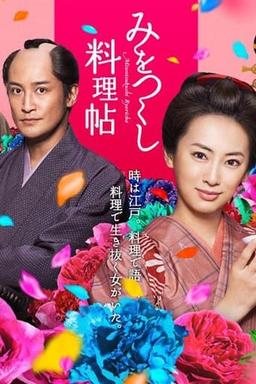
It is the Spring of 1814. The restaurant “Tsuru-ka” is gaining much popularity after its chef, Mio, won the prestigious cooking competition. One day, the owner of “Tsuru-ka”, Taneichi, employed young Fuki to be the attendant for customers’ shoes. Mio could fully empathize with young Fuki, who was an orphan and yet was courageous enough to survive on her own. Around the same time, the famous novelist Seiemon started coming to “Tsuru-ka”. Even though Seiemon criticized Mio’s cooking each time, he always returned to the restaurant daily.
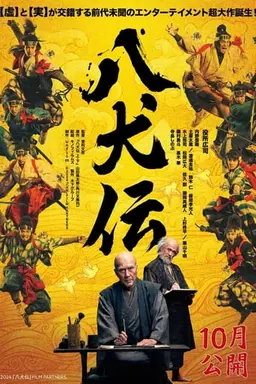
Takizawa Bakin, a popular Edo period author, begins to recount a story he is planning in front of his friend, the artist Katsushika Hokusai. The story is about eight warriors who, each carrying a jewel, gather together as if guided by fate and embark on a harsh journey to fight the curse of the Satomi family. Hokusai is drawn into the story that Bakin is telling, and visits Bakin on various occasions to hear the rest of the story, and a strange relationship between the two begins. The serialization becomes Bakin's life's work, with the idea of "rewarding good and punishing evil in a world where evil is rampant," but after 28 years, as the story finally approaches its climax, Bakin begins to lose his sight. With the completion of the story in doubt, he receives an unexpected proposal from his daughter-in-law. Will the story ever be completed?


Miss Hokusai follows the life of O-Ei, the daughter of the renowned ukiyo-e painter Hokusai, as she navigates art, family, and the challenges of being a female artist in Edo-period Japan.
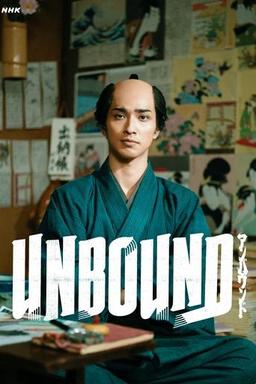
In 18th-century Edo, Tsutaya Juzaburo rises from a poor background to become a leading publisher. Despite political changes threatening his career, he works to shape Edo’s cultural scene through innovative books and collaborations with artists.
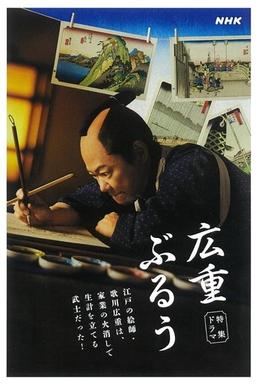
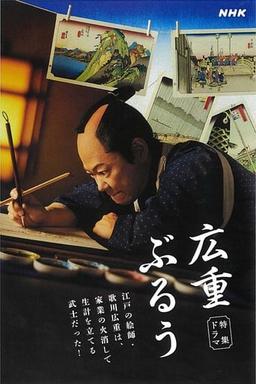
Utagawa Hiroshige, along with Katsushika Hokusai, is widely recognized in the world of Ukiyo-e, Japanese Woodblock Print. However, it is lesser known that Hiroshige was also a firefighter while he painted. This drama depicts the untold story of Hiroshige and his wife, Kayo.

In 1802, 8-year-old Mio lost her parents in a river flood in Osaka and feels all alone after she is also separated from her childhood friend Noe. She is saved by Yoshi, the proprietress of "Tenman Icchōan", one of Osaka's famous restaurants, whom she happened to meet.

Oei, later known as Katsushika Oi, was born the third daughter of Edo’s talented painter Katsushika Hokusai and his second wife Koto. Although Oei became the wife of a town painter for a time, her love of the paintbrush more than her husband spelt disaster and she comes back home to Hokusai from the family she had married into. This is how Oei starts to help her father out in his painting of the “insurmountable high wall”. Meanwhile, Oei can only talk to the painter Ikeda Zenjiro, who is her father’s student, about her pain and worries. Zenjiro has taken Edo by storm as Keisai Eisen, the master of ukiyo-e portraying beautiful women. He visits regularly because he admires Hokusai and secretly likes Oei although their relationship is like childhood friends. Oei respects her father whose paintings fascinated her and continues to work as a painter who supports him behind the scenes. When Hokusai’s masterpiece Thirty-six Views of Mount Fuji was completed, she was also by his side.

When Mio was young, she lost her parents in a great flood and also became separated from her best friend Noe. Afterwards, Mio found her talent in cooking and eventually became a cook. Meanwhile, Noe has become an oiran (high-ranking courtesan).
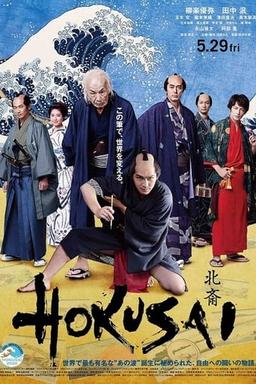
The unknown life of Ukiyo-e artist Katsushika Hokusai in the Edo period, who is said to have painted more than 30,000 works throughout his life, such as "Thirty-Six Views of Mount Fuji"
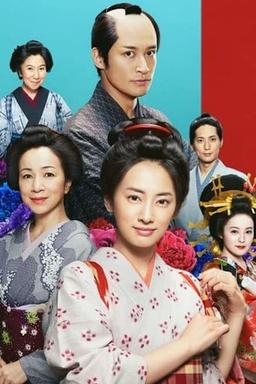
The film is set in Edo period. As an orphan child Mio starts working at a restaurant in Osaka where she learns how to cook. When she turns 18, she moves to Edo (today's Tokyo) where she opens her own restaurant.
No More results found.