Movies and TvShows featuring "jimmy-carter" theme.
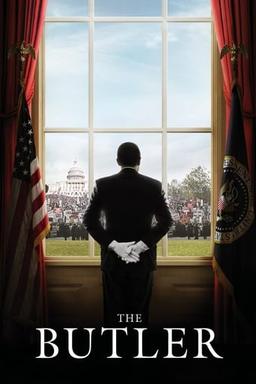

As Cecil Gaines serves eight presidents at the White House, the civil rights movement, Vietnam, and other major events shape his life, family, and American society. This film tells the story of Cecil Gaines, a White House butler who served eight American presidents over three decades. The film traces the dramatic changes that swept American society during this time, from the civil rights movement to Vietnam and beyond, and how those changes affected this man's life and family.

In 1980 Queens, New York City, Jewish-American Paul Graff becomes friends with rebellious African-American classmate Johnny. Paul's journey of self-discovery and pursuit of his artistic aspirations in the face of racial inequality and societal expectations is at the heart of this deeply personal coming-of-age story.

Explore how President Jimmy Carter's affinity for rock music influenced his political career in the 1970s.

The inauguration of Jimmy Carter as the 39th president of the United States was held on Thursday, January 20, 1977, at the East Portico of the United States Capitol in Washington D.C. This was the 48th inauguration and marked the commencement of Jimmy Carter's and Walter Mondale's single term as president and vice president.

This documentary explores the life and career of Jimmy Carter, from his early days as a peanut farmer to his presidency and post-presidential activities.Directed by Jonathan Demme, the film provides an intimate and candid look at Carter's life, including his work on international relations and peace talks in the Middle East.

Jimmy Carter ran for president on a wave of post-Watergate disaffection with Washington politics. But inexperience, inflation, recession, and the Iran hostage crisis, derailed his presidency dramatically. His crowning achievement, the Camp David Accords, created a framework for Middle East peace, inspiring his life since. The film traces his ascent from Plains, Georgia, to the Oval Office and explores the role of religion in his career. This is the first of two parts.

Piano Vladimir Horowitz in a televised recital from the White House on 26 January 1978, on the occasion of the 50th anniversary of his US debut, at the invitation of President & Mrs Carter. On the program, Chopin's Sonata #2 in B-flat minor, Waltzes in A minor and C-sharp minor, and Polonaise in A-flat, followed by encores by Schumann, Rachmaninoff, and Horowitz's own Carmen Variations.

The third and final presidential debate between President Gerald Ford and former Governor Jimmy Carter took place on Friday, October 22, 1976, in the Phi Beta Kappa Memorial Hall at the College of William & Mary in Williamsburg, Virginia. The debate was moderated by Barbara Walters of ABC, who posed the questions for each candidate.

The Life a House Built: The 25th Anniversary of the Jimmy and Rosalynn Carter Work Project(2008)
Biography - President Jimmy Carter and his wife discuss the 25 years they've spent working with Habitat for Humanity and their Jimmy and Rosalynn Carter Partnership Foundation project, in this illuminating documentary. The film showcases Habitat for Humanity's 2008 Blitz Build campaign to rebuild the Gulf Coast and demonstrates Carter's far-reaching impact, the result of a determined man who refuses to ignore people in need. -

The first presidential debate between President Gerald Ford and former Governor Jimmy Carter took place on Thursday, September 23, 1976, in the Walnut Street Theater in Philadelphia, Pennsylvania. The debate was moderated by Edwin Newman of NBC moderated the debate with a panel consisting of Elizabeth Drew, Frank Reynolds and James Gannon posed the questions to each candidate. This was the first presidential debate in 16 years. Eighty-one minutes into the broadcast of the 90 minute debate, the sound was lost and the debate was paused for 27 minutes before the problem was fixed and the debate could resume.

The second presidential debate between President Gerald Ford and former Governor Jimmy Carter took place on Wednesday, October 6, 1976, at the Palace of Fine Arts in San Francisco, California. The debate was moderated by Pauline Frederick of NPR, who posed the questions for each candidate. The debate is infamous for President Ford's gaffe, "There is no Soviet domination of Eastern Europe and there never will be under a Ford administration."

The first presidential debate took place on Sunday, September 21, 1980, at the Baltimore Convention Center in Baltimore, Maryland. The three invitees were Carter, Anderson and Reagan, though Carter refused to attend due to the presence of Anderson. Following a strong performance by Reagan, Anderson's poll numbers began to drop. Consequently, Anderson would not be invited to the second debate.

The second presidential debate took place on Tuesday, October 28, 1980, at the Music Hall in Cleveland, Ohio. Carter and Reagan were the only invitees. Reagan's most notable moments include using the phrase "There you go again" and asking whether or not Americans were better off than they were four years ago. CNN attempted to include Anderson from the Constitution Hall in Washington, D.C. CNN's Daniel Schorr read the same questions to Anderson. They then aired Anderson's live responses along with tape delay of Carter and Reagan's responses, despite technical difficulties.
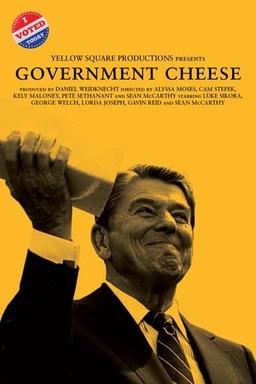
After years of overproduction, the Reagan administration unloads over 500 million pounds of surplus cheese on the American public in the 1980s. The pungent dairy product comes to be known as 'Government Cheese.'


A look at a conspiracy involving the United States president Jimmy Carter.
President Jimmy Carter "sings" Ray Charles' "Georgia on my Mind", while thinking about his home state. Preserved by the Academy Film Archive in 2009.

Following the news of President Jimmy Carter entering hospice care, his friends and family reflect on his impact on them and their town.
No More results found.