Movies and TvShows featuring "italian-renaissance" theme.
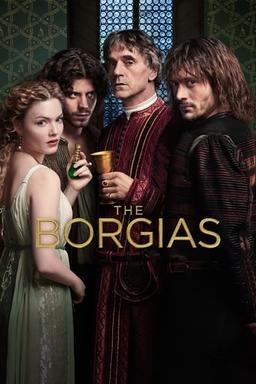
Set in the Italian Renaissance, The Borgias follows the Borgia family as they rise to power in the Catholic Church, engaging in schemes, murder, and forbidden relationships. The series explores themes of corruption, lust, and vendetta in a backdrop of political intrigue and power struggles.
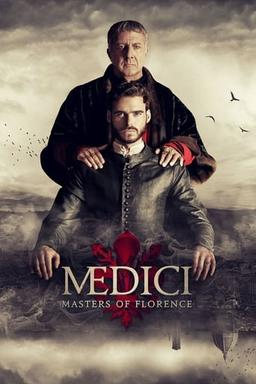
Medici: Masters of Florence is a TV show that portrays the rise to power and political intrigue of the Medici family during the Italian Renaissance. The story explores themes of ambition, betrayal, and the pursuit of wealth and power. Set in 15th-century Florence, the show follows the Medici family's journey as they navigate the complex world of politics, art, and religion, facing challenges and conflicts along the way.
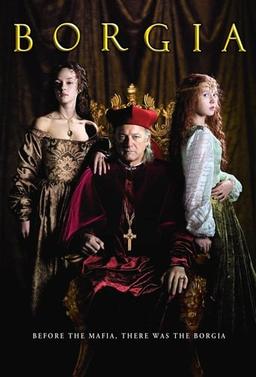
Borgia is a TV show that explores the rise and fall of the powerful Borgia family during the Renaissance. The series delves into their political intrigue, ambition, and sibling rivalry as they navigate the complex world of the Catholic Church and European history. It follows their journey to power, the tragedies they face, and the vendettas they seek to settle.
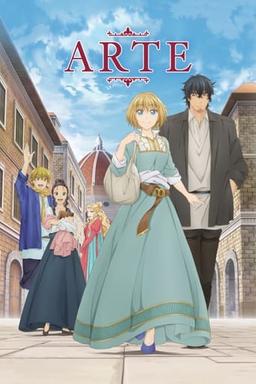
In the 16th century, Arte, a delightful young lady from an aristocratic family, dreams of being an artist and contributing to the renewal of civilization. However, with her father's death, she ends up losing the only person who believed in her passion for art. Now she is expected to marry a nobleman and live as a refined housewife without disgracing her family name. Reluctant to accept her fate, the headstrong Arte steps into the streets in search of a master artisan to take her on as an apprentice. But no one believes that women are capable of fine craftsmanship, so none are willing to accept her. Luckily, a renowned artisan by the name of Leo is persuaded to take her as his disciple since he has none anyway. And thus, Arte's new life begins, far from the comfort of her noble upbringing. As an apprentice, she must earn her keep while tackling various challenges along the difficult path to becoming a full-fledged, master artisan.
A a serial in ten parts on the lives of one of the most intriguing families in history.
Assassin's Creed: Lineage is a TV mini-series set in 15th-century Italy, following the story of an assassin who uncovers a conspiracy and struggles to protect his secret identity and family. This action-packed series features hidden weapons, sword fights, and thrilling investigations, all set against the backdrop of the Italian Renaissance.
The insatiably curious and headstrong inventor Leonardo da Vinci leaves Italy to join the French court, where he can experiment freely, inventing flying contraptions, incredible machines, and study the human body. There, joined in his adventure by the audacious princess Marguerite, Leonardo will uncover the answer to the ultimate question – "What is the meaning of it all?"

The Agony and the Ecstasy is a biographical drama about the relationship between the renowned artist Michelangelo and Pope Julius II. Set in the 16th century, the movie depicts the struggle and triumph of Michelangelo as he is commissioned to paint the ceiling of the Sistine Chapel in the Vatican. The film captures the agony of Michelangelo's creative process and the ecstacy of his artistic achievement.
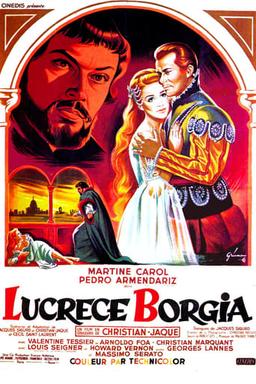
In the early 16th century, Italy is ruled by the powerful Borgia family, led by César Borgia and his sister Lucrèce. In a ruthless power play, César plots to have his sister’s husband murdered. But without her brother’s knowledge, Lucrèce has taken a strong lover who will challenge the Borgias.
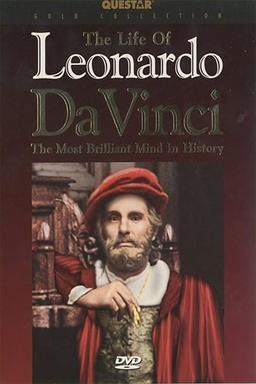
La vita di Leonardo da Vinci — in English, The Life of Leonardo da Vinci — is a 1971 Italian television miniseries dramatizing the life of the Italian Renaissance polymath Leonardo da Vinci. The Golden Globe-winning miniseries was directed by Renato Castellani, and produced by RAI and distributed in the United States by CBS, which aired it from August 13, 1972 to September 10, 1972. Castellani wrote the screenplay. It was filmed entirely on location in Italy and France. The total runtime of the five episodes is nearly five hours.

This two-part, four-hour documentary delves into the world of a 15th-century art titan and unravels his journey while shedding light on his lasting impact on future generations.

New evidence suggests that many of Leonardo da Vinci's ideas can be traced to other scientists as far back as 1700 years. This film was used as the S16E5 episode of the PBS TV series Secrets of the Dead broadcast on 2017/04/05.
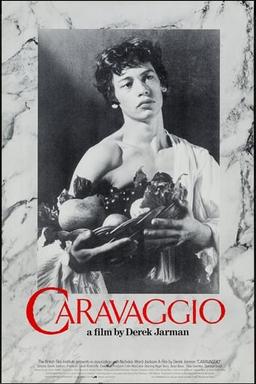
Caravaggio is a biographical drama film that explores the life of the Italian painter, focusing on his relationship with an older man, his artistic creation, and the religious themes in his work. Set in 17th-century Italy, the movie delves into Caravaggio's struggles with his homosexuality, the murder he is falsely accused of, and his complex inner world as an artist.

The story of Benvenuto Cellinin (1500-1571), a soldier and one of the most important craftsmen and artists of Renaissance Italy whose life was marked by many achievements and adventures, but also crimes. There is also the mini-series version consisted of three 90 minutes episodes, broadcasted by RaiDue.


This is an exposition of the social and political history of renaissance Florentine history, told through dramatized conversations between the main participants, Cosimo de Medici and Brunelleschi.

A 3 part drama series about the notorious powerful Borgia family who took power in Italy in the 15th/16th centuries.
In late 19th-century Sicily, the noble Uzeda family—whose lineage dates back to the ancient viceroys that ruled those lands—fights to preserve its waning power in the face of the newly unified Italian regime.
With an original staging of text and music, Orlando follows the trail of one of the greatest composers of the Renaissance: Orlando di Lasso (also known as Roland de Lassus). His life and masterful oeuvre continue to move people to this day. Although he was a European star at the time, di Lasso had to endure the indignities of his social status as a servant. This documentary explores the relationship between art and power, musically accompanied by the ensemble La Tempête.

Acquired in July 1909 by art collector Wilhelm von Bode (1845-1929), director general of the Prussian Art Collections and founding director of the Kaiser-Friedrich-Museum, now the Bode-Museum, the Bust of Flora, Roman goddess of flowers, has been the subject of controversy for more than a century.