Movies and TvShows featuring "hygiene" theme.

A teaching film for social studies, which was developed as a new educational subject in 1947. At an elementary school in Hokkaido, children have started a fly extermination campaign to improve school hygiene. In order to eliminate the causes of flies, the entire town is working to improve the sanitary environment. The short was filmed with the cooperation of Mizukaido Elementary School in Joso City and is the first film in the "Social Studies Teaching Film System" by Iwanami Film Productions.


In the year 1999, during the Y2K scare, a man named Abbie is stuck on his couch, unable to leave until he beats a mysterious video game. As time passes, he must complete increasingly bizarre and difficult challenges, including drinking his own urine, vomiting into a mop bucket, and even wearing sunglasses indoors. With the help of his supportive brother and a personal assistant, Abbie embarks on a surreal journey filled with Pac-Man, secret knocks, and a lot of milk.

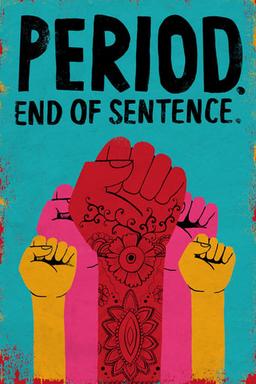
Period. End of Sentence. is a documentary that sheds light on the social stigma surrounding menstruation in India, emphasizing the challenges faced by women due to religious discrimination, social taboos, and lack of access to feminine hygiene products. The film also explores the impact of this stigma on girls' education, female independence, and overall public health.

Young Billy Martin has a vision of Soapy, a giant bar of soap, that teaches him the importance of being clean.
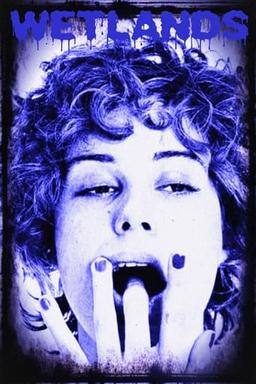
Wetlands is a movie about an unruly teenage girl named Helen who has an obsession with bodily functions and unhygienic practices. She navigates through life and explores her desires, experiences, and relationships while dealing with divorced parents, sexual tension, self-injury, and the aftermath of a hemorrhoid surgery.

This is the fact-based story of an aristocratic woman who defies Victorian society to reform hospital sanitation and to define the nursing profession as it is known today. After volunteering to travel to Scutari to care for the wounded soldiers, who are victims of the Crimean war, she finds herself very unwelcome and faces great opposition for her new way of thinking. However through her selfless acts of caring, she quickly becomes known as 'The Lady with the Lamp', the caring nurse whose shadow soldiers kiss.
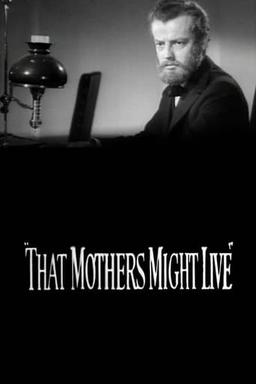
That Mothers Might Live is a 1938 American short drama film directed by Fred Zinnemann. The short is a brief account of Hungarian physician Ignaz Semmelweis and his discovery of the need for cleanliness in 19th-century maternity wards, thereby significantly decreasing maternal mortality, and of his struggle to gain acceptance of his idea. Although Semmelweis ultimately failed in his lifetime, later scientific luminaries advanced his work in spirit like microbiologist Louis Pasteur, who provided a scientific theoretical explanation of Semmelweis' observations by helping develop the germ theory of disease and the British surgeon, Dr. Joseph Lister who revolutionized medicine putting Pasteur's research to practical use. In 1939, at the 11th Academy Awards, the film won an Oscar for Best Short Subject (One-Reel).

Talking germs and objects teach kids the importance of proper hygiene.

Health film using unusual imagery and metaphors to impart lessons in hygiene.

Shows techniques of sanitary food handling in the dining room and stresses the responsibility of personnel to both look and be clean.
Produced by a division of social services, the film follows a country girl's journey to learn more about hygiene and health after she's rejected from by her boyfriend who thinks her uncultivated.

In this explicit sex education film based on clinical research made by American and Swedish doctors, a panel of experts in the field of sex education discuss various aspects of human sexuality. The film deals with and demonstrates all kinds of problems related to sexual relationships.

A fairly accurate historical account of Walter Reed's search for the cause of "Yellow Jack" or Yellow Fever and those who risked their lives in the pursuit.
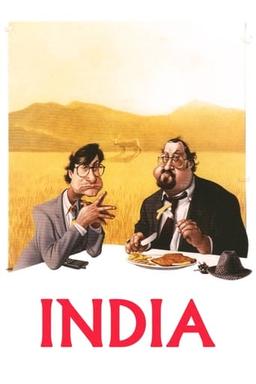
India is a comedy-drama film that follows the story of a civil servant on a business trip in a province of Austria. During his journey, he befriends a colleague and they embark on a tour, facing various challenges and hilarious situations along the way. However, their adventure takes a serious turn when the civil servant is diagnosed with a fatal illness. The film explores themes of friendship, life's fragility, and the importance of living in the present.

In the middle of the 19th century, almost one in three women who gave birth died of puerperal fever. The Hungarian doctor Ignaz Philipp Semmelweis also observed these terrible occurrences in his clinic in Vienna. He came to the conclusion that it was primarily the unhygienic conditions in the clinic itself that led to this disease, as his colleagues were constantly shuttling back and forth between the anatomy department and the delivery room. He tries to convince the doctors of the absolute necessity of thorough disinfection by washing their hands with chlorinated lime. He meets with fierce resistance from his colleagues until he himself sets up an exemplary clinic in Budapest.

Parody focused on the horrors of being uncircumcised.

The comparison of two rural families to demonstrate the need for proper hygiene and the consequences of its neglect.