Movies and TvShows featuring "hong-kong-protests" theme.

In 2017, twenty years after the British handed over Hong Kong to China in 1997, young people, more politicized than any previous generation and proud of their land, do not feel Chinese and actively fight against the oligarchs who want to subdue them to China's authoritarian power.

Freedom For The Wolf is a thought-provoking documentary that delves into the global rise of illiberal democracy and the decline of freedom. It examines the cases of Tunisia, Hong Kong protests, Japan, India, and explores the political activism and challenges faced in these regions.

A short documentary about the protests in Hong Kong in 2019 and 2020.

Revolution of Our Times is a documentary film that delves into the political and social upheaval in Hong Kong, focusing on the protests and street riots that emerged as a response to increasing control from Communist China. Through interviews and footage, the film captures the spirit of the movement and highlights the struggles faced by the people of Hong Kong.

Hong Kong's high-speed rail link, the demolition of Choi Yuen Village, the impending budget and the influence of the global Occupy movement are at the centre of independent filmmaker Lo's timely measure of the city's pulse. Ostensibly the third entry in a trilogy that began with 21 years after. (2010) and to be continued (2010), which also captured public reaction to watershed moments in Hong Kong's political life since 2009. The documentary was built upon the material used in its previous installment (to be continued, 46 minutes). It disproves the notion of a passive Hong Kong in a chronicle of a generation poised for massive social change.


Joshua Wong, a teenage activist, leads a series of protests and demonstrations in Hong Kong, advocating for political reform and democracy. The film showcases his journey and the challenges he faces in his fight against political oppression.

China's Rebel City: The Hong Kong Protests is a comprehensive documentary account chronicling the 2019 Hong Kong anti-government protests that pushed the city to the brink and reshaped its political landscape. This documentary is a gritty, no-holds-barred audiovisual account of the political turmoil and social chaos that unfolded during months of demonstrations. The series draws on hundreds of hours of footage and features expertise and ground-zero reporting from award-winning journalists, providing an in-depth look at one of the most significant political events in recent Hong Kong history. The documentary tells the dramatic story of a city at the crossroads, drawing from extensive video footage, exclusive interviews with key stakeholders, and unparalleled access to ground-zero reporting. It won best documentary feature at the Cannes World Film Festival and an Online Journalism Award in the "2021 Digital Video Storytelling, Series" category.

This is the first referendum held in Hong Kong and probably the last. Some people want to grasp the chance to directly participate in the democratic process. They try in various ways to push for greater democracy in society so that the people can become emancipated.
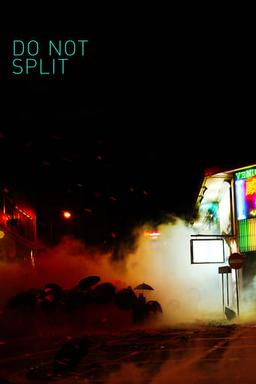
Do Not Split (2020) is a documentary that provides an inside look into the Hong Kong protests, showcasing the nonviolent resistance and the citizens' defiance against authority. It explores the use of tactics like Molotov cocktails, the extreme police harassment and excessive force faced by protesters, and their commitment to civil disobedience in the face of police brutality and violence.

I made June when I didn’t have any inspiration to create a feature film. The documentary is about the rarely known stories in the social movement in June. At first the clips of videos were kept for sorting out my feelings, but after being edited, they were made into a documentary and became a record of history. Six scenes and voices were used to tell what happened during that month.

Brian, Jenny, Peter, and Eddie find their lives forever changed as they become part of the Hong Kong protest movement, which started as a response to a controversial extradition bill but has now grown into a fight for freedoms and democracy. The protests, fueled by anger over police brutality, pose the biggest challenge to Beijing since Hong Kong's return to China in 1997. If We Burn follows their stories as they navigate the uncertain future of their city.

Memories of his four-year journey focused on the Hong Kong protests. Narrated in the first person, is rich with reflections and contemplations, most intertwined with feelings of guilt.

Cheung Chau, once a fishing village in Hong Kong, has transformed into a tourist spot. Ri-Tai, a food stall run by A-Cheung, reflects local life, absurdities, and societal realities. A-Cheung spends his days playing games with customers like Plumpy, forming bonds that transcend generations. However, the onset of COVID-19 disrupts this sense of community, leaving the island deserted and questioning whether Ri-Tai's simple way of life will vanish.

In the aftermath of 2014's Umbrella Revolution, five Hong Kong activists are confronted with the question of what it means to be Hong Kongers.

Although the Chinese government promised that Hong Kong would retain separate status until 2047, in recent years the Chinese state has consolidated its power over the metropolis. Large-scale protests by the populace have been brutally suppressed. This mix of documentary, fiction, and visions of the future reveals the current state of desolate depression among the people of Hong Kong. “A desperate attempt to capture the final moments of a sinking island”, as maker Chan Tze-woon himself puts it.

In late 2009, over twenty Hong Kong civic groups united as the "Anti-High-Speed Rail, Stop Funding" coalition, aiming to halt Legislative Council approval of the HKD 66.9 billion Express Rail Link amid deep social rifts. The "Post-80s Anti-High-Speed Rail Youth" group drew thousands of young people with their slogan “Defend Our Homeland, Protest with Joy,” leading to three funding suspensions that surprised the public. Media coverage was intense and innovative, featuring rare camera angles and lively online debate among journalists. This documentary explores how reporters shaped the movement, their emotional involvement, and the dynamic relationship between the media and activists during Hong Kong’s pivotal 2009–10 protests.

Inside the Red Brick Wall is a documentary that captures the intensity and determination of the Hong Kong protests in 2019. Through the eyes of the protesters, it provides an intimate look at their struggles for democracy and human rights within the city.
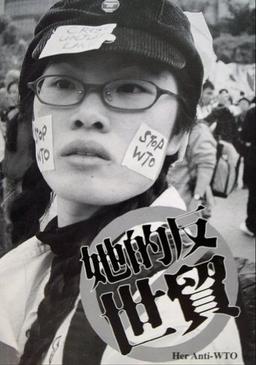
The 2005 World Trade Conference in Hong Kong was the starting point of the "direct action" that emerged from the Hong Kong protest movement. It was also the first time the Hong Kong police used a large number of tear-gas and beanbag rounds on the street after the 1967 riots. Outside the conference, there were many Hong Kong protestors. Why and how did they get involved in this movement centered on Korean farmers?

An anonymous, authentic video secretly filmed from taxi windows captures fragments of violence right in the middle of clashes between police and protesting Hong Kong residents. In addition to the contact sound of fights, screams, singing, chants of the slogan “Liberate Hong Kong! Revolution of our times!”, and the howls of those who've been beaten, we also hear the conflicting comments of taxi drivers from both sides of the border - Hong Kong and the neighboring mainland Shenzhen.

Two young Hong Kong activists reflect on their resistance against China, are forced to decide between long-term imprisonment and refugee camps for a life in exile, while their movement inspires mass protests in the city they love.