Movies and TvShows featuring "historical-society" theme.

Set in pre-colonial Aotearoa, we see the lives of three prominent chiefs doing whatever it takes to keep their people safe and maintain their chiefly honour.

Tokyo Phoenix is a documentary film that explores the rich history of Tokyo, from its early days as Edo to its destruction during World War II and eventual rebirth as a modern metropolis. The film delves into key events such as the dropping of the atomic bombs on Hiroshima and Nagasaki, and the city's transformation in preparation for the Olympic Games. Tokyo Phoenix showcases the resilience and spirit of the people of Tokyo as they rebuild and rise from the ashes.


A documentary that explores the life and career of Robert S. McNamara, the former Secretary of Defense, and his involvement in the Vietnam War.
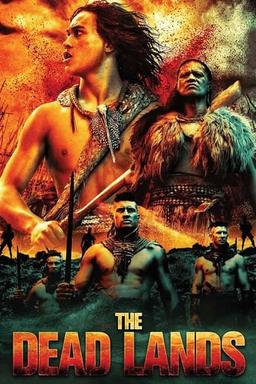
In a post-apocalyptic world, Hongi, a Maori chieftain's teenage son, must avenge his father's murder in order to bring peace and honor to the souls of his loved ones after his tribe is slaughtered through an act of treachery. The young boy struggles to battle against the odds and fulfill his destiny as a leader and warrior.

After the tragic death of his wife and daughter, a music professor moves into an old mansion in Seattle. As he starts experiencing supernatural phenomena, he delves into the history of the house and uncovers a dark secret involving a ghostly child. With the help of a medium, he seeks revenge and unravels a series of horrifying events.

After moving back to his hometown, a man experiences paranormal activity and must team up with a psychic investigator to uncover the truth behind vengeful ghosts haunting the town.

All's Faire in Love is a romantic comedy that takes place in a renaissance fair. It explores the class divisions and relationships between the upper and lower class. The story follows a group of characters who navigate through vanity, curses, witchcraft, jousting, and other whimsical scenarios. As they encounter challenges and comedic situations, they discover the true meaning of love and learn valuable lessons about themselves and others.


A law school graduate, Kennedy Blaine, inherits a horse ranch in Nebraska after her father's funeral. She must decide whether to sell the ranch or stay and live a new life. While exploring her options, she finds herself caught in a love triangle and uncovers some dark secrets about the town's historical society.
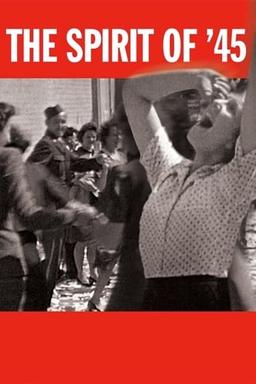
The Spirit of '45 is a documentary that delves into the social and political changes that occurred in Britain after the end of World War II. It explores the implementation of key reforms such as the creation of the National Health Service, nationalization of industries, and the establishment of a welfare state. The film also examines the impact of these changes on the working class, highlighting issues such as housing shortages, the class struggle, and the rise of Margaret Thatcher's Conservative Party.

Phil Comeau shines a spotlight on the Ordre de Jacques-Cartier, a powerful secret society that operated from 1926 to 1965, infiltrating every sector of Canadian society and forging the fate of French-language communities. Through never-before-heard testimony from former members of the Order, along with historically accurate dramatic reconstructions, this film paints a gripping portrait of the social and political struggles of Canadian francophone-minority communities.

The Tale of Genji Museum in Uji City, Kyoto will be airing a short film blending history and fantasy, the story follows a modern high school girl named Hana who is transformed into a cat and transported back in time. She travels 1,000 years ago to the Heian Era as portrayed in The Tale Of Genji, arguably the most famous novel in Japanese literature. Guided by the novel's titular character Hikaru Genji, Hana experiences firsthand the emotions that the author Murasaki Shikibu depicted in her novel. The short features scenes based on The Diary of Lady Murasaki and other historical materials, such as the real-life noble Fujiwara no Michinaga swiping early drafts of The Tale Of Genji because he could not wait to read chapters as Murasaki wrote them.

Long live the strike! Lucie Baud, one of the pioneers of the women's movement, went with creativity, fighting spirit and the power of singing against the weapons of male-dominated capitalist society in nineteenth-century France. The film, based on true events, describes the ambitious fight of a silk moth. She stood up for the rights of the female working class to end maltreatment and oppression once and for all. For the revolution in women's rights, she even put her family back and fought to the end for their beliefs.
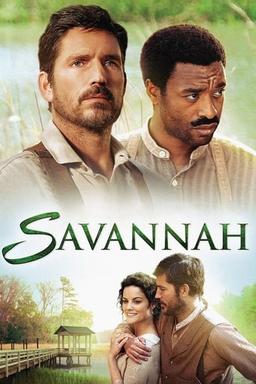
Savannah is a historical drama that explores race relations in the city of Savannah. The story follows the friendship between a former slave and a white historian who is writing a book about the city's history. As they delve into the past, they uncover a tragic love story that took place during the Civil War. The film also touches on themes of friendship, justice, and the struggle for equality.

For eight centuries, between the 9th and 1st century BC, the Etruscans, inhabitants of the Italian peninsula, were one of the most powerful peoples of the Mediterranean basin, and when they disappeared they left behind impressive necropolises, vestiges of sanctuaries and even entire cities. How did they attain such power? How far did they extend their dominion and influence? What were the causes of their decline?

In the small town of Indian Flats, a dog discovers a mutated creature resulting from a biological research experiment gone wrong. Chaos ensues as the monster terrorizes the town, leading to false accusations and a surreal journey through a historical landmark. The local community must confront the monstrous consequences of their actions.

A German historian struggles with a complicated relationship while dealing with the aftermath of the Holocaust and exploring themes of mental illness.

More than 2.000 years ago, Narbonne in today's Département Aude was the capital of a huge Roman province in Southern Gaul - Gallia Narbonensis. It was the second most important Roman port in the western Mediterranean and the town was one of the most important commercial hubs between the colonies and the Roman Empire, thus the town could boast a size rivaling that of the city that had established it: Rome itself. Paradoxically, the town that distinguished itself for its impressive architecture, today shows no more signs of it: neither temples, arenas, nor theaters. Far less significant Roman towns like Nîmes or Arles are full of ancient sites. Narbonne today is a tranquil town in Occitania


Between the end of the Second World War and the abolition of the "offence of homosexuality" in 1982, 10,000 sentences were handed down in France. Sentences in correctional courts, fines and sometimes imprisonment, the convictions were mainly against men. The last witnesses of this period speak out and tell of four decades of clandestine life, just before the tragedy of AIDS.