Movies and TvShows featuring "french-writer" theme.

In 1831, a woman flees her abusive marriage, moves to Paris under a male pseudonym, and challenges gender norms by wearing men's clothing, pursuing affairs, and advocating for women's rights through writing.

An account of the brief life of the writer Albert Camus (1913-1960), a Frenchman born in Algeria: his Spanish origin on the isle of Menorca, his childhood in Algiers, his literary career and his constant struggle against the pomposity of French bourgeois intellectuals, his communist commitment, his love for Spain and his opposition to the independence of Algeria, since it would cause the loss of his true home, his definitive estrangement.


During a power outage, a writer and a pizza delivery man find themselves in a secluded cabin. To pass the time, they start telling scary stories, leading to a night of terror and unexpected twists.
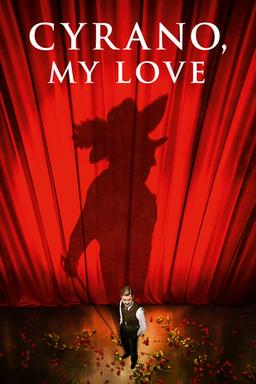
In 19th century France, a struggling playwright working at the Comedie-Francaise falls in love with a woman named Roxane. As he works on writing a play, he becomes determined to win her heart, even though he lacks confidence in his own appearance. With the help of his friend Cyrano de Bergerac, he embarks on a romantic and comedic journey filled with mistaken identities, unrequited love, and unexpected twists.

A docu-drama portrait of the early-20th-century French author Marcel Proust, based on Alain de Botton's updated analysis of his work as a modern-day self-help guide. Ralph Fiennes plays Proust, with Phyllida Law and Donald Sinden as his contemporaries, while commentators including de Botton, Louis de Bernières and Doris Lessing explain their enthusiasm for his work.

A comprehensive and insightful documentary that explores the life and works of Albert Camus, the Nobel Prize-winning French writer and philosopher. Through interviews, archival footage, and captivating narration, the film delves into Camus' upbringing in Algeria, his literary achievements, and the profound impact of his philosophical ideas.
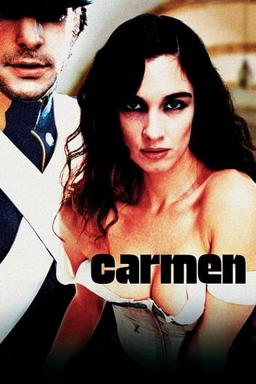
Carmen is a tragic romance that takes place in 1800s Spain. It follows the story of a soldier who falls in love with a seductive woman named Carmen. Their passionate affair leads to jealousy, betrayal, and ultimately tragedy.

On January 31, 1857, the French writer Gustave Flaubert (1821-80) took his place in the dock for contempt of public morality and religion. The accused, the real one, is, through him, Emma Bovary, heroine with a thousand faces and a thousand desires, guilty without doubt of an unforgivable desire to live.

Maria Casarès, a theatre actress and Albert Camus, one of the most important modern french writer, keep a long correspondence (more than 900 letters) about their love and the emotions they feel for each other for 15 years.

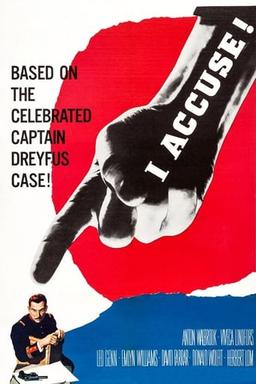
In 1894, French army captain Alfred Dreyfus is wrongfully convicted of treason based on forged documents. Emile Zola, a famous writer, publishes an open letter accusing the military of a political cover-up. The case becomes a public scandal and sparks national debate on anti-Semitism and justice.
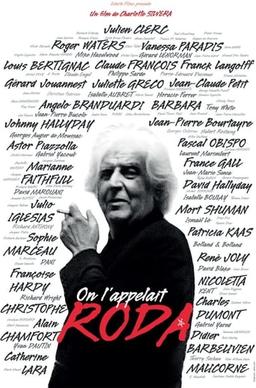

Writer, journalist, explorer, filmmaker, communist militant, freedom fighter. Truths and lies. A plot twist. Politician. General De Gaulle's shadow. Overwhelmed by the weight of power. The numerous exploits of André Malraux (1901-1976).


In the 1970s, Agustín Gómez Arcos rose to the top of French literature, while in his own country, Spain, his name remained hidden. A Free Man reflects on the recent history of Spain through silences, lost stories and the role of culture and memory.

When French writer Marguerite Duras (1914-96) published her novel The Sea Wall in 1950, she came very close to winning the prestigious Prix Goncourt. Meanwhile, in Indochina, France was suffering its first military defeats in its war against the Việt Minh, the rebel movement for independence.
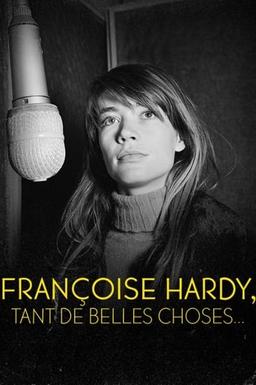
An idol of young people in the 1960s, Françoise Hardy agrees to be interviewed and candidly reflects on her successes, disappointments, and love life.

Marcel Proust's "In Search of Lost Time" is one of the great novels of world literature. The documentary immerses itself in the very own cosmos, spanning 3,000 pages and hundreds of characters, for which Proust's own world was the source of inspiration, and brings Proust's moral portrait of the Belle Epoque to new life.
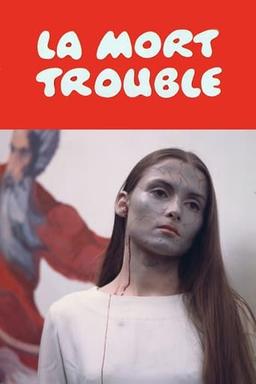
Three sisters visiting their uncle in his island home, find themselves alone with the late uncle's manservant. Their relations reveal a dark side in all of them, and gender, racial, and class tensions that lead to situations of humiliation, domination and sex, and death.