Movies and TvShows featuring "french-opera" theme.

The Metropolitan Opera presents a live performance of La Fille du Régiment, a comedic French opera that takes place in the 19th century. The story follows Marie, a young woman who was adopted and raised by a regiment of soldiers. When she falls in love with a nobleman, the soldiers help her pursue her romantic interests, resulting in a series of humorous and slapstick situations. Set in Switzerland, the opera combines music, comedy, and elements of army life.

The charismatic swordsman-poet helps another woo the woman he loves.

Les Contes d'Hoffmann is a French opera that tells the story of the poet Hoffmann and his romantic encounters with various women. Each act represents a different love affair, including a courtesan, a doll, and a woman driven insane. Throughout the opera, Hoffmann is haunted by a sinister scientist who aims to take away his talent and sanity. The opera explores themes of love, art, and the blurred lines between reality and fantasy.


In the 18th century, a princess disguises herself as a man to access the philosophers she loves. With the help of her servant, they navigate through the world of royalty, opera, and gender disguise, all while dealing with the misogyny and seduction around them.
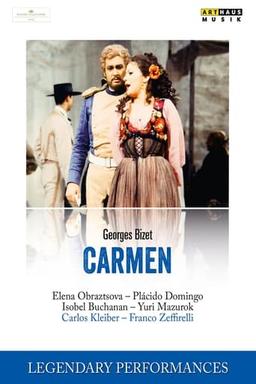
Carmen is a seductive and free-spirited woman who attracts the attention of two men, causing jealousy and tragedy in their lives. Set in Spain, this movie explores themes of love, betrayal, and fate.
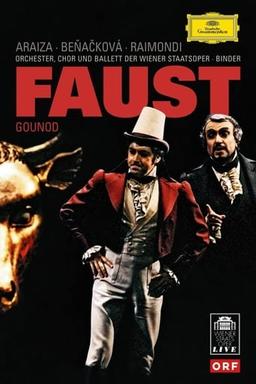
In an epic tale of good versus evil, Faust sells his soul to the Devil and tries to save Marguerite from an eternity in Hell.
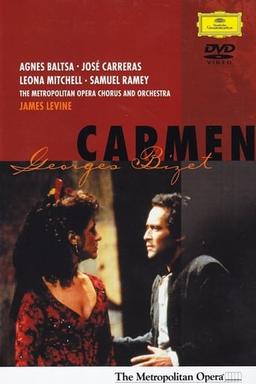
In the heart of Seville, passions ignite and tempers flare as a love triangle involving a matador, a beautiful dancer, and a jealous singer leads to betrayal and murder. The story unfolds amidst the fiery backdrop of flamenco music and bullfighting, showcasing the vibrant and seductive culture of Spain.
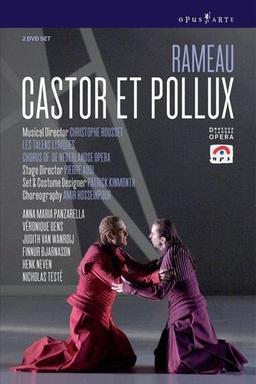
Recorded at the Musiektheater, Amsterdam on 21 & 25 January 2008. Performed by De Nederlandse Opera, composer Jean-Philippe Rameau's renowned tragedy "Castor et Pollux" tells the myth-based story of the selfless love between two brothers: Castor, who is mortal, and the immortal Pollux. When Castor dies trying to prevent the kidnapping of the woman he loves, Pollux decides to become mortal and replace his brother in the Underworld. Finnur Bjarnason, Henk Neven and Anna Maria Panzarella star.

Experience the heart-wrenching story of forbidden love as depicted through the beautiful music and exceptional stage performance of Gounod's Romeo et Juliette. This live performance of the French opera is based on Shakespeare's timeless play and will captivate audiences with its emotional depth and stunning musical compositions.
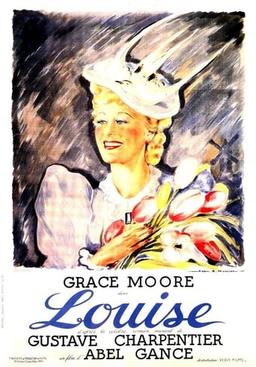
What was it about opera diva Grace Moore that attracted the attention of filmdom's top directors? Moore's 1937 American movie vehicle When You're in Love had been directed by Josef Von Sternberg; two years later, her French starrer Louise was helmed by no less than Abel Gance, who a decade earlier had revolutionized the "historical epic" genre with the awesome Napoleon. There was, however, little that was revolutionary in this cinemadaption of Gustave Charpentier's opera. Moore plays Louise, a poor seamstress who is led astray by the rakish Julien (Georges Thill). After falling from grace (no pun intended), our heroine is rescued by her understanding father (Andre Pernet), who demonstrates his forgiveness by singing to her (it is, after all, an opera). Though it played to enthusiastic crowds in both London and Paris, Louise turned out to be Grace Moore's final film; conversely, Abel Gance continued to make commercial potboilers well into the 1970s.
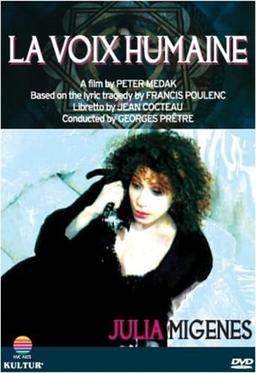
La Voix Humaine is a concerto for soprano and orchestra, centering on the break-up of a relationship by telephone. It represents one side of a conversation between a young woman (sung by American soprano, Julia Migenes) and her lover, who has jilted her. In a 1930s, Parisian apartment, a woman is seen making for the door. As she passes the telephone, it rings. From now on she sings, sitting, standing, on her knees, pacing up and down the room, pulling at the telephone cord, going through every emotion until ultimately, in despair, she takes her own life. Jean Cocteau wrote, it is not just that the telephone is sometimes more dangerous than the revolver but that its tangled cord drains us of our strength, while giving us nothing in return.

Don Carlos is a movie set in Spain during the 16th century. It tells the story of Don Carlos, a prince who is in love with Queen Elisabeth of Valois. The movie explores their forbidden love and the political struggles of the time. With live performances of French opera by Verdi, the movie is filled with music and passion.

Les Indes Galantes (2004) is a comedic and musical journey that explores the intertwining love stories set in various cultures, including Native American and Indian cultures. The opera showcases the beauty of French and Baroque Opera through live performances in Paris, France.
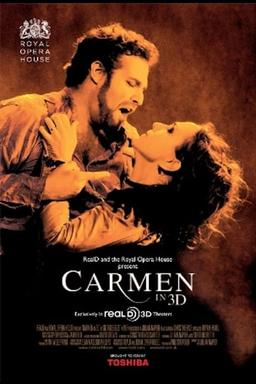
Carmen in 3D is a dramatic musical movie that brings the story of Carmen, a beautiful and free-spirited gypsy, to life in stunning 3D visuals. Set in the world of French opera, the film explores themes of jealousy, love, and passion through captivating live performances.

The French have occupied Sicily, and Hélène is held hostage by Montfort, the French governor, who has had her brother executed. She turns to the partisan Jean Procida and the rebellious patriot Henri in her bid for vengeance. Les Vêpres siciliennes is one of Verdi’s lesser-known mature operas, but was vital to his development as a composer. It was created for the Paris Opéra in 1855, providing Verdi with an opportunity to embrace the elaborate style and traditions of French grand opera. First seen at the Royal Opera House in 2013, this staging of Verdi's rarely-performed opera Les Vêpres siciliennes – directed by Stefan Herheim and conducted by The Royal Opera’s Music Director, Verdi specialist Sir Antonio Pappano – went on to win the prestigious Olivier Award for Best New Opera Production.
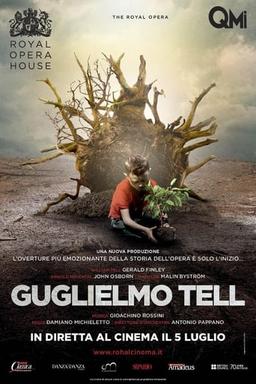
New production. Recorded live at Royal Opera House, July, 05, 2015.

While the rest of the Hebrews bewail their fate, Samson alone trusts in God's promise of liberty. Abimelech, the Philistine satrap of Gaza, enters to mock the Hebrews' God, proclaiming the superiority of Dagon, and the Hebrews are afraid of him. But calls them to show some defiance, so Abimelech attacks Samson with his sword. Samson seizes the sword and strikes him dead. The Hebrews scatter and the High Priest of Dagon appears, cursing the Hebrews. When a messenger reports that the Hebrews are ravaging the harvest, the High Priest forms a plan to use Delilah to overcome Samson's strength. Delilah's beauty is such that Samson can't resist her for long. She begs to know the secret of his supernatural strength, but he refuses, though he says he loves her. Delilah betrays Samson by having some Philistine soldiers seize him and throw him into a prison in Gaza, where his hair is cut off.

The first ever performances in Munich, this production was entrusted to Dmitri Tcherniakov, whose worldwide reputation is underpinned by productions like Eugene Onegin and Macbeth at the Paris Opera and Don Giovanni at Aix-en- Provence. The superb international cast includes a fine Blanche de la Force in Susan Gritton and an excellent Madame de Croissy by Sylvie Brunet, who was favourably compared to Rita Gorr in the press.

The hero of this admirably complete August 2013 Guillaume Tell from Pesaro is homegrown maestro Michele Mariotti. The inimitable overture is (mercifully) unstaged and terrifically played, with splendid cello and flute solos: the fine standard never flags. Rossini’s extraordinary 1829 score audibly presages Meyerbeer, Berlioz, Glinka, Verdi and Wagner, among many others. Graham Vick’s direction privileges class conflict, with a clenched fist on the red-and-white forecurtain. The Edwardian costumes place Austrians in white evening garb; the black-clad Swiss polish the floor while the rulers savor a filming (much of that to follow) — the fisherman Ruodi, in a boat with a blonde and fake scenery, with Tell and his family providing tech support. Vick deploys geographical and historical kitsch liberally but not (always) pointlessly. Ron Howell’s pretentious, mannered choreography, however, beggars belief.
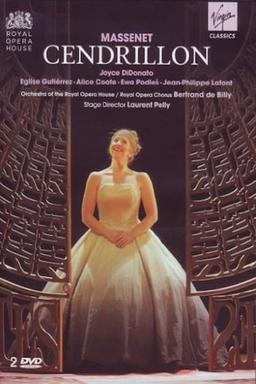
Cendrillon is a modern French opera that beautifully adapts the classic story of Cinderella. The enchanting tale follows the journey of a young girl who overcomes adversity and finds her true love with the help of a magical fairy godmother. This captivating opera combines elements of fantasy, music, and a mesmerizing stage performance that will leave audiences spellbound.