Movies and TvShows featuring "film-essay" theme.

A series in which the auteur interrogates a boy and a girl from two families in an attempt to get back to the origins of language and movement.
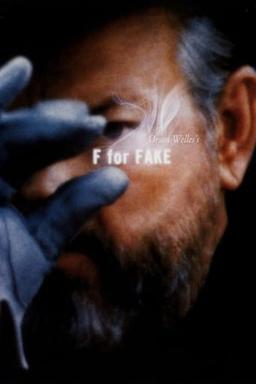

F for Fake is a documentary film about the life and art of notorious art forger Elmyr de Hory. Directed by Orson Welles, the film explores the blurred line between reality and fiction, as well as the themes of deception, manipulation, and illusion. The film also delves into the world of art forgery and the scandal surrounding it. With a nonlinear timeline and innovative storytelling techniques, F for Fake is a thought-provoking exploration of the nature of authenticity and the concept of truth in the art world.
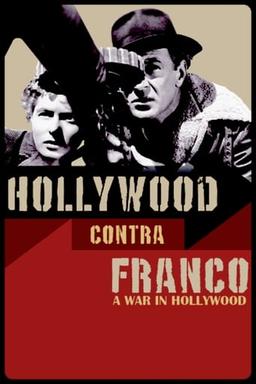
A War in Hollywood is a documentary that explores the role of Hollywood in producing war propaganda films during the Spanish Civil War. It delves into the stories of screenwriters, filmmakers, and journalists who worked in the film industry during that era. The documentary also discusses the impact of the McCarthy era and the Franco regime on the Hollywood film industry.

Far from Vietnam is a documentary film released in 1967, focusing on the Vietnam War. It is an omnibus film created by several filmmakers, exploring different aspects of the war and its impact on both Vietnam and the United States. The film uses various narrative techniques to convey the brutality of the war and the anti-war sentiment that was growing during that time.

Sans Soleil is a poetic documentary that blends archive footage with personal musings to explore the themes of memory, time, and identity. The film takes the viewer on a journey across different countries and cultures, using images and narration to create a thought-provoking and visually stunning experience.

How the cinema industry does not respect the author's work as it was conceived, how manipulates the motion pictures in order to make them easier to watch by an undemanding audience or even how mutilates them to adapt the original formats and runtimes to the restrictive frame of the television screen and the abusive requirements of advertising. (Followed by “Filmmakers in Action.”)

What’s it like to dedicate your life to work that won’t be completed in your lifetime? Fifteen years ago, filmmaker David Licata focused on four projects and the people behind them in an effort to answer this universal question.
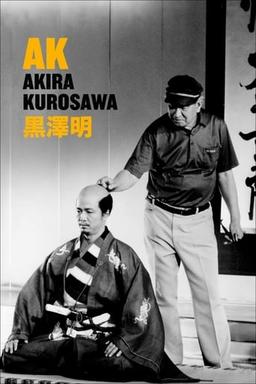
A.K. is a documentary film that explores the life and work of A.K., a famous Japanese filmmaker. The film delves into his filmmaking process and the challenges he faced in his career. It also highlights his spiritual journey and his deep connection with Japanese culture.

Famous Spanish film critic Alfonso Sánchez talks about his personal life, his work and Anouk Aimée. A sentimental tribute to one of the most relevant figures on the Spanish film scene.
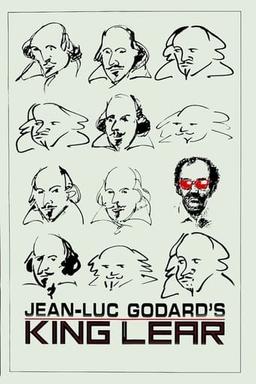
In King Lear (1987), a film editor finds himself captivated by the writings of a renowned playwright. As he delves deeper into the playwright's works, his own life starts to mirror the themes of power, virtue, and the complexities of human relationships. Set against the backdrop of the 1980s and the aftermath of the Chernobyl disaster, this film explores art, inspiration, and the blurred lines between reality and fiction.
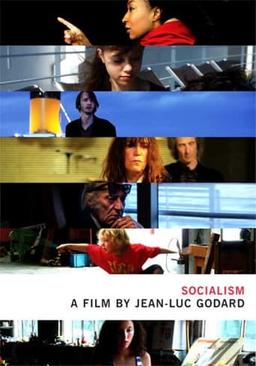
Film Socialisme (2010) is an avant-garde movie that delves into topics such as philosophy, family relationships, politics, and justice. Through a unique film-essay style, it presents a thought-provoking exploration of these themes. The story meanders through different scenarios, including a cruise ship, a garage, and historical events like the French Revolution. The film touches upon the resentment, struggles, and complexities of human existence, all while offering a critical reflection on society. With its unique blend of elements, Film Socialisme invites viewers to engage in a profound and philosophical journey.

What is the state of cinema and what being a filmmaker means? What are the measures taken to protect authors' copyright? What is their legal status in different countries? (Sequel to “Filmmakers vs. Tycoons.”)

Two decades on from Cinema of Unease, Tim Wong’s essay film contemplates the prevailing image of a national cinema while privileging some of the images and image-makers displaced by the popular view of filmmaking in Aotearoa. Now streaming for free at: films.lumiere.net.nz

An analysis of the social upheaval of May 1968, made in the immediate wake of the workers’ and students’ protests. The picture consists of two parts, each with with identical image tracks, and differing narration.

Manoel de Oliveira plays his film in three stages: the first part - a play, the second can be roughly defined as a silent film (with the behind the scenes read excerpts from Beckett works), but in the end the director brilliantly performs the same material of the avant-garde exercise. Surprisingly, a joke, repeated three times, each time everything sounds fresh and develops into an almost verbatim adaptation of the biblical "Book of Job" - a spectacular point in a parable about how hard to empathize with other people's misery, when you have your own.

Cofralandes, Chilean Rhapsody is a surreal film that takes the viewer on a journey through the history and identity of Chile. It combines elements of comedy, documentary, and drama to paint a unique picture of the country. The film explores various themes such as the Chilean coup d'etat, the reign of Augusto Pinochet, and the national identity of Chile. It is directed by a cult director and features a non-professional cast. The film also incorporates elements of a film-essay and video-essay, creating a thought-provoking experience for the audience.

Anémona and Pisces live a capicua experience: they are at the same time the woman who looks, the woman who is looked at, and the very act of looking. Between fractal scenes and images multiplied in reference to Man Ray, Anémona assumes the will to, through the state of trance, always be a foreigner within herself, while Pisces goes in search of an alien vision, to assume herself as the self and otherness to understand the world.

Level Five is a documentary film from 1997 directed by Chris Marker. It follows Laura, a computer programmer, as she explores the Battle of Okinawa and creates a video game based on the war. The film delves into themes of memory, history, and the impact of war on individuals. Laura becomes consumed by her research and the tragic events of the war, leading to a shocking and tragic conclusion.

In a mental institution the patients see themselves as people like Jesus, Lázaro, Marta, Maria, Adão, Eve, Sonia, Raskolnikov, Aliosha e Ivan Karamasov, a Philosopher, a Profet, Santa Teresa d'Avila, reciting the Divine Comedy.
