Movies and TvShows featuring "enviroment" theme.


In I ♥ Huckabees, a group of individuals in a suburban town grapple with existential crises and delve into interconnected lives. The story revolves around an investigation into the meaning of life, with themes of superficiality, friendship, and enlightenment. The characters navigate through various storylines, exploring concepts like Buddhism, celebrity, religion, and environmental activism. Through surreal and dark comedy, the film explores the depths of human emotions and the complexities of existence.

In a city plagued by pollution, lifelong companions Theo and Xochitl join forces with others to take aggressive action against the oil industry. With Theo battling leukemia, they plan to detonate an oil pipeline in West Texas.

The world is on the brink of major social and economic collapse, and powerful billionnaire Malcolm Hunt has the solution. Malcolm invites eight 'candidates' to a house in the country for a weekend adn each must prove themselves worthy of attending a prestigious world summit call 'Advanced Earth'. But when they awake on their frst morning in the house, the candidates fnd themselves trapped, cut off from the outside world, and the true, terrifying purpose of Advanced Earth is revealed...

In the aftermath of an emotional shock, a ruthless high-class manager faces her own abyss, becomes pervaded by a sensory spirit and undertakes a purifying voyage.

Jyire holds a motocross race in his hometown, where he must adhere to the park’s restrictions and drown out the public’s concern.

Documentaries are broadcast every week on Dutch TV Channel NPO 2 under the name 2Doc: inspiring stories of the here and now.
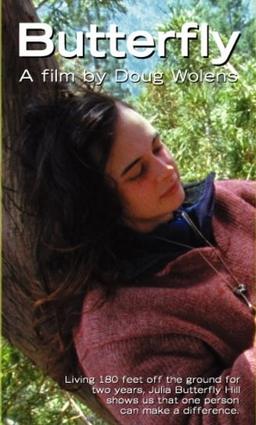
Living in an ancient redwood tree for more than two years to prevent the tree from being clear-cut, Julia Butterfly Hill captured our hearts and minds by showing us that one person can make a difference. Through interviews with Hill, filmmaker Doug Wolens paints a portrait of an intensely spiritual and articulate woman who encountered both beauty and horror (she was assaulted by lumber company helicopters at one point) during her time above ground.

In the cobalt mining areas of Katanga in the Democratic Republic of the Congo (DRC), babies are being born with horrific birth defects. Scientists and doctors are finding increasing evidence of environmental pollution from industrial mining which, they believe, may be the cause of a range of malformations from cleft palate to some so serious the baby is stillborn. More than 60% of the world’s reserves of cobalt are in the DRC and this mineral is essential for the production of electric car batteries, which may be the key to reducing carbon emissions and to slowing climate change. In The Cost of Cobalt we meet the doctors treating the children affected and the scientists who are measuring the pollution. Cobalt may be part of the global solution to climate change, but is it right that Congo’s next generation pay the price with their health? Many are hoping that the more the world understands their plight, the more pressure will be put on the industry here to clean up its act.

On 1500 metres above sea level, on the slope of the mountain Hallingskarvet, stands "Tvergastein', the cabin of Norwegian philosopher Arne Naess. In his life he has spent nearly 12 years in this hut, where he wrote several books and essays on philosophy and ecology. In this film, Naess tells about the concept of 'deep ecology', which was first introduced by him in 1973. One of the basic tenets of deep ecology is that nature has a value in itself, apart from its possible use value to humans. Next to being a famous mountaineer, Naess has been a longtime activist in the environmental movement. He gives an inspiring account of his participation in blockades to prevent the Alta river in northern Norway (the area of the Sami, an indigenous people) from being dammed.
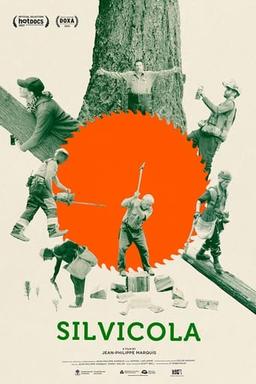
The human impact on forests is explored through breathtaking vistas and poignant vignettes set in Canada's Pacific Northwest. Those who rely on this precious resource highlight the tensions and dilemmas between commodification and conservation.
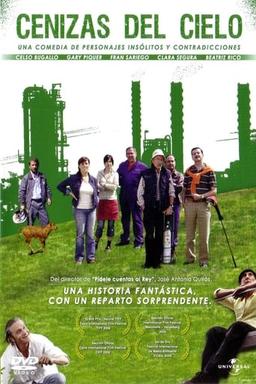
Environmental drama set in Asturias, Spain. A Scottish travel writer is forced to stay in a valley town in northern Spain when his camper van breaks down. There he gets to know the different inhabitants, some of them struggling to close down the nearby power station and some trying to make it more prosperous.
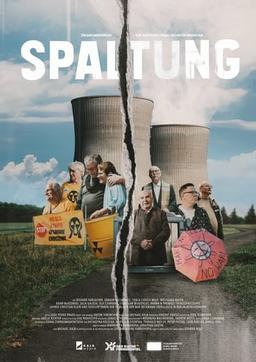
The climate crisis, Germany’s nuclear phase-out and Russia’s war against Ukraine are just three of the heavy pieces in the dramatic game about the future of energy. Caught in the middle are two small towns with barely a thousand residents each: Gundremmingen in Bavaria, home to a shuttered nuclear plant, and Choczewo on Poland’s Baltic coast, where the country’s first facility is now under construction. What do the good people on the ground think about it all?

Brazilian documentary short about the life of Edna — actress of Iracema.

Environmental journalist and activist Joana Guerra Tadeu moderates this debate show in which youngsters question the policies of the elders.
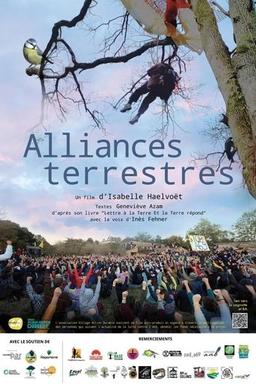

A childhood episode comes back to the memory of a man with no land

Follows four women of the estimated 40,000 displaced people moved from the banks of the Xingu River in the Amazon Basin to make space for construction of one of the world's largest dams, the Belo Monte.

How can we prevent epidemics? Why do viruses and bacteria move? Rather than trying to contain epidemics one after another, why not stop the processes that encourage their emergence? The challenges are enormous, but scientists argue that solutions exist. Because if emerging diseases are the collateral consequences of our lifestyles, our lifestyles are under our control.