Movies and TvShows featuring "earth-science" theme.
A Perfect Planet is a documentary TV series that showcases the remarkable variety of life on Earth and the intricate systems that support it. From the impact of the sun's rays to the movement of global ocean currents, the show delves into the interconnectedness of the planet's natural systems and the delicate balance necessary for life to thrive. With breathtaking visuals and captivating narratives, A Perfect Planet takes viewers on a journey to discover the extraordinary beauty and resilience of our home.
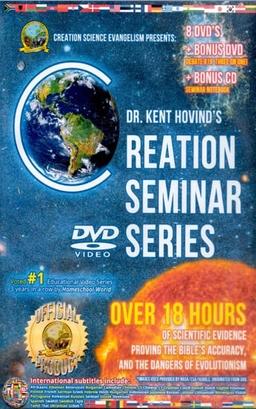
A 7-part DVD series contrasting Creation Science with the theories of evolution Dr. Kent Hovind, founder of Creation Science Evangelism, is dedicated to proclaiming scientific evidence which supports the Biblical account of a literal six-day creation. As guest lecturer for public and private schools, universities, churches, camps, debates, and TV and radio programs, he has been traveling internationally giving seminars on creation versus evolution since 1989. His extensive study and research make Dr. Hovind one of the world's foremost authorities on science and the Bible.
New Zealand is a geologically young land, created and shaped by tectonic forces, volcanism and the elements. It is a living laboratory for scientists seeking to more accurately understand and predict volcanic eruptions and earthquakes.

From Pete, David and Leila - the creators of History Time, Voices of the Past and Something Incredible. From dust to dinosaurs; come with us as we explore the entire history of our planet. History of the Earth tells the entire story of the Earth, from its formation 4.5 billion years ago to today – covering eye-watering geology and bizarre biology along the way.
Miriam is an unemployed journalist who has a beat on a story that could turn her bad luck around. Her dad is an evangelical who believes the fossil record derived from Noah's Flood. For ten years, he has lived in the Mojave Desert, running a paleontology museum. Miriam ventures west to interview him about what made him a creationist.

Unearth the secrets of the mighty Tyrannosaurus Rex and other awe-inspiring dinosaurs in this captivating documentary hosted by Chris Packham.

Japan has a long history of natural disasters. BOSAI explores how to overcome them and save lives with the power of science.

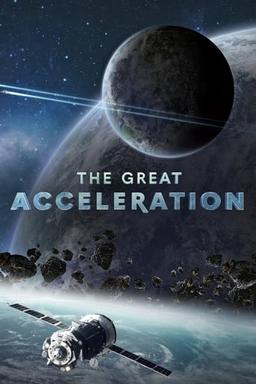
This remarkable science-history series investigates the blistering pace of human endeavour in space exploration, computing, energy, resources, Earth science and our understanding of the evolution of life itself.

All-puppet animation tells the story of how oil is formed through ages of geological change, how it is found, extracted and put to use by man.


The film features a character named Wesley, who is training to become an agent with the Weather Bureau of Investigation (WBI). Throughout the film, Wesley experiences various weather phenomena, including hurricanes, thunderstorms, and tornadoes. He learns about the formation and characteristics of these storms, including how hurricanes develop over warm ocean waters and how tornadoes form within thunderstorms. The film emphasizes the importance of understanding weather patterns and staying safe during severe weather events.
The film follows a character named Wesley as he trains to become an agent with the Weather Bureau of Investigation (WBI). Throughout his training, Wesley learns about wind, its invisibility, and how it is influenced by temperature differences and geographical features. He observes the effects of wind in both urban and rural settings, learns about jet streams, and discovers the significance of uneven heating by the sun. The film concludes with Wesley summarizing his lessons about wind systems and their patterns while expressing his preference for land over water.
Discusses the tundra biome, highlighting its extreme climate characterized by low temperatures and a short growing season. It describes the unique adaptations of tundra wildlife, such as the muskox and arctic fox, which thrive in harsh conditions. The seasonal changes in the tundra are explored, detailing the brief summer when plant life flourishes and animals migrate to take advantage of the abundant food supply. As summer ends, the tundra prepares for the long, cold winter, leading to a decline in wildlife activity and the migration of many species.

An educational film that introduces children to the various elements of weather using the letters of the alphabet. Each letter represents a weather-related concept, such as air, clouds, temperature, and storms, providing a fun and engaging way to learn about the atmosphere and its changes. The film highlights the importance of weather in daily life and the roles of meteorologists in predicting it
Using a scientific discovery approach, the film explains what wind is, how it forms, and its effects on the environment and human life. It demonstrates how wind can be both beneficial and destructive, showcasing real-world examples of wind-powered work, hurricanes, tornadoes, and sandstorms. Through engaging visuals and scientific observations, the film provides a comprehensive look at the power of wind, making it an informative resource for meteorology, earth science, and environmental studies.
The film features a character named Wesley, who is in training at the Weather Bureau of Investigation. He learns about different air masses, their movements, and how they interact to cause weather changes. The training includes understanding high and low pressure systems, cold and warm fronts, and observing changes in weather conditions using various instruments. Wesley experiences firsthand the transition from a warm air mass to a cold front, noting changes in temperature, wind direction, and cloud types.
No More results found.