Movies and TvShows featuring "drivers-ed" theme.



In Pink Skies Ahead, a young woman with anxiety named Winona is faced with the challenges of navigating adulthood while also dealing with her own mental health struggles. Through therapy, relationships, and self-discovery, Winona learns to confront her anxieties and find her place in the world.

A live-action short, using many avant-garde film techniques, that looks at American car culture in the late 1960s. The main section deals with the many trials and obstacles a teenager must face on the path to being able to drive. Surviving the driver's education class is only the first step, as the teenager must then pass his driving test, and then finally get permission to borrow the family car.
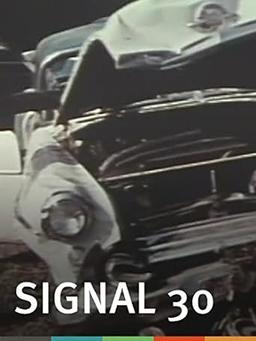
The results of serious traffic accidents caused by careless driving are displayed. One of several Driver's Education films produced by Highway Safety Films, filmed at actual auto accident scenes and consisting largely of color closeups of mangled accident victims.
The film shows the risks associated with different driving speeds and the impact of collisions. It includes demonstrations of controlled impacts, part of experiments conducted by the University of California to study car crashes and improve safety. This includes the use of anthropometric dummies to measure the effects of collisions on passengers. The importance of safety seat belts and shoulder harnesses in preventing injuries is shown, as well as the dangers to unrestrained children in car accidents and the use of lifelike dolls in experiments. The conclusion of the film emphasises the driver's role in ensuring safety by being attentive and careful.
On the day young Alan receives his driver's license, Officer Hal Jackson visits the Dixon farm to sternly lecture the family on the dangers of carelessness at railroad crossings.
This black & white educational driver safety film is about how to drive on America's new, post-war highways / freeways and on multi lane roads.


A group of hip '90s teens educate new drivers about how to conduct themselves around semi-trucks on the freeway.
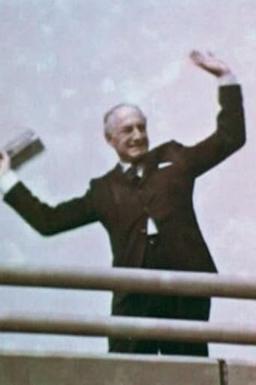
Driver’s Ed film about Mr. Rellik.

This educational film from the 1960s demonstrates the basic rules of defensive driving including planning ahead in traffic situations and a willingness to give way to another driver.
This color educational film is a driver's safety film about city driving. There is no copyright at the beginning or end of the film so the date of the production appears to be the mid to late 1970s.
The Ohio State Highway Patrol explain the need for safe driving, and the tragic consequences of accidents.

An ultra-grim Highway Safety Films title, thanks to narration that’s even more dour than usual and a chilling musical score by Hungarian composer Zoltan Rozsnyai. This is not the TV series, "Emergency!" These are real people who are hurt. You not only get a glimpse of the gory results of accidents; you see emergency care before the paramedics came into vogue (1969). Miami rolled out the first paramedics that year while Los Angeles County (basis of "Emergency!), along with Portland, began providing street medicine.

Beyond Our Control was the title of an American youth-produced television series that aired on local NBC affiliate WNDU-TV in South Bend, Indiana for 20 seasons from 1967 to 1986. Usually televised from late-January to mid-May of each year, the program was produced by WJA-TV, a company that was part of the local Junior Achievement program, designed to give high school students business and work experience, of which WNDU-TV was a local sponsor.

Following in the bloody footsteps of the auto-accident documentaries produced by Highway Safety Films (HSF) of Ohio, came a number of independently produced imitators Produced by the "Suicide Club" (Dean Robinson, who also narrates), DEATH ON THE HIGHWAY is composed largely of still photos retouched with red ink to underline the gruesomeness.
No More results found.