Movies and TvShows featuring "american-dream" theme.
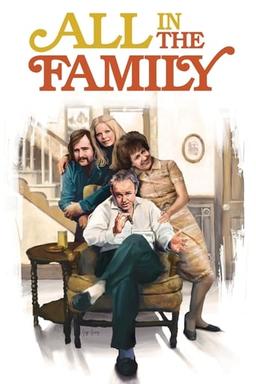
All in the Family is a groundbreaking sitcom that portrays the life of a working-class family in Queens, New York City, during the 1970s. The show delves into various social issues and cultural conflicts, tackling topics like racism, bigotry, ignorance, and political instability. Through humorous and controversial situations, it explores the generational conflict, intergenerational trauma, and the challenges faced by the family members in their daily lives.

As Harvard student Mark Zuckerberg creates the social networking site that would become known as Facebook, he is sued by the twins who claimed he stole their idea and by the co-founder who was later squeezed out of the business. The movie follows the journey of Mark as he faces legal battles and navigates the rise of Facebook, ultimately becoming a billionaire.

Superman: The Animated Series follows Clark Kent, a humanoid alien with supernatural powers, as he protects the city of Metropolis from supervillains and other threats. With the help of his friends, including Lois Lane and Jimmy Olsen, he battles against the likes of Lex Luthor and other villains. The series showcases the dual identity of Superman, as he navigates life as a mild-mannered reporter and fights crime as the Man of Steel.

Barely 17 yet, Frank is a skilled forger who has passed as a doctor, lawyer and pilot. FBI agent Carl becomes obsessed with tracking down the con man, who only revels in the pursuit. Frank eludes Carl with his clever deceptions and continues to live a life of luxury, fooling people and stealing millions of dollars. While Frank attempts to reconcile his divorced parents and settle down, Carl is relentless in his pursuit. In the end, Frank is caught, but manages to turn his skills to help the FBI identify other forgers.
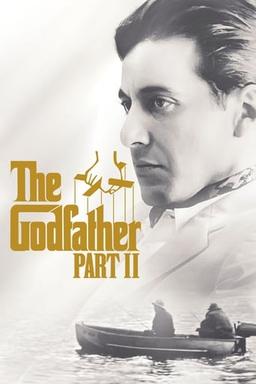
The Godfather Part II follows the saga of the Corleone family as they continue to navigate the world of organized crime. The movie explores themes of power, family, and betrayal, while delving into the backstory of Vito Corleone and his rise to power. Set in the 1950s and 1960s, the film takes viewers from the streets of New York to the casinos of Las Vegas and the revolution in Cuba.

When a visionary architect and his wife flee post-war Europe in 1947 to rebuild their legacy and witness the birth of modern United States, their lives are changed forever by a mysterious, wealthy client.

After witnessing a murder, single mother Estela Carrillo must hide the fact that she is an undocumented immigrant escaping a dark past. While hiding her secret, romantic interests and her dream of becoming a singer complicate her plans.
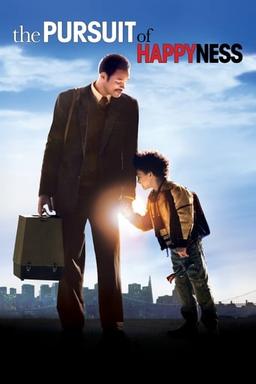
In 1981, in San Francisco, the smart salesman and family man Chris Gardner invests the family savings in Osteo National bone-density scanners, an apparatus twice as expensive as an x-ray machine but with a slightly clearer image. This white elephant financially breaks the family, bringing troubles to his relationship with his wife Linda, who leaves him and moves to New York where she has taken a job in a pizza parlor. Their son Christopher stays with Chris because he and his wife both know that he will be able to take better care of him. Without any money or a wife, but committed to his son, Chris sees a chance to fight for a stockbroker internship position at Dean Witter, offering a more promising career at the end of a six-month unpaid training period. During that period, Chris goes through a lot of hardship personally and professionally. When he thinks he is stable, he finds that he has lost $600 when the government takes the last bit of money in his bank account for taxes. He is rendered homeless because he can't pay his rent. He is forced at one point to stay in a bathroom at a train station, and must scramble from work every day to the Glide Memorial United Methodist Church, which offers shelter to the homeless. He must leave work early every day so that he is there by 5:00 in the evening along with his son so that he may be assured of a place to sleep. He is seen carrying his suitcase to work because he doesn't have a home. At work, there are nineteen other candidates for the one position. One day, he is called into an office and in it were the heads of Dean Witter. Chris thinks that he is about to be told the job will not be his as he says that he wore a shirt and tie for his final day. Then they tell him that he has been an excellent trainee and that tomorrow he will have to wear his shirt and tie again as it will be his first day as a broker. Chris struggles to hold back tears. Outside he begins to cry as the busy people of San Francisco walk past him. He rushes to his son's daycare, hugging him and knowing that after everything him and his son had been through things would be all right. The final scene shows Chris walking with his son down a street. His son is telling him a joke, when a wealthy business man in a suit walks past. Chris looks back as the man continues on. The man in the suit is none other than the real Chris Gardner.

Reclusive gym manager Lou falls hard for Jackie, an ambitious bodybuilder headed through town to Las Vegas in pursuit of her dream. But their love ignites violence, pulling them deep into the web of Lou’s criminal family.
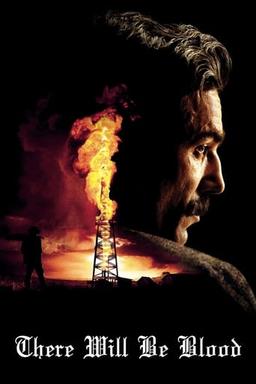
In 1898, Daniel Plainview, a prospector in New Mexico, mines a potentially precious ore vein from a pit mine. In 1902, he discovers oil near Los Angeles and establishes a drilling company. He adopts an orphaned boy and presents him as his business partner. In 1911, Daniel attempts to buy a farm with oil deposits, but faces resistance from the pastor who demands a large sum of money. Daniel's oil production begins, but disasters occur, leading to conflicts with the pastor. Over the years, Daniel's greed and violence escalate, leading to the downfall of those around him, including his adopted son. In 1927, Daniel is a recluse, wealthy but suffering from alcoholism. When his adopted son wants to dissolve their partnership, Daniel reacts brutally and reveals his son's true origins. Daniel's final act of violence is against the pastor who betrayed him. Daniel is left with a sense of despair and emptiness.

Frank and April Wheeler are a couple living in 1950s suburban Connecticut. They struggle with the monotony of their lives and their own personal issues while trying to raise their two children. April dreams of moving to Paris to escape their suburban life, but Frank is not supportive. Their relationship becomes strained as they face challenges and make decisions that ultimately lead to a tragic outcome.

The Bridges of Madison County(1995)
 90%Tomatometer
A National Geographic magazine photographer, Robert Kincaid, arrives in Madison County, Iowa to photograph its famous covered bridges. While there, he meets Francesca Johnson, an Italian immigrant and farm wife. The two form a deep connection and embark on a passionate love affair that will forever change their lives.

¿Qué Pasa, U.S.A.? is America's first bilingual situation comedy, and the first sitcom to be produced for PBS. It was produced and taped in front of a live studio audience at PBS member station WPBT in Miami, Florida and aired on PBS member stations nationwide. The program explored the trials and tribulations faced by the Peñas, a Cuban-American family living in Miami's Little Havana neighborhood, as they struggled to cope with a new country and a new language. The series was praised as being very true-to-life and accurately, if humorously, portraying the life and culture of Miami's Cuban-American population.

Little America is an anthology series that showcases the different stories of immigrants in the United States of America, focusing on their struggles, triumphs, and the pursuit of the American Dream. The show portrays the diverse experiences of immigrants from various backgrounds, highlighting their challenges, perseverance, and the impact they have on American society.

Cristela is a sitcom that follows the story of Cristela Hernandez, a Mexican-American woman who is determined to become a lawyer. She takes an unpaid internship at a prestigious law firm in Dallas, Texas, and faces obstacles and discrimination along the way. Despite the challenges, Cristela is determined to prove herself and achieve her American dream.

Grace, a woman fleeing from gangsters, seeks shelter in a small Colorado town. The townspeople agree to protect her, but as time goes on, they demand more and more from her, leading to abuse and exploitation. When Grace's true identity is revealed, she seeks revenge on the town by orchestrating their destruction with the help of the mobsters.

The Great American Dream Machine was a weekly satirical variety television series, produced in New York City by WNET and broadcast on PBS from 1971 to 1973. The program was hosted by humorist and commentator Marshall Efron. The show centered around skits and satirical political commentary. The hour and a half long show usually contained at least seven different current event topics. In the second season, the show was trimmed down to an hour. Other notable cast members included Chevy Chase. Contributors included Albert Brooks and Andy Rooney. Some of the skits would later be revamped for the movie The Groove Tube. There were also occasional short films presented on the show, most of them "experimental" or documentaries about artistic endeavours. Some of these were subtitled.

Minari tells the story of a Korean-American family who moves to a small farm in Arkansas in the 1980s. The family faces various challenges as they try to achieve their version of the American Dream. The film explores themes of family relationships, cultural assimilation, and the pursuit of hope and fulfillment.
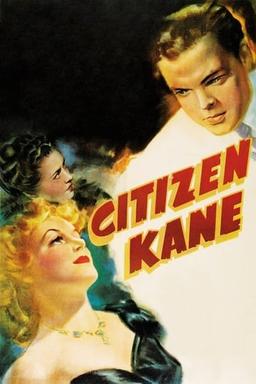
In a mansion in Xanadu, a wealthy newspaper publisher is on his deathbed. Reporters try to uncover the meaning of his last word, 'Rosebud.' Through interviews and investigation, they learn about his rise to power, failed relationships, political career, and ultimate loneliness. As they dig deeper, they discover that 'Rosebud' refers to a childhood sled, symbolic of the simple happiness he lost. The sled is eventually burned as his belongings are discarded.

A Yale law student heads back to his Appalachian hometown and reflects on his family's history, unearthing painful memories of love, addiction, and resilience.